Welcome to my cooking measurements rant. I really admire people who can bake. I am not one of them (or rarely am I successful). This post started as a Portuguese cooking measurement guide but ended up as something else. For the conversion guide and Portuguese vocabulary, go here.
Understanding Cooking Measurements in Portugal
Have you ever found a recipe for a cake or some muffins that looked exciting, so you get everything ready, start to measure everything according to the recipe and realize some things need to be converted from ounces to grams, and you say to yourself it’s not a problem and do a quick online search for a conversion guide or online converter and follow the measurements there. No bother, right?
First, you notice the batter is looking weird or doesn’t rise properly, then it tastes burnt or bland, or the whole thing goes wrong.
Then you look back and try to figure out what went wrong, and you realise… the recipe was American, but you converted English units into metric. Following that, you converted ml to g. Anyone?
Having lived most of my life in Portugal and being raised with mostly the metric system, understanding measurements in recipes can sometimes be difficult to get right, given all the different volume sizes for cups alone. But I’m starting to think that the confusion isn’t just the different measurement systems or the language barriers.. but it is over-simplistic or incomplete and /or unreviewed conversion guides that are the problem. Especially when going from millilitres to grams and vice versa. And don’t get me started on halving and doubling measurements!
The Cup Confusion
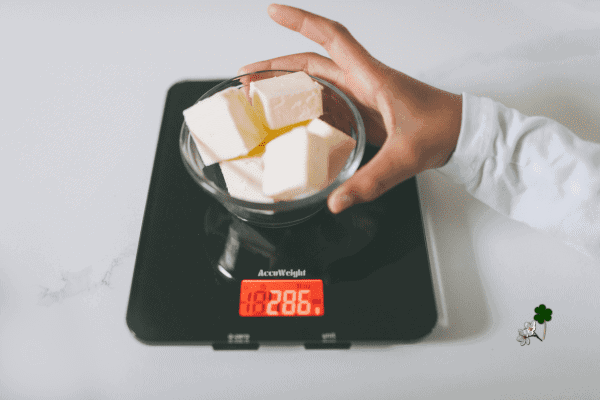
Take butter, for instance… in some recipes, they mention ounces, some mention grams, and others talk about sticks of butter. In Portugal, cooking butter or margarine is measured in sticks of 50g and comes marked as such on the packaging. But 1 stick butter = ½ cup = 4 ounces = 113 grams. (but which size cup?) If we have no scales to confirm, we end up having to “eyeball” 113 g of butter. But that’s not too difficult if you have a package that is marked in 50g sections. The problem begins if I have unmarked margarine and only a cup in millilitres…
Moreover, as I’m trying to look these guides up online, I’m confronted with the first problem – if not stated, what cup size is the recipe talking about? Are they UK cups? American? Australian? Metric?
Overcoming the Cup Conundrum
The official sizes are:
- UK 284ml, American technically 236.6ml but officially has been rounded up to 240ml;
- Australia favours the metric cup, which is 250ml. And ignore the nationality of the author because that, whilst a good starting place, is not always a sure-fire way of knowing what sizes they in fact chose.
- Now throw in Portuguese “soup spoons” and “xícaras” or “chávenas”, and it becomes next to impossible. I’m sure some of you can relate.
Unveiling the Complexity
Simple solution? Not likely…
I have read in some of these guides (both Portuguese and English) that one can apply the simple conversion, which is to assume a cup is a standard cup (250ml) and generally speaking, 1ml = 1g Right?
OMG…I have found out the hard way this is NOT the f@%*ing same. This never works for me. I’ve applied this in the past and failed. Miserably.
From what I can understand, this only applies to water. Common sense fails me – one “cup” (250ml) of sugar does NOT weigh the same as a “cup” (250ml) of flour… how could it? Granulated sugar does not have the same density as flour and therefore can’t weigh the same. In Portuguese, I’m confronted with the same issue too, as it seems no cooking page, blog, or book can agree on whether the “chávena” equals 250 ml, 240 ml or 200 ml.
Even within the same guides, I’ve come across contradictions. They will say one chávena is 250 ml, but right under it will say one chávena equals 16 tablespoons, and that each table soup is 15ml, BUT:
16 x 15 is 240 ml!!!! What is going on?? It shouldn’t be this difficult.
Of course, a potential explanation for this is if the recipe is written in Brazilian or European Portuguese – regardless of whether the dish is, in fact, traditionally from Portugal! Or even if it’s being translated from European or American English…but even that doesn’t work because I’ve found Brazilian and Portuguese guides with the same problem. I’ve seen xícaras at 200ml, 240ml and 250ml. This is so frustrating.
Dry vs. Wet Measuring Cups
Adding to all this mega confusion, all the other measurements don’t work either. It doesn’t help that in general, American pints and ounces are not the same as European ones…and then we have the metric system trying to make sense of it all, but sometimes just makes it even more complicated.
Confused yet? I’m not sure if I understand it all myself, hahaha, I’m probably overthinking this WAY too much.
Finding Clarity
One thing seems to be certain… no one in these guides, seemingly, has actually measured the ingredients to check if they actually measure what they are saying they do, and they don’t seem to read over the guide themselves, having just copied it from somewhere else. I say this because I did a small experiment of my own and ended up with different results from all these guides.
For example, according to the majority of the measurement conversion guides I found, 1 cup (250 ml) of sugar weighs 160 g, one cup (250 ml) of wheat flour weighs 120g, and one cup (250 ml) of raw rice weighs 210 g.
However, when I tested this, my sugar weighed 232 g, my flour 161g, and my rice weighed 237 g (all measured with the same cup, and I used the same digital precision scales). Maybe you can get away with this in general cooking, but for baking, I don’t think these are small, negligible differences. What am I missing here?
A Helpful List
Well, my friends, I dug a little deeper and reached some conclusions. The main one is that the measuring conversion guides are incomplete. They lack important information on specific ingredients, such as whether the sugar is white, brown, granulated, powdered, etc. They all just say “sugar”. How compact is the flour? What type are they talking about (all-purpose, T45, T65, etc.)? You get the idea.
The other big conclusion was that many times there is an unspoken or unmentioned detail in some of these recipes: there is a difference between DRY measuring cups and WET measuring cups…. People like me are confused about the use of DRY vs WET measuring cups. After spending loads of hours looking up all these sizes and guides, I think I can say that most dry measuring cups are 250 ml and most wet measuring cups are 240 ml.
Conclusion
But of course, people, including myself, won’t think about that and just use the same measuring cup they have (whatever size it is, usually 250 ml).
However, it’s advisable to figure out in what language the recipe is in and what version (American, English, or other) of it first. And try to keep everything in the system from that language. But of course, that is easier said than done. If you only have measuring utensils in the “wrong” system. Or you’re following a recipe from another country IN another country that doesn’t use the same system. I often find myself in this situation. Thankfully, for the most part that I’ve observed, most recipes nowadays have included ready-made conversions or are in the metric system.
Additional Cooking Vocabulary
When you see “xícaras”, it’s safe to assume this is Brazilian Portuguese. Although it’s a word also used in Portugal, it is much more common in Brazil. Therefore, one tea cup is typically 240 ml unless otherwise stated. If in European Portuguese, then the recipe will usually talk in “chávenas” (also tea cup) and that typically means 250 ml, again, unless otherwise stated. All mentions of “soup spoons” (tablespoons) and teaspoons follow the same sizes as Ireland and the U.K. (sizes below)
So does this mean we all have to dump all our measuring cups and scales? Of course not, but finding a precise measuring guide will not be easy unless you test it out yourself first. Let me know in the comments below how you use conversion guides, if any!
Ready to Improve Your European Portuguese?
Reading about Portugal and Portuguese Tradition is great. But real progress comes from structured listening, repetition and guided practice.
Inside the Language Hub, you get:
- Audio-based lessons in European Portuguese
- Comprehension exercises
- Real-world vocabulary
- Clear explanations without overwhelming grammar
If you want to understand Portuguese beyond textbook dialogues, this is your next step.


I am currently experiencing my own frustration in trying to find a Portuguese measurement in American English terms. I saw a video to make strawberry brigadeiros and it calls for creme de leite, 1/4 da caixinha. I can only find creme media at my grocery store, but I see that heavy cream or sour cream can be substituted. My problem is the measurement of “1/4 da caixinha”.. literally translated that is “1/4 of the box”. What the heck is that hahaha this creme comes in a small can…if they mean 1/4 of the can and I have to substitute sour cream will that just be a straight weight measurement? Please help.
oohh interesting question!! By the description of the ingredients, sounds like this recipe is from Brazil, because we don’t call it “creme de leite” in Portugal (we call it either “natas frescas” or “natas para bater”). But either way, I looked it up and it looks like they sell them there in boxes just like here in Portugal which is 200ml or 6.75 FL OZ per box. So, that means for your recipe you need roughly 50ml or approximately 1,70 FL OZ (I hope I converted that right!!) Also, just a heads up, the recipes I’m familiar with for brigadeiros always use the whole box of creme or condensed milk. Is this a modified recipe perhaps?