
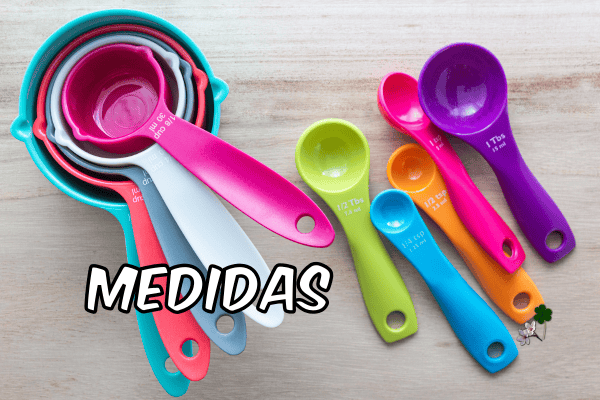
Ever been confused by Portuguese Cooking/Baking Vocabulary and measurements? I often have problems with these. Here is an example. Then this post is for you! Today, we’re going over an extensive list. But first, let’s decipher the measurements!
Measuring Guide:
- xícara = tea cup in Brazil, in other words = 240 ml unless otherwise stated.
- chávena = tea cup in Portugal, in other words = 250ml unless otherwise stated.
- 1 colher de sopa = “1 soup spoon” = 1 table spoon = 15 ml
- 1 colher de chá = 1 tea spoon = 5 ml
- 1 colher de sobremesa = 1 “dessert spoon” = 10 ml
- 1 colher de café = 1 coffee spoon = 2 ml
- 1 dl = one decilitre = 100 ml
- rasa = “flat” meaning level or at/to level
- prato fundo nivelado = deep plate to level = 200 g
- q.b. = quanto baste = literally “as much is enough” = meaning = “to taste”
- 1 pitada de = a pinch of
- um fio de = a drizzle of / a trickle of / a dash of.
Other relevant cooking vocabulary
- dentes de alho = “teeth” of garlic (garlic cloves)
- ralado = shredded / crumbs (queijo ralado = shredded cheese / pão ralado = bread crumbs)
- moído = ground or minced
- lamidados = laminated
- congelados = frozen
- frescos = depends on context. It can refer to fresh produce, like fresh herbs for example, but if it’s regarding a liquid, then it means cold (água fresca = cold water).
- rodelas = round slices (e.g. pineapple slices = rodelas de ananás / sliced olives = azeitonas em rodelas)
- fatias = slices
- fatiado = sliced
- picado = finely chopped or diced
- casca = shell or peel
- posta = a cut piece / or slice of meat or fish
- lombos = loins
- costeletas = chops
- lume = fire/heat source in this case
- lume brando = low heat
Verbs
- cozinhar = to cook
- cozer = to bake
- ferver = to boil and/or bring to a boil
- fervilhar = to simmer
- assar = to roast in the oven or on the grill / to broil
- grelhar = to grill
- fritar = to fry
- escalfar = to poach
- estufar = to stew in the oven
- guisar = to stew
- refogar = to brown / to braise
- saltear = to sauté
- aquecer = to warm up / to heat up
- arrefecer = to cool down
- mexer = to stir
- misturar = to mix
- bater = to beat or to whisk
- amassar = to knead
- estender a massa = to roll out pastry
- descascar = to peel / to shell
- dissolver = to dissolve
- deitar = to pour (in this context)
- juntar / adicionar = to add
- retirar = remove
- pôr / colocar = to put or to place
- escorrer = to drain or to strain
- macerar = to macerate
- esmagar = to squash or to crush
- reduzir a puré = to puree or to mash
- picar = to chop very finely or to dice
- fatiar = to slice
- cortar = to cut
- lavar = to wash
- preparar = to prepare
- torrar = to toast
- espalhar = to spread
- salpicar = to splash or sometimes to drizzle
There you have it: Portuguese Cooking / Baking Vocabulary list. Now you’ll never be confused again. If you would like to read and laugh a little about my measuring cups rant, please click here.
Video Lesson – Improve your Portuguese Comprehension
Watch the following comprehensible input lesson at the bakery to improve your comprehension!
Ready to Improve Your European Portuguese?
Reading about Portugal and Portuguese Tradition is great. But real progress comes from structured listening, repetition and guided practice.
Inside the Language Hub, you get:
- Audio-based lessons in European Portuguese
- Comprehension exercises
- Real-world vocabulary
- Clear explanations without overwhelming grammar
If you want to understand Portuguese beyond textbook dialogues, this is your next step.