

Want to learn the Portuguese alphabet (European Portuguese) and actually use it in real life?
In this beginner-friendly lesson, you’ll learn how to pronounce the Portuguese alphabet, how to spell your name, and how the alphabet is used in everyday situations in Portugal.
👉 This is not just memorisation: you’ll hear, see, and start recognising the sounds naturally.
This guide will help you learn the Portuguese alphabet pronunciation (European Portuguese) step by step, with real examples and audio.
- How many letters are in the Portuguese alphabet?
- Why learn the Portuguese alphabet?
- Useful phrases for spelling in Portuguese
- How to spell your name in Portuguese
- How to pronounce the Portuguese alphabet (European Portuguese)
- Does pronunciation always stay the same?
- Learn the Portuguese alphabet with real words
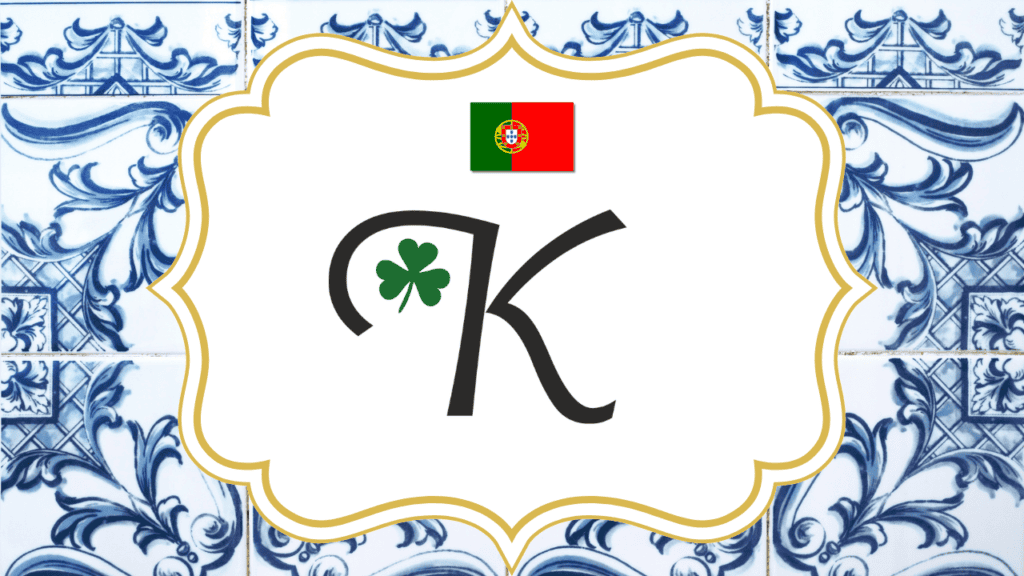
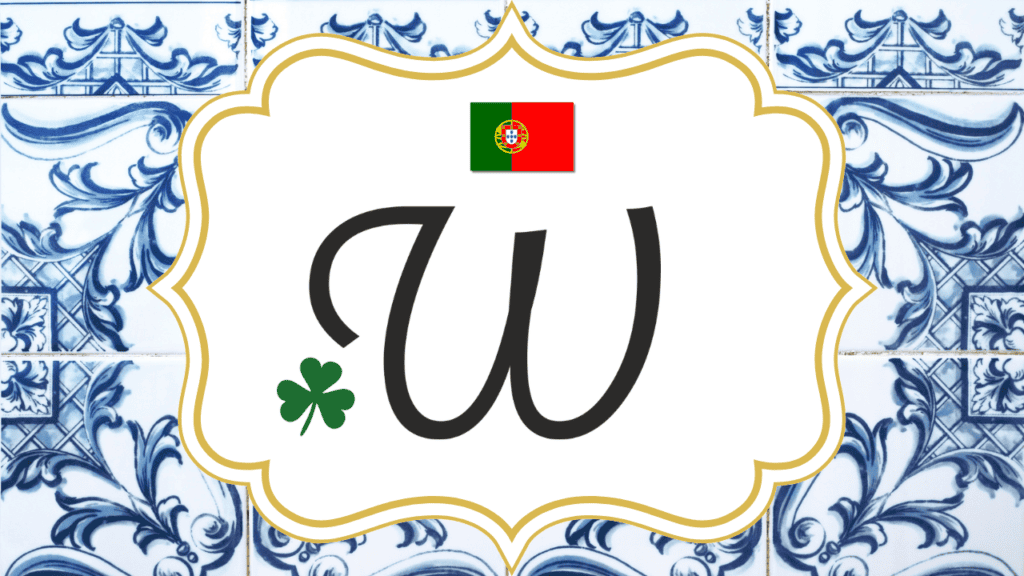
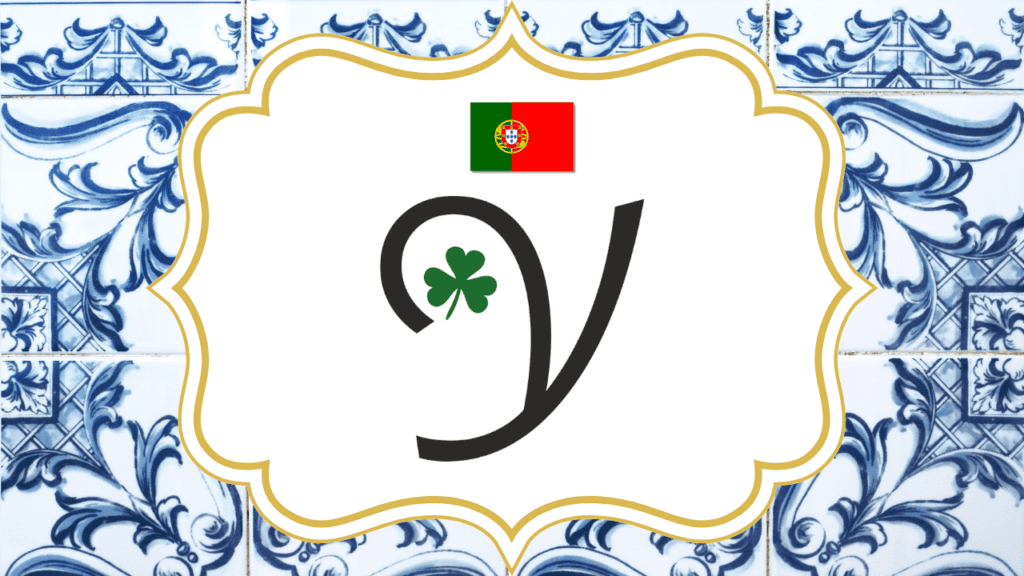
- What about K, W and Y?
- Want European Portuguese lessons?
How many letters are in the Portuguese alphabet?
The Portuguese alphabet has 26 letters, A, B, C, D, E, F, G, H, I, J, L, M, N, O, P, Q, R, S, T, U, V, X, Z, K, W, Y.
However, this wasn’t always the case.
Before the Orthographic Agreement of 1990, the letters K, W, and Y were not officially part of the alphabet in Portuguese. They were mainly used in foreign words and names (called estrangeirismos).
Today, these letters are included, but they still appear mostly in international words like whisky, yoga, or kilo.
Why learn the Portuguese alphabet?
If you live in Portugal or interact with Portuguese speakers, you’ll quickly notice that spelling is part of everyday communication.
You’ll need it when:
- Spelling your name at appointments
- Giving your email address
- Understanding names that sound unfamiliar
Useful phrases for spelling in Portuguese
“Como se soletra o seu nome?”
(How do you spell your name?)
“Como se escreve o seu nome?”
(How do you write your name?)
“Pode soletrar o seu nome, se faz favor?”
(Can you spell your name, please?)
If you want to understand how these sounds work in real words, explore this European Portuguese pronunciation lesson.
How to spell your name in Portuguese
- “O meu nome é Adelina: á – dê – é – él – i – én – á”
- “Chamo-me Hannah: agá – á – én – én – á – agá”
- “O meu nome é Richard: érr – i – cê – agá – érr – dê”
How to pronounce the Portuguese alphabet (European Portuguese)
Each letter in the Portuguese alphabet has a specific name and sound. In European Portuguese, these sounds are often shorter and more closed than in English.
👉 Quick tip: In European Portuguese, many letter names sound shorter and less open than in English. Listen carefully and try to copy the rhythm, not just the sound.
Does pronunciation always stay the same?
Not always. In Portuguese, the sound of a letter can change depending on its position in a word.
For example, the letter “A” can sound different depending on stress and surrounding letters.
👉 Instead of memorising rules, focus on listening and recognising patterns. This is how children learn, and it works just as well for adults.
Learn the Portuguese alphabet with real words
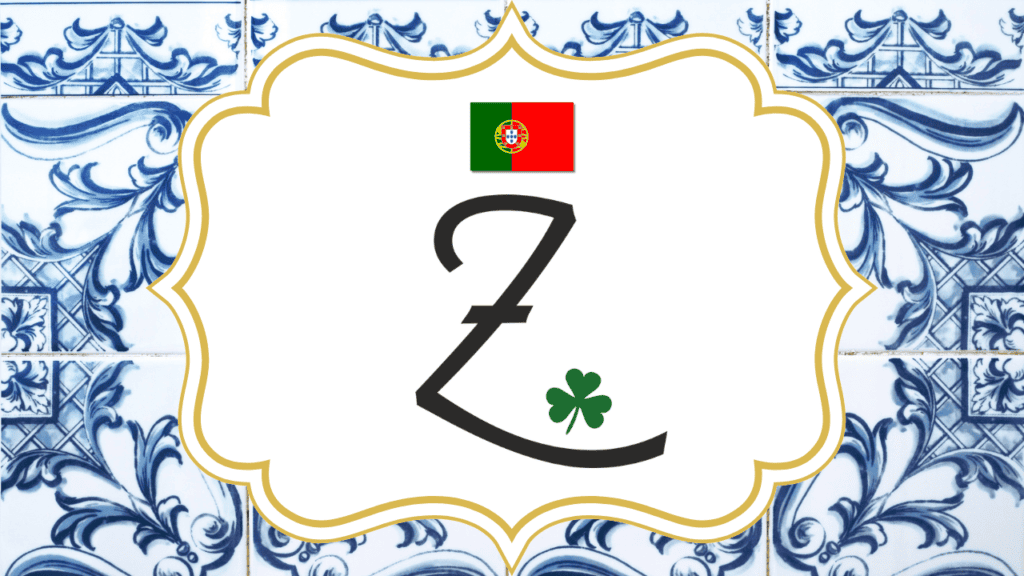
Click on each letter below to learn real vocabulary, pronunciation, and examples in European Portuguese. Each link will take you to a post on my YouTube channel → ✅ where you can add your own words


What about K, W and Y?
Although these letters are now part of the Portuguese alphabet, they are mostly used in borrowed or international words.
Examples:
- Kilo
- Whisky
- Yoga
In European Portuguese, you may also see adapted spellings:
- quilo
- uísque
- ioga
Want European Portuguese lessons?
Reading about pronunciation helps. But real progress comes from hearing, repeating, and recognising patterns in real speech.
Inside the Language Hub, you get:
- Audio-based lessons in European Portuguese
- Comprehension exercises
- Real-world vocabulary
- Clear explanations without overwhelming grammar
If you want to go from recognising the alphabet to actually understanding spoken Portuguese, this is your next step.
← Back to Portuguese Pronunciation
← Back to Unidade 1 – Cumprimentar, apresentar-se e conhecer pessoas