

If you are in Portugal today, you may notice something a little different in some towns and cities: there are fewer cars on the streets!
Today, 22 de setembro, is the Dia Europeu Sem Carros (European Car Free Day). It is the final day of the Semana Europeia da Mobilidade, which takes place every year from 16 to 22 September.
The idea is simple: for one day, towns and cities encourage people to leave the car at home and think about other ways of getting around: a pé, de bicicleta, de transportes públicos!
And here in Tavira, we’re joining in too!
🚶♀️ Tavira sem carros
Today, several streets in the centre of Tavira are closed to veículos motorizados between 9h00 and 19h00.
That includes parts of:
- Rua da Liberdade
- Rua dos Pelames
- Rua 5 de Outubro
- Ponte do Gilão
- Rua do Cais
- Rua José Pires Padinha
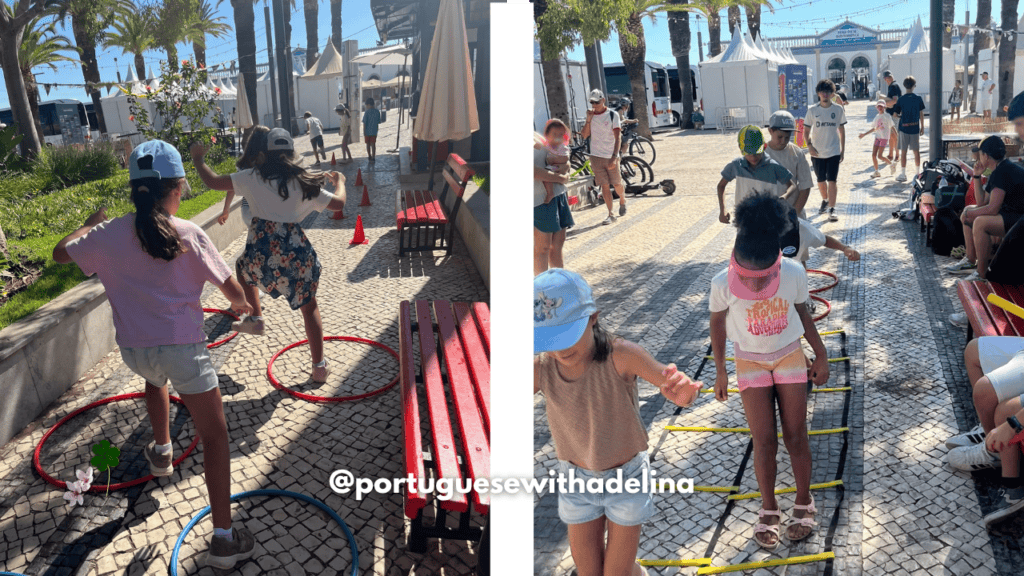
There are also activities around the Rio Gilão and the Jardim do Coreto, involving local schools and organisations.


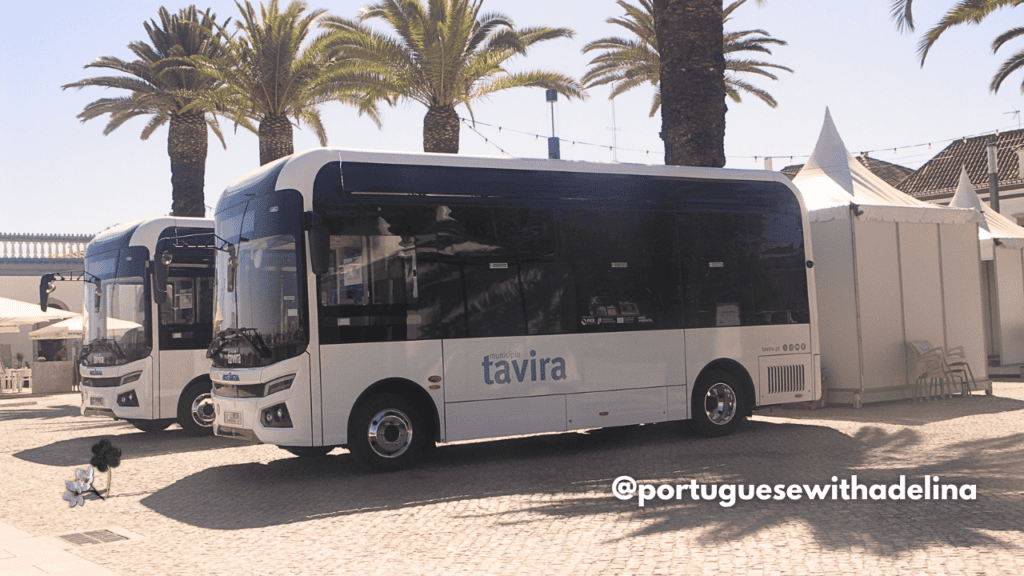
And if you happen to be walking around Tavira today (2026), you might also see something rather interesting near the Mercado da Ribeira: two new electric buses. These buses will be used for school transport.
So, for one day, some of the streets that are normally full of cars become places where people can andar a pé, andar de bicicleta and simplesmente desfrutar da cidade.
And that gives us some useful Portuguese!
🇵🇹 How do you say “to get around” in Portuguese?
One useful verb is:
deslocar-se – to get around / to travel from one place to another
For example:
Como é que te deslocas pela cidade?
How do you get around the city?
You could answer:
Desloco-me a pé.
I get around on foot.
Or:
Desloco-me de bicicleta.
I get around by bicycle.
Or:
Desloco-me de autocarro.
I get around by bus.
Notice something important here: Portuguese uses a with pé but de with most forms of transport.
a pé
de bicicleta
de autocarro
de comboio
de carro
de avião
That’s a useful little pattern to remember!
🚗 What does “sem carros” actually mean?
You might see the expression sem carros and think:
“Does that mean there are literally no cars?”
Not necessarily!
sem means without, and you will encounter it all the time!
café sem açúcar = coffee without sugar
água sem gás = still water (water without gas/carbonation)
sem manteiga = without butter
sem molho = without sauce
estou sem luz = I don’t have electricity / the power is out
and on the 22nd of September: cidade sem carros!
When we talk about the Dia Europeu Sem Carros, we’re talking about temporarily making certain areas free of motorised traffic – not necessarily removing every single car from an entire city!
Other examples:
Quero um café sem leite.
I want a coffee without milk.
Saí de casa sem o telemóvel.
I left the house without my phone.
Não consigo viver sem café!
I can’t live without coffee!
(The last one may or may not be true for you… 😄)
🚌 Some useful transport vocabulary
Here are a few words you might need when talking about getting around Portugal:
| Portuguese | English |
|---|---|
| o carro | car |
| o autocarro | bus |
| o comboio | train |
| a bicicleta | bicycle |
| a trotinete | scooter |
| os transportes públicos | public transport |
| o trânsito | traffic |
| a rua | street (not road) |
| o passeio | foot path/pavement/sidewalk |
| a estrada | road (not street) |
| a pé | on foot |
And one little cultural note: in European Portuguese, autocarro is the word you will normally hear for bus. If you are learning Portuguese from Portugal, this is the word you want!
For a more detailed lesson on modes of transport, have a look at Transportes em Português.
🌍 A day to look at Portuguese differently
For me, one of the interesting things about days like this isn’t simply the idea of “no cars”.
It’s the opportunity to notice how we normally move through a city.
We usually think about getting from A to B, but when you walk through a town, you notice completely different things. You hear people talking, you notice the buildings, you see the river, you stop for a coffee…
And perhaps that’s one reason why andar a pé is such a useful expression to know in Portuguese. 😉
So, if you’re in Tavira today, why not leave the car at home and andar a pé?
And if you’re somewhere else in Portugal, have a look around. You might find that your town is celebrating the Dia Europeu Sem Carros too!