Countries, Nationalities and Languages in European Portuguese
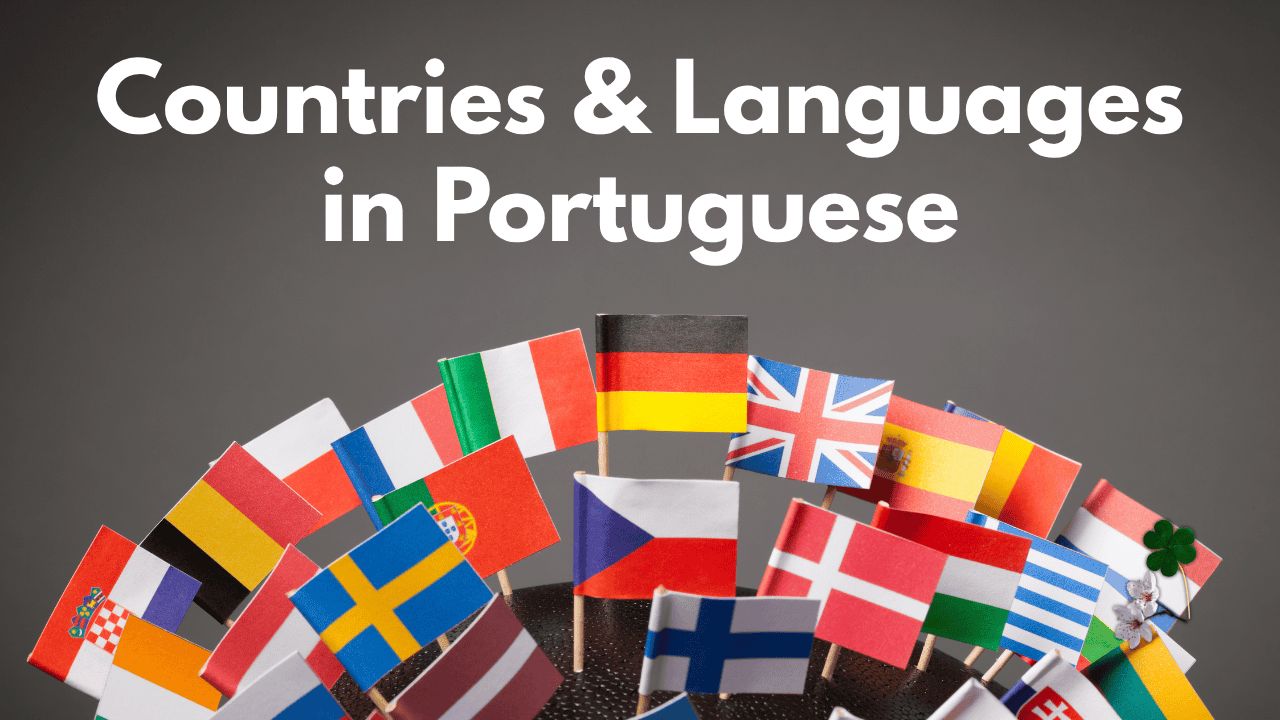
Collection of European country flags with the title 'Countries & Languages in Portuguese'.

When learning European Portuguese, you’ll probably want to talk about where you’re from, where you live and which languages you speak. These are useful things to know when introducing yourself and getting to know other people. But how do you say Irish, Dutch, American or English in Portuguese? And what’s the difference between the name … Read more
Goodbye in Portuguese

How to say goodbye in Portuguese with a note and Portuguese flag.

Olá outra vez! If you’re learning Portuguese, one of the first things you’ll want to know is how to say goodbye in Portuguese. And, just like with greetings, there’s more than one way to do it! When first learning a new language, I always recommend learning useful expressions in chunks rather than trying to translate … Read more

How to Introduce Yourself in European Portuguese: Essential Phrases for Beginners

Portuguese flag with 'Hello My Name Is' message and marker pen.

Meeting someone for the first time is an important step when learning a new language. You might already know how to say olá (hello) or bom dia (good morning), but what comes next? How do you tell someone your name, say where you’re from, or ask a few questions to get to know them? In … Read more

The Verb Chamar-se: What’s Your Name?

Portuguese flag with 'Chamar-se to be called' text for language learning.

One of the first things we learn when we start speaking Portuguese is how to say our name. In Portuguese, we usually use the verb chamar-se to say what our name is. The literal translation is “to call oneself”. For example: Eu chamo-me Adelina.My name is Adelina. (I call myself Adelina) Como te chamas?What’s your … Read more

Passar a + Infinitivo (B1)

Portuguese grammar concept: Passar a + Infinitivo with Portuguese flag.

Olá pessoal! In this lesson, I bring you yet another sentence structure that doesn’t translate into English neatly. If you want to describe starting to do something as a new situation, habit or way of doing things in European Portuguese, you’ll often come across: passar a + infinitive For example: Passei a estudar português todos … Read more

Deixar de + Infinitivo (B1)

Portuguese language learning poster about 'Deixar de + Infinitivo' with Portuguese flag.

Often, languages don’t translate into each other neatly. The sentence structure I bring in this lesson is one of them. If you want to say “to no longer do something” in European Portuguese, you’ll often come across this structure: deixar de + infinitive For example: Deixei de fumar.I stopped smoking. Ela deixou de trabalhar aqui.She … Read more

Regresso às Aulas em Portugal

Back to school in Portugal with school supplies and backpack.

September means regresso às aulas em Portugal. After the long summer holidays, children and teenagers return to school, families get back into their routines, and shops fill with school supplies. For Portuguese learners, this is also a great opportunity to learn vocabulary that you will hear in everyday Portuguese conversations. In this guide, we’ll look … Read more

Dia Europeu Sem Carros🚶‍♀️🚲

street in Tavira, Portugal with a bycicle but no cars.

If you are in Portugal today, you may notice something a little different in some towns and cities: there are fewer cars on the streets! Today, 22 de setembro, is the Dia Europeu Sem Carros (European Car Free Day). It is the final day of the Semana Europeia da Mobilidade, which takes place every year … Read more

Voltar a vs Voltar para: What’s the Difference?

voltar a vs voltar para - European Portuguese Lesson

The verb voltar means “to return” or “to go back”, but the preposition that follows it can change what we mean. Two very common structures are: voltar a + infinitivevoltar a/para + place At first, these can be confusing because voltar a can have two different meanings. Let’s look at how they work. Voltar a … Read more

Começar a vs Passar a: What’s the Difference in Portuguese?

European Portuguese Lesson about the differences between "começar a" and "passar a"

If you want to say that someone started doing something in Portuguese, you probably already know the structure: começar a + infinitivo Comecei a estudar português.I started studying Portuguese. But there is another very useful construction that can sometimes be translated similarly: passar a + infinitivo Passei a estudar português. At first, these two structures … Read more