

Olá Pessoal! Welcome to another conversation with Luke! In this video lesson I tell him about Portuguese Carnaval, The Caretos de Podence and Cozido à Portuguesa!
We also unpack what Bacalhau Roupa Velha is and the Expression “És de Braga?”. Luke isn’t Portuguese, which makes this conversation especially valuable: you’ll hear authentic interaction between a native speaker and a learner navigating real topics in real time.
If you’re aiming to improve your listening comprehension and feel more confident speaking, this is exactly the kind of exposure you need.
Carnaval in Natural Conversation
During our chat, we talked about Carnaval, and I talked a little bit about Carnaval in Portugal: not as a textbook explanation, but as something that simply comes up in conversation.
I mention the famous Caretos de Podence, with their colourful fringed costumes and mischievous energy. These kinds of cultural references often appear casually when Portuguese people speak, and without context, they can be confusing.
What makes this interesting is that you hear how a learner reacts, asks questions and engages with cultural references in Portuguese. This mirrors what many of you experience when speaking with natives.
If you’d like a full cultural breakdown of Carnaval traditions, I have a separate detailed article on the topic. Here, the focus is on conversation and comprehension. Carnaval in Portugal
Talking About Food: Cozido à Portuguesa
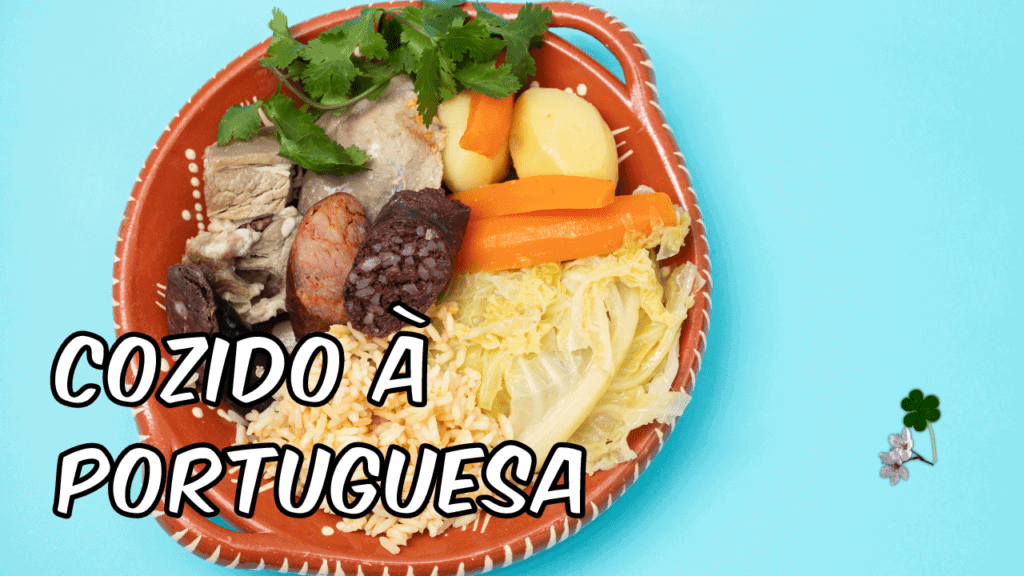
Food always finds its way into Portuguese conversation. I tell Luke about Cozido à Portuguesa, one of Portugal’s most traditional dishes. Instead of a structured explanation, you’ll hear how it’s described naturally: mentioning sausages like chouriço and alheira, and even vegetables like alho-francês.
Because my guest is still learning Portuguese, you’ll notice moments of clarification, vocabulary exploration and spontaneous explanation, which is incredibly useful for learners watching.
If you’d like a detailed breakdown of the dish itself, you can read my full article on Cozido à Portuguesa.
We also talk about Bacalhau Roupa Velha in the conversation – here’s the full recipe if you want to try it at home.
Expression: “És de Braga?”
One of the expressions we unpack in this conversation is:
“És de Braga?”
Literally, it means “Are you from Braga?”, referring to the northern city of Braga.
Culturally, though, it’s used playfully to suggest someone might be a bit stingy or overly careful with money. It’s teasing, not literal, and it’s exactly the kind of expression that learners rarely encounter in textbooks.
Understanding these expressions helps you grasp tone, humour and subtext, which is essential for real fluency.
The Word “Fixe”
We also talk about the word:
Fixe
It means cool, nice, or great, and it’s extremely common in European Portuguese.
It’s informal but completely natural. If you’re not using “fixe” yet, you should be. It instantly makes your Portuguese sound more integrated and less translated.
Curious about culinary terms we mentioned? Learn the difference between a casserole and a caçarola and hear them used naturally in conversation.
Why Conversation-Based Learning Matters
Textbook dialogues are clean and controlled.
Real conversation isn’t.
In this video, you’ll hear:
- Natural rhythm
- Interruptions
- Cultural references
- Spontaneous vocabulary
- Light teasing
- Everyday expressions
This is what actually prepares you for living in Portugal or speaking with Portuguese people confidently.
If you’ve missed the previous collaboration videos in this series, you can find them in the Portuguese Conversations section of the site.
Who This Video Is For
This conversation is ideal if you:
- Are around A2-B2 level
- Want to improve listening comprehension
- Want exposure to natural European Portuguese
- Care about understanding Portuguese culture through language
If that sounds like you, press play, and see how much you understand before turning on subtitles.
And afterwards, let me know:
Did you already know the expression “És de Braga?”
And do you use “fixe” yet?