

Embarking on the journey of Portuguese greetings involves more than just words; it’s a cultural dance with its rhythm and the often dreaded “cheek kisses”. Let’s delve into the nuances of Portuguese Greetings: To Kiss or Not to Kiss? in Portugal, along with a sprinkle of phrases that may weave through the fabric of introductions. While there’s no one-size-fits-all rulebook, we’ll sketch the general expectations, letting you gracefully waltz through this dance of communication.
Common Greeting Gestures
Let’s begin by talking about what the common greeting gestures are in Portugal:
- Handshake
- Hug
- Double cheek-kisses
Next, let’s delve into when these are used.
Informal Scenarios
In informal settings, a gentle exchange of two kisses on the cheek is most common between a man and a woman or two women. Meanwhile, men engage in the classic handshake, known as “aperto de mão.” Another term in this dance is “passou-bem,” akin to saying, “Give me a handshake!”

When performing the cheek kisses, the right cheek leads, followed by the left. Often, a light touch on the arm accompanies the movement, and interestingly, these “face kisses” often involve only cheek-to-cheek contact with “air kisses”.
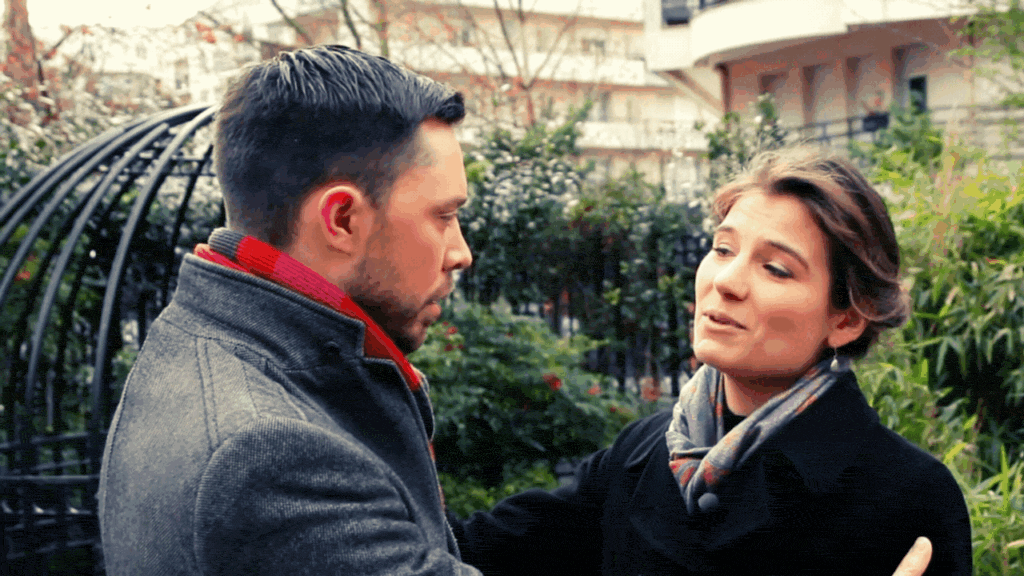
While some opt for a single cheek peck, particularly those with a higher social standing, the script spoken during these greetings varies based on context and intimacy levels. Friends might throw around a casual “Tudo bem?” (Is all well?), a rhetorical question akin to the English “What’s up?” or “How’s it going?”

I will add that cheek kisses in general occur more frequently either when being introduced to someone or among friends who have not seen each other in a long time. Another key time when cheek kisses are exchanged (even among acquaintances) is during special events. These include events like Christmas, Birthdays, other celebrations or when congratulating someone, etc.
However, this dynamic can change from friend group to friend group.
First Meetings
Firstly, it will depend on the type of meeting: formal or informal. Are you out with friends or work colleagues/clients? Secondly, for a 1st time encounter, consider the elegant simplicity of saying something like:
“Olá, sou o Michael, muito prazer” (Hello, I’m Michael, pleasure)
with “prazer” standing in for “pleasure to meet you.” However, it’s normal to greet a woman with “face kisses”. An increasing number of Portuguese people are more aware of others from cultures who do not partake in cheek kisses. But remember, you are in Portugal, so when in Portugal…
If it is a professional encounter, then keep to the handshake, unless the other person initiates the “air kiss”.
Navigating Group Dynamics
Physical greetings are prevalent but not obligatory, especially in larger groups. Opting for a “boa tarde a todos” (good afternoon to all) or an “Então, tudo bem?” (So, everything good?) might be a pragmatic choice to save time. If uncertainty looms, let the other person take the lead, especially if they seem less inclined towards physical greetings.
Family Ties
Within families, greetings paint a diverse canvas. Some mirror those shared between friends, spiced up with extra hugs. In some families, for important life milestones, male family members opt for kisses instead of handshakes, adding a familial touch to their interactions.
Professional Encounters
Stepping into professional arenas, the handshake takes centre stage, playing the lead role for both men and women. Brace yourself for firmer handshakes among men, with the potential for an enthusiastic grip from the more spirited souls in the room. Watch the Portuguese President Marcelo Rebelo de Sousa greet the American President Donald Trump.
Embark on this cultural journey of Portuguese Greetings: To Kiss or Not to Kiss? where every interaction is a choreography of connection, and every greeting tells a unique story.
Related Post for Further Reading
Return to