
In Portuguese from Portugal, the verbs pressionar, premir and carregar can all mean “to press”, but they’re not always interchangeable. Let’s check these out one by one and see when to use each!
Premir
💡 More formal / technical
You’ll often see this one in automated voice recordings, user manuals, or formal language.
Meaning: to press (usually a button)
Common contexts:
- Elevators
- ATMs
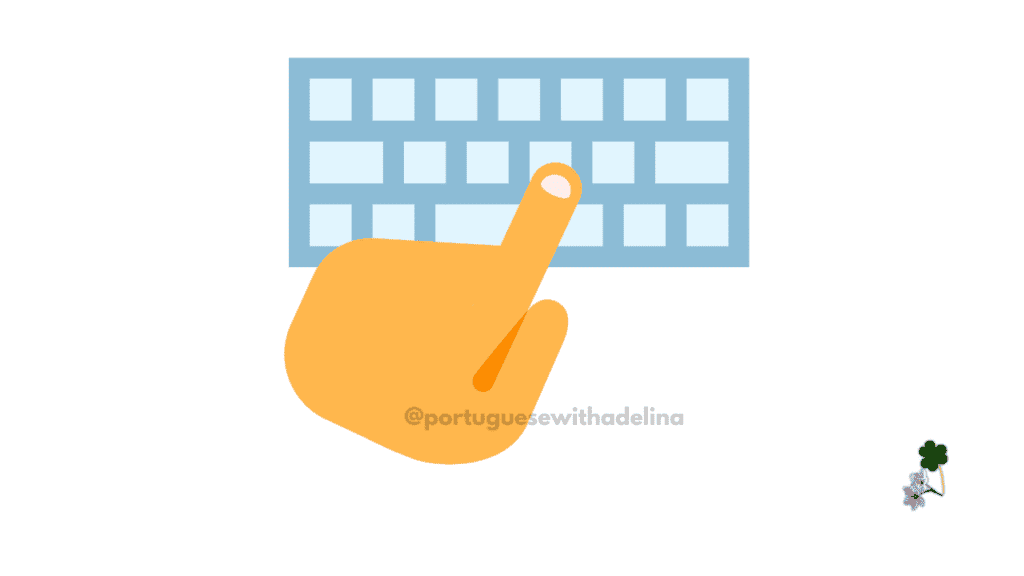
- Keyboards
- Phones
📌 Examples:
- Prima o botão verde para continuar.
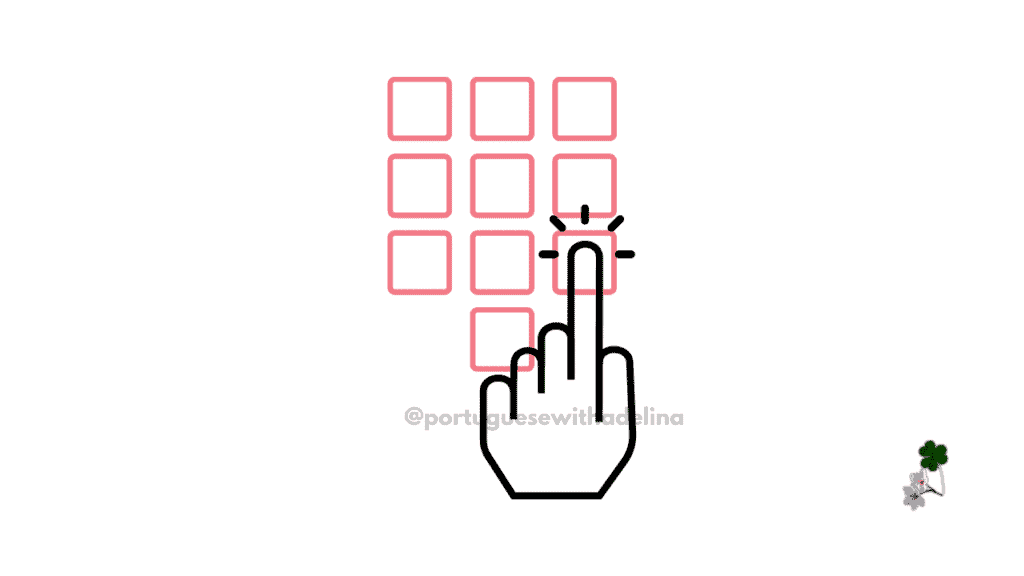
- Para cancelar, prima seis (6).
- Prima aqui para aceitar os termos.
🧠 Derivatives:
- Prima (noun) – the command/button you press (rare, often seen in tech language such as answering machines and AI assiants)
- Premido/a – rarely used, but technically the past participle meaning pressed.
✅ Premir is rarely used in speech – more often replaced by carregar or pressionar in everyday talk.
Pressionar
💡 More literal or abstract
This verb works in both physical and figurative contexts.
Meanings:
- to physically press something (e.g., with your hand)
- to put pressure on someone emotionally or socially
📌 Examples:
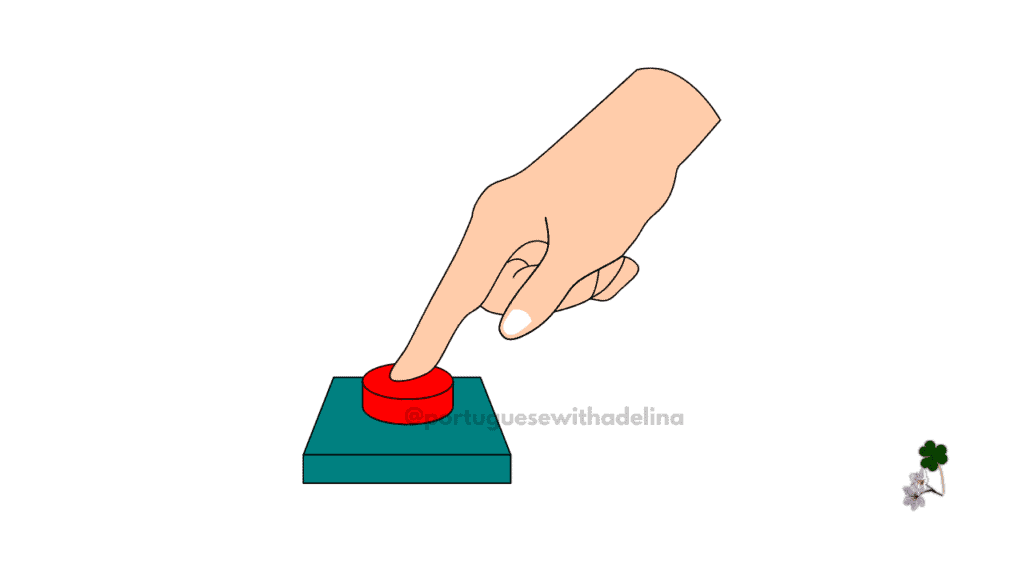
- Pressiona este botão durante 5 segundos. (Press this button for 5 seconds.)
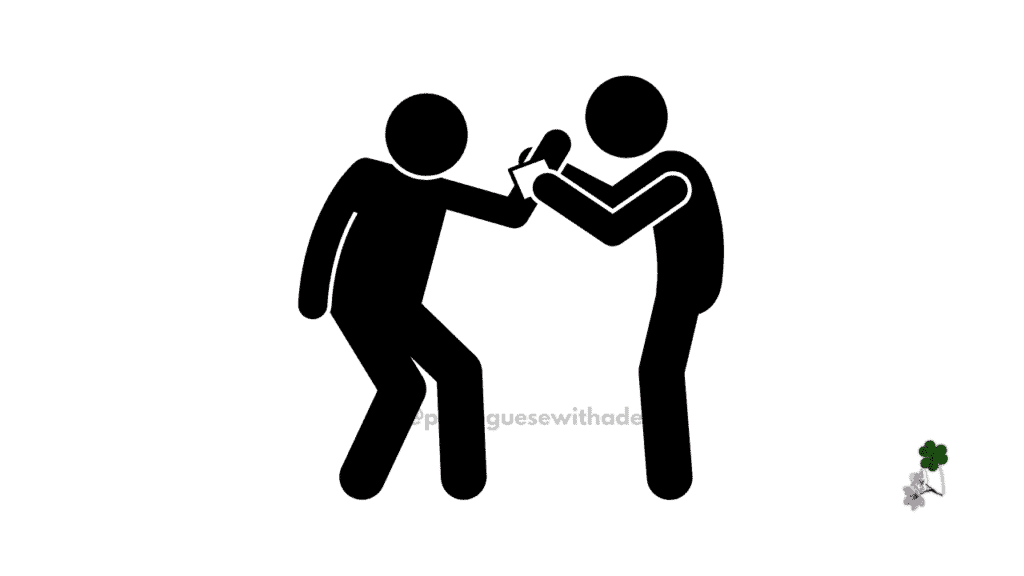
- O enfermeiro pressionou a ferida com uma compressa. (The nurse pressed the wound with a compress.)

- O chefe está a pressionar-me para entregar o relatório. (My boss is pressuring me to hand in my report.)
- Os media pressionaram o governo. (The media pressured the government.)
🧠 Derivatives:
- Pressão – pressure (both literal and metaphorical)
- Pressionado/a – pressured
- Pressionante – pressuring (rare)
✅ Pressionar is very versatile and is your go-to verb when there’s some kind of pressure (emotional or physical).
Carregar
💡 Most common in speech
This is a colloquial, everyday word in Portugal. It can mean “to press,” or “to click” but also “to carry”, “to load” and even “to charge”(battery).
Meanings:
- to press (a button/screen)
- to load (a file, webpage, etc.)
- to carry a heavy object
📌 Examples:
- Carrega aí no botão. (hit/press the button-informal)
- Carreguei no link, mas não abre. (I clicked the link, but it won’t open.)
- Está a carregar a página. (The page is loading.)
- O pai carregava o bebé ao colo. (The dad was carrying the baby in his arms/lap.)
🧠 Derivatives:
- Carregamento – a loading/top-up (e.g. phone credit)
- Carregador – charger
- Carregado/a – loaded
- Carregadíssimo – super loaded (weight or metaphorically stressed)
✅ Most common when talking to people – “Carrega aí no play!” (Hit play!) is what you’d hear from a friend, not “Prime o botão.”
❗When are they interchangeable?
| Situação | ✅ Pode usar | ❌ Melhor evitar |
|---|---|---|
| Press a button (formal) | Premir | Carregar (less formal) |
| Press a button (casual) | Carregar | Premir (sounds robotic) |
| Apply pressure (physical) | Pressionar | Premir/Carregar |
| Put pressure on someone (figurative) | Pressionar | Carregar/Premir |
| Load or carry something | Carregar | Premir/Pressionar |