
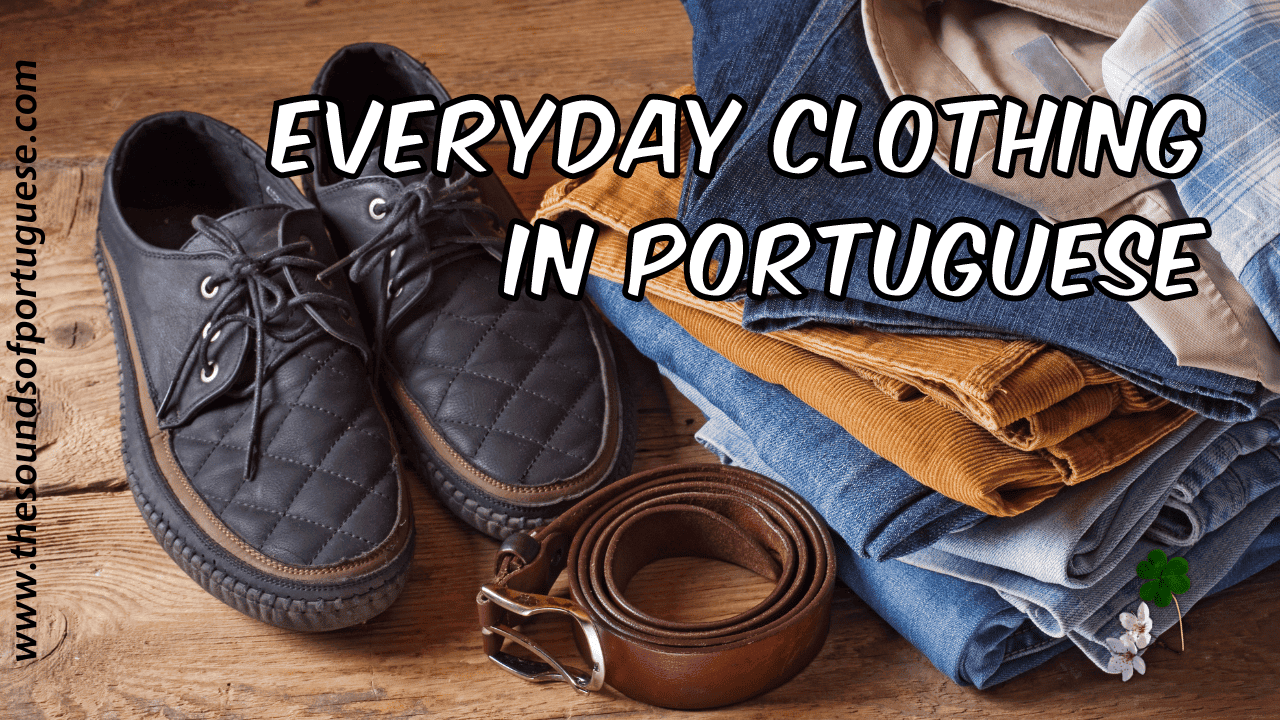
Hello everyone! Today, we are going to learn about everyday clothing in Portuguese. This lesson is perfect for beginners. Let’s go and learn about clothes in Portuguese!
Clothing for Men
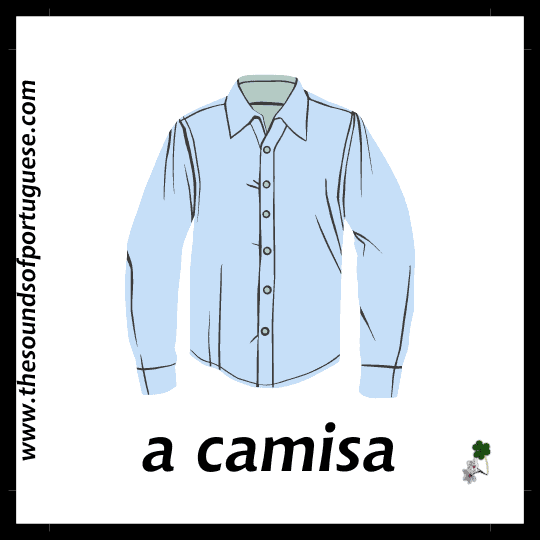
A camisa: A shirt is a common piece of clothing for men. It can be for both formal and informal occasions.
- Example: Ele está a usar uma camisa azul. (He is wearing a blue shirt.)
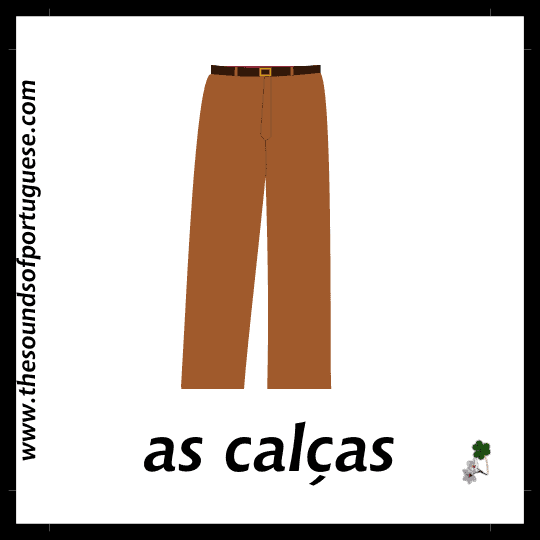
As calças: Trousers or pants are essential in a man’s wardrobe.
- Example: Ele comprou calças novas castanhas. (He bought new brown trousers.)
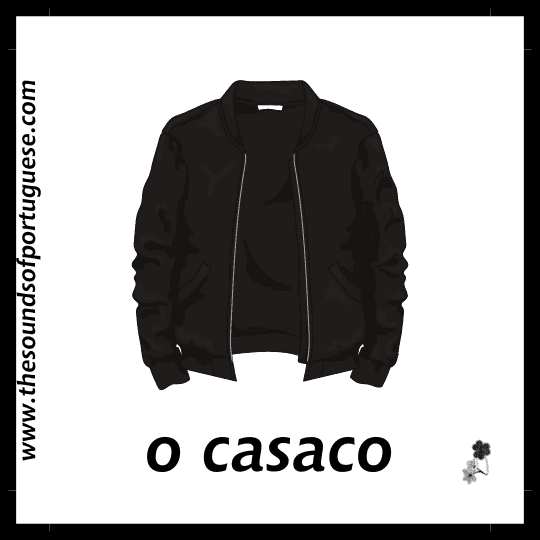
O casaco: A jacket is often needed in cooler weather. Casaco is also for describing a coat.
- Example: Precisas de um casaco para sair. (You need a jacket to go out.)
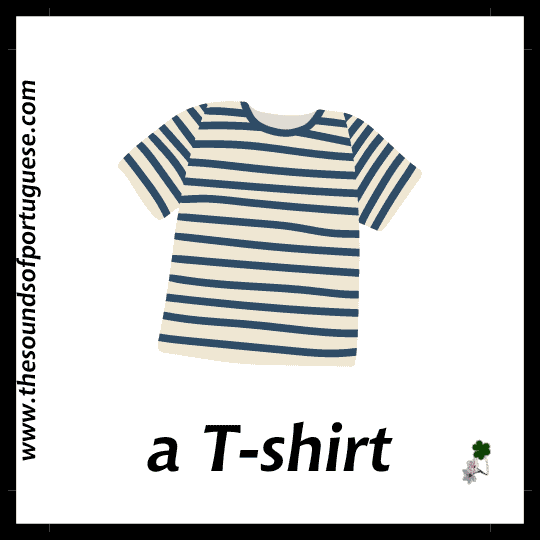
A T-shirt: A T-shirt is casual and comfortable for everyday wear.
- Example: Ele veste uma T-shirt branca. (He is wearing a white T-shirt.)
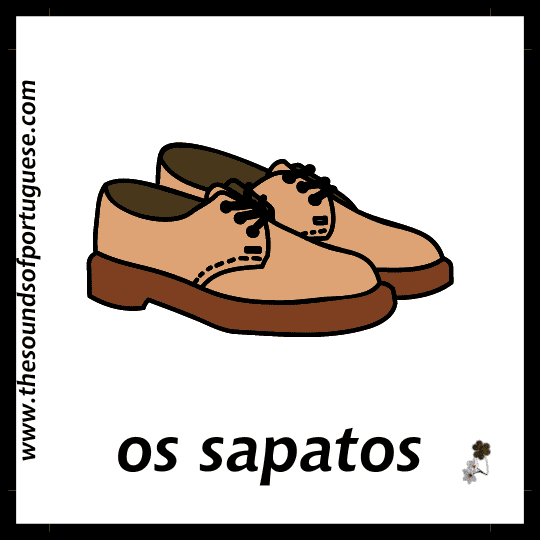
Os sapatos: Shoes are important for completing an outfit.
- Example: Onde estão os teus sapatos? (Where are your shoes?)
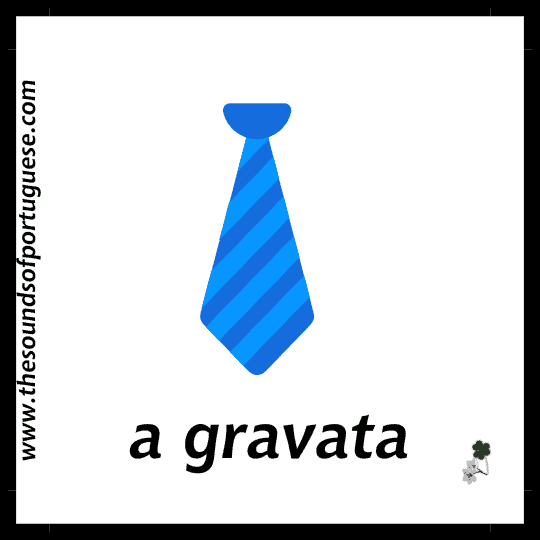
A gravata: A tie is often for formal occasions.
- Example: Ele está a usar uma gravata azul. (He is wearing a blue tie.)
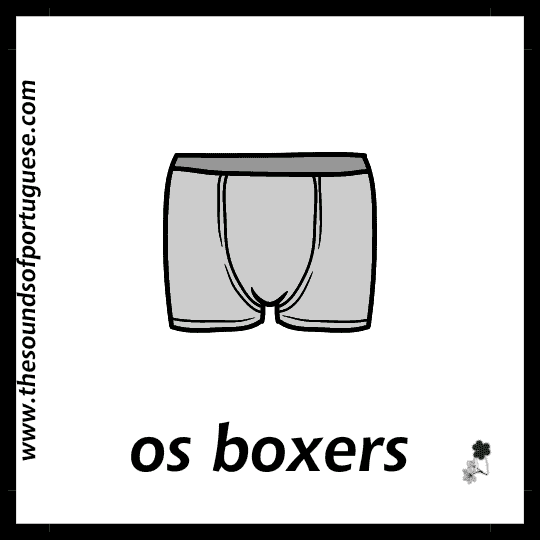
Os boxers: Boxers are a common type of men’s underwear.
- Example: Ele está a usar boxers. (He is wearing boxers.)
Clothing for Women
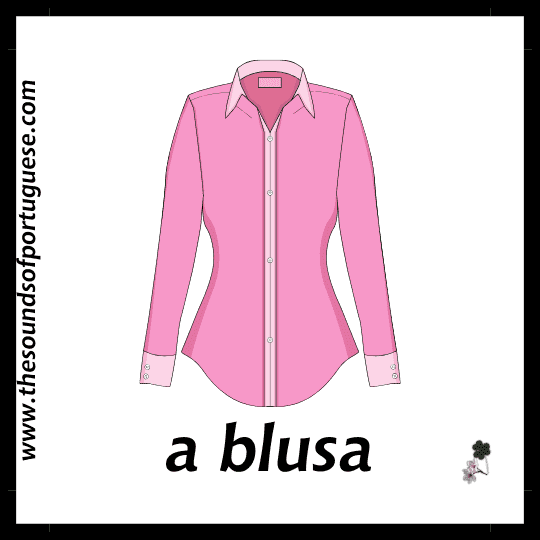
A blusa: A blouse is a versatile piece of clothing for women.
- Example: Ela gosta de usar blusas coloridas. (She likes to wear colourful blouses.)
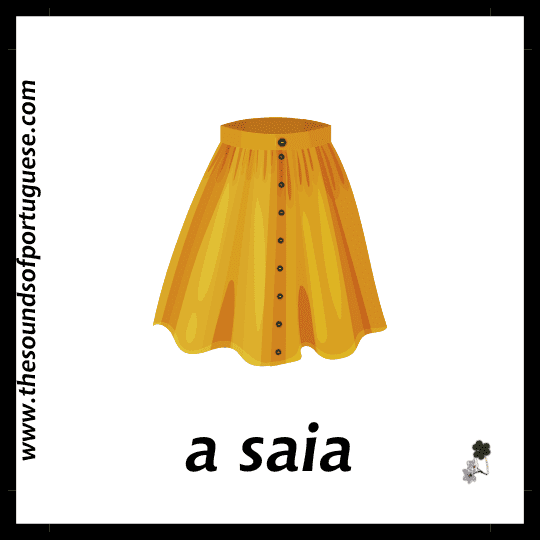
A saia: A skirt can be for both casual and formal occasions.
- Example: A saia dela é muito elegante. (Her skirt is very elegant.)
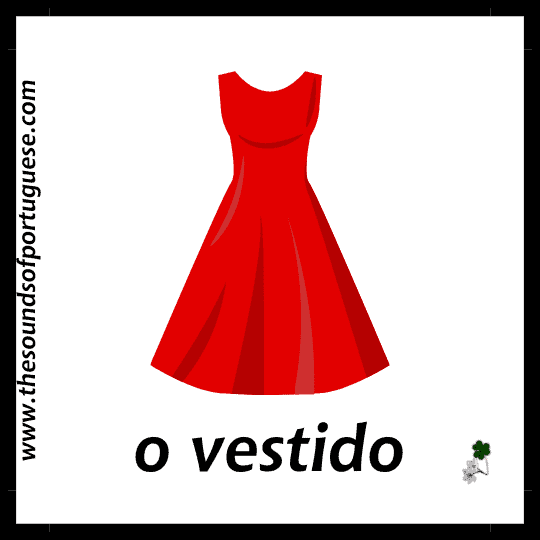
O vestido: A dress is a single piece of clothing that is often used for special occasions.
- Example: Ela tem um vestido vermelho. (She has a red dress.)
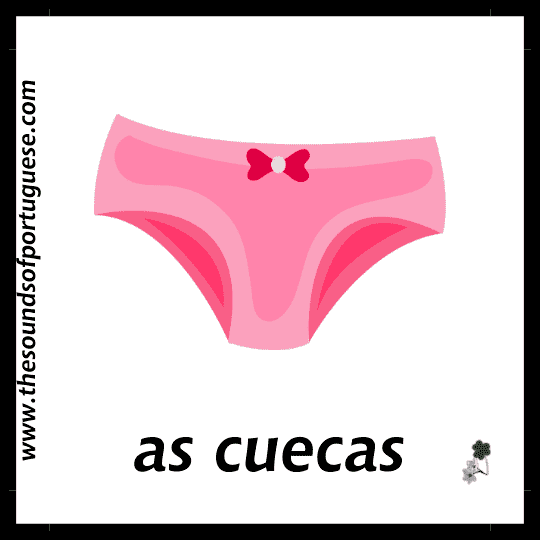
As cuecas: Knickers or panties are common types of women’s underwear.
- Example: Ela está a usar cuecas rosa. (She is wearing pink knickers.)
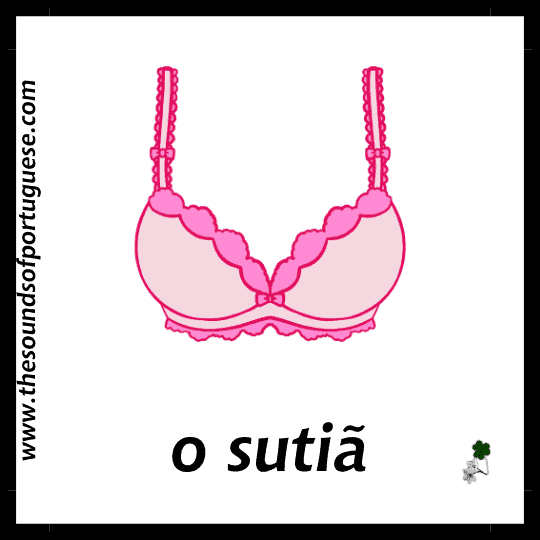
O soutiã: A bra is an essential piece of women’s underwear.
- Example: Ela comprou um soutiã novo. (She bought a new bra.)
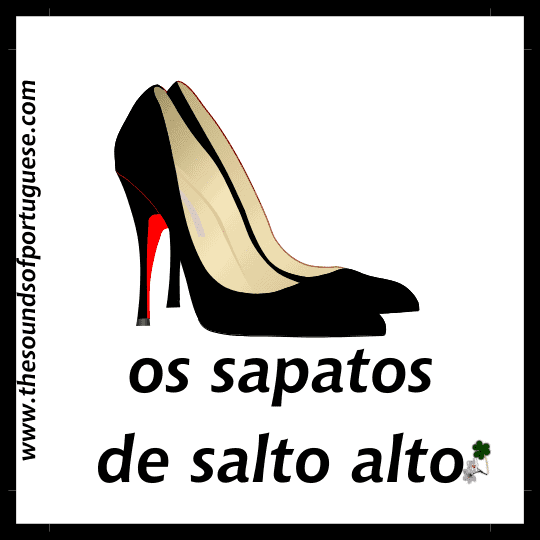
Os sapatos de salto alto: wearing high-heeled shoes in Portugal should not be taken lightly. Our cobbled streets become perilous, so mind your ankles.
- Example: Vais usar saltos hoje? (Are you wearing heels today?)
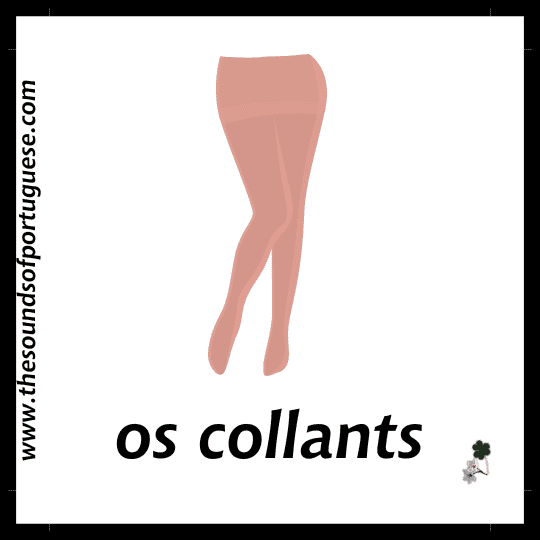
Os collants: Tights or pantyhose are worn for warmth or style.
- Example: Ela prefere usar collants em vez de meias. (She prefers to wear tights instead of socks.)
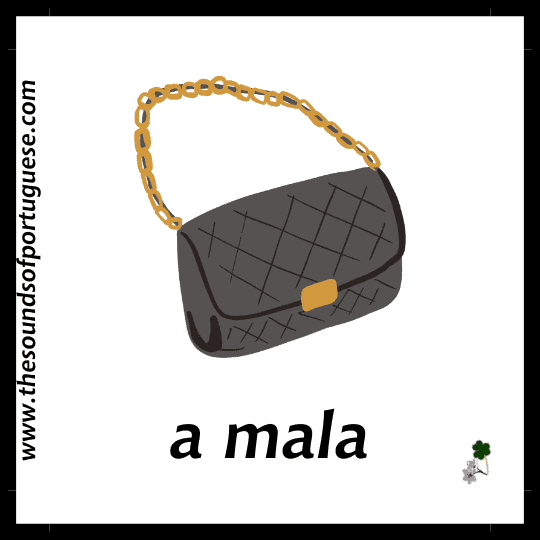
A mala (de senhora): A bag is often used to carry personal items. “Mala” is used for suitcase (mala de viagem) and also for the car boot/trunk (mala do carro)
- Example: Ela tem uma mala pequena. (She has a small bag.)
Common Accessories
As we go through Everyday Clothing in Portuguese, it’s time to look at common accessories.
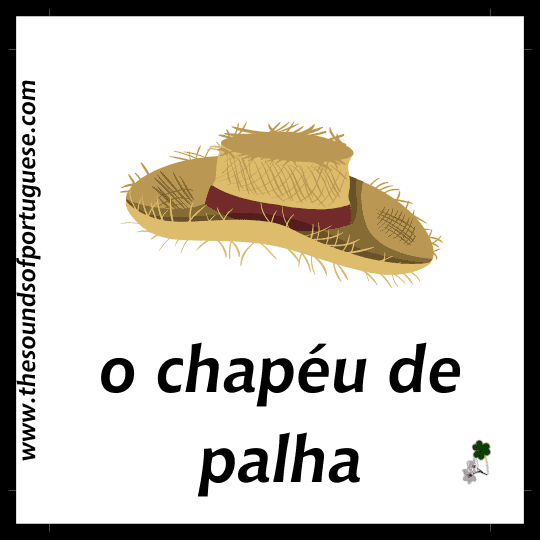
O chapéu: A hat can be both functional and fashionable.
- Example: Ele está a usar um chapéu de palha. (He is wearing a straw hat.)
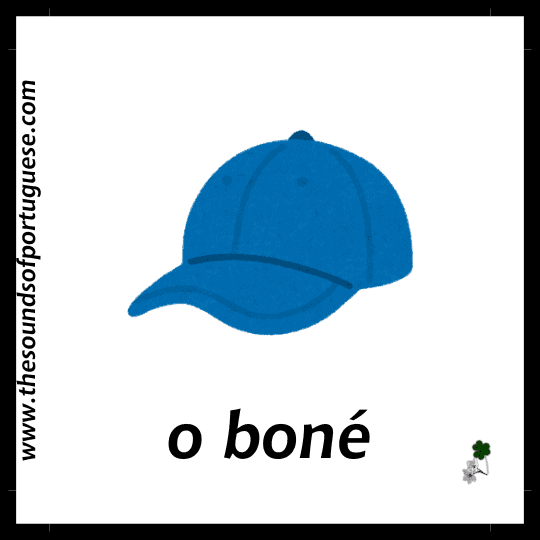
O boné: So many people love caps, they are so comfortable.
- Example: Ela usa um boné quando vai correr. (She wears a cap when she goes running.)
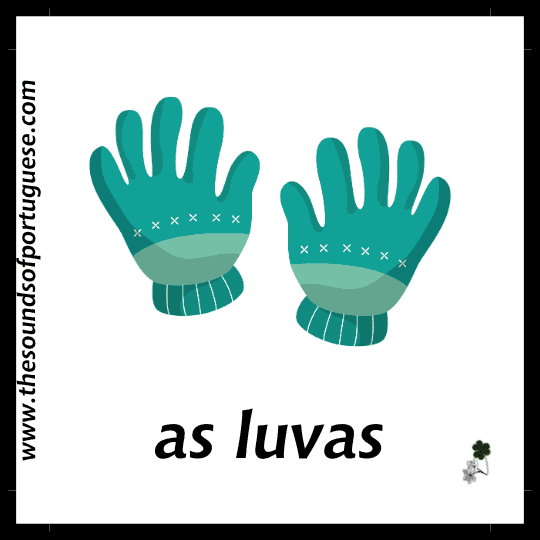
As luvas: this is the word for gloves in Portuguese.
- Example: Ela comprou luvas de lã. (She bought wool gloves.)
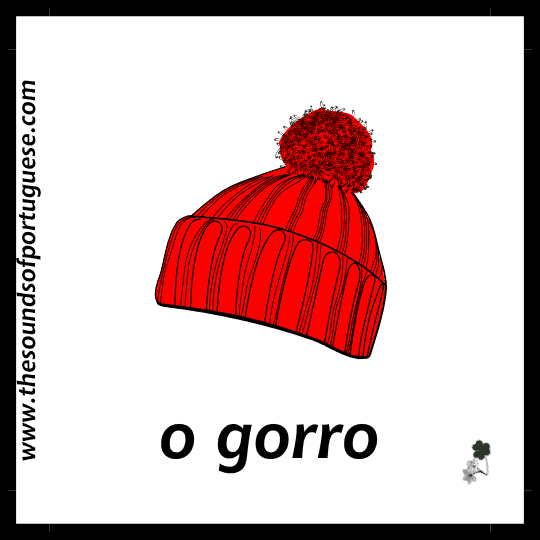
O gorro: A beanie or hat is worn to keep warm in cold weather.
- Example: Ela usa um gorro nos dias de inverno. (She wears a beanie in winter days.)
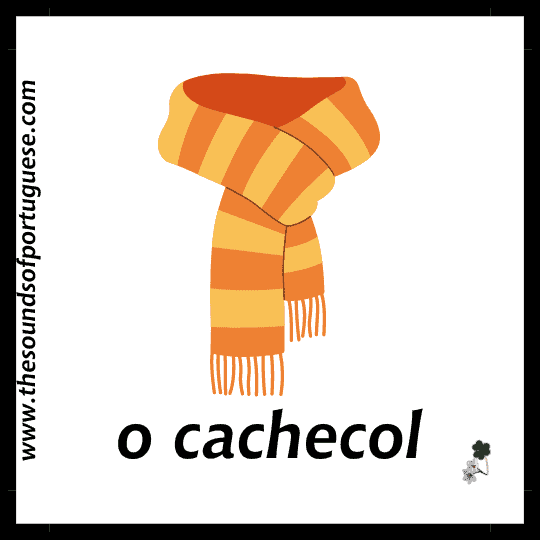
O cachecol: You may need a scarf in January!
- Example: Precisas de um cachecol no inverno. (You need a scarf in winter.)
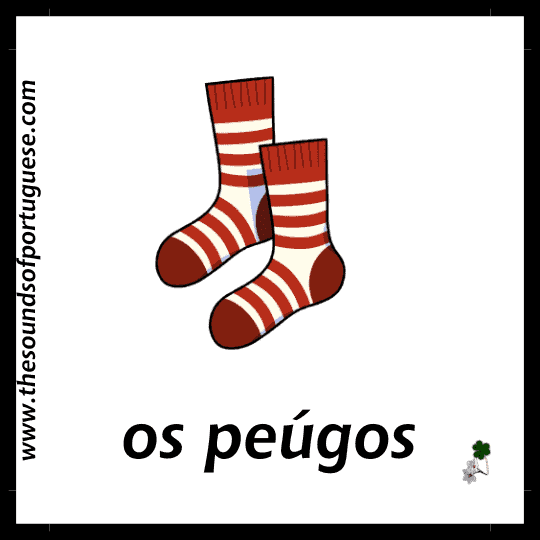
Os peúgos: Socks are worn to keep feet warm. The words “meias” and “peúgas” are also used for socks.
- Example: Ela comprou novos peúgos para o frio. (She bought new socks for the cold.)
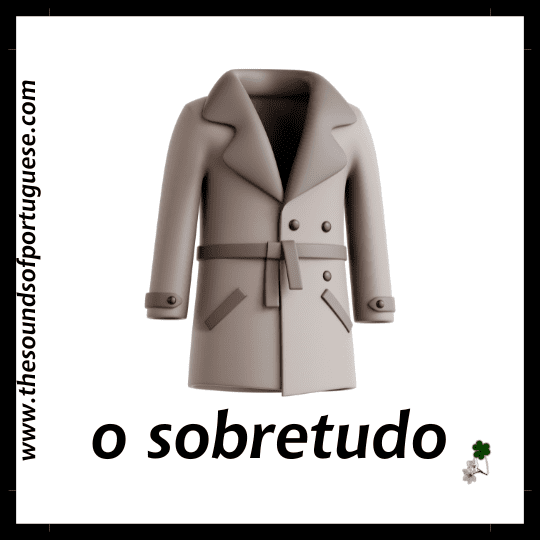
O sobretudo: An overcoat is for colder weather.
- Example: Ela comprou um sobretudo elegante para o outono. (She bought a stylish overcoat for autumn.)
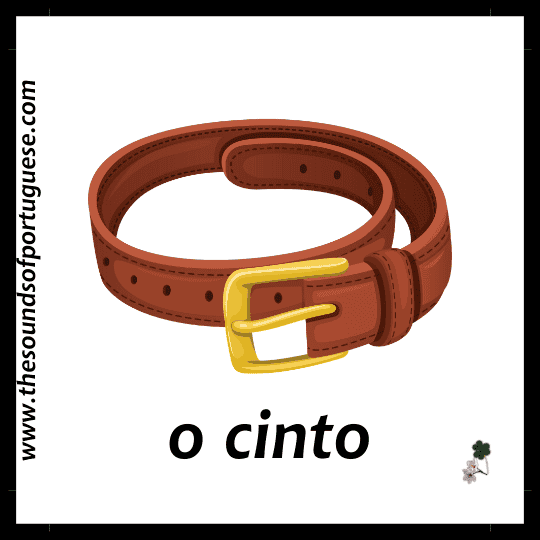
O cinto: A belt is worn to hold trousers or for fashion.
- Example: Ele precisa de um cinto novo. (He needs a new belt.)
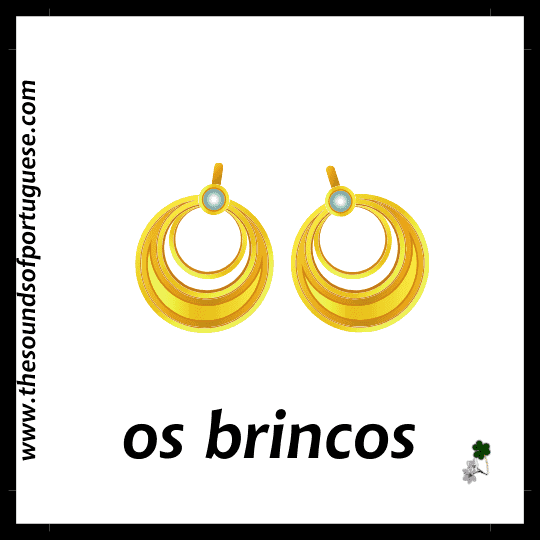
Os brincos: I love earings. I have 9 total piercings.
- Example: Ela adora os seus brincos novos. (She loves her new earrings.)
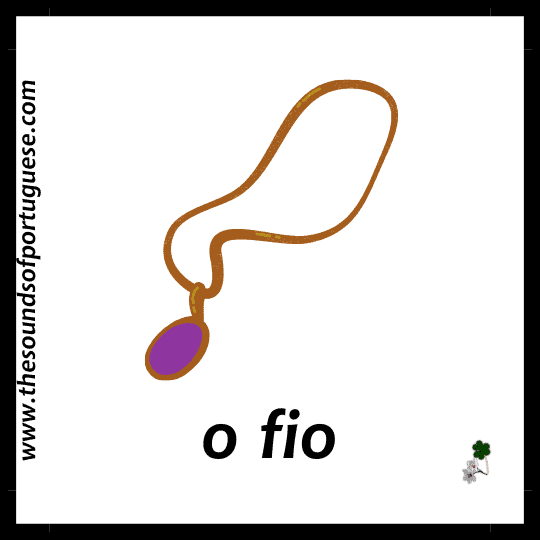
O fio: Many people wear a necklace around the neck.
- Example: Ela usa um fio de ouro. (She wears a gold necklace.)
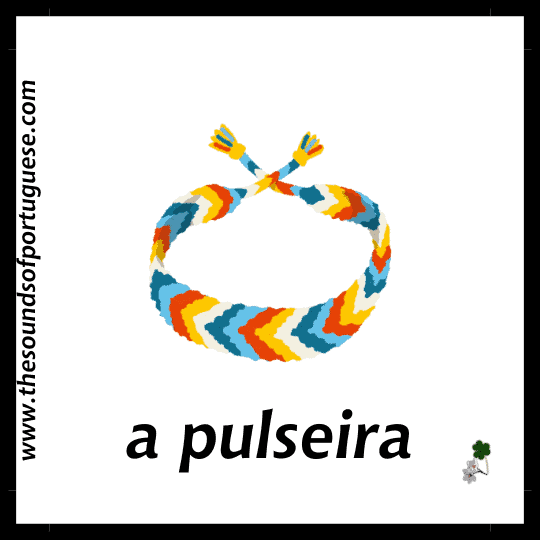
A pulseira: Many people also like wearing a bracelet.
- Example: Ela não usa uma pulseira de prata. (She doesn’t wear a silver bracelet.)
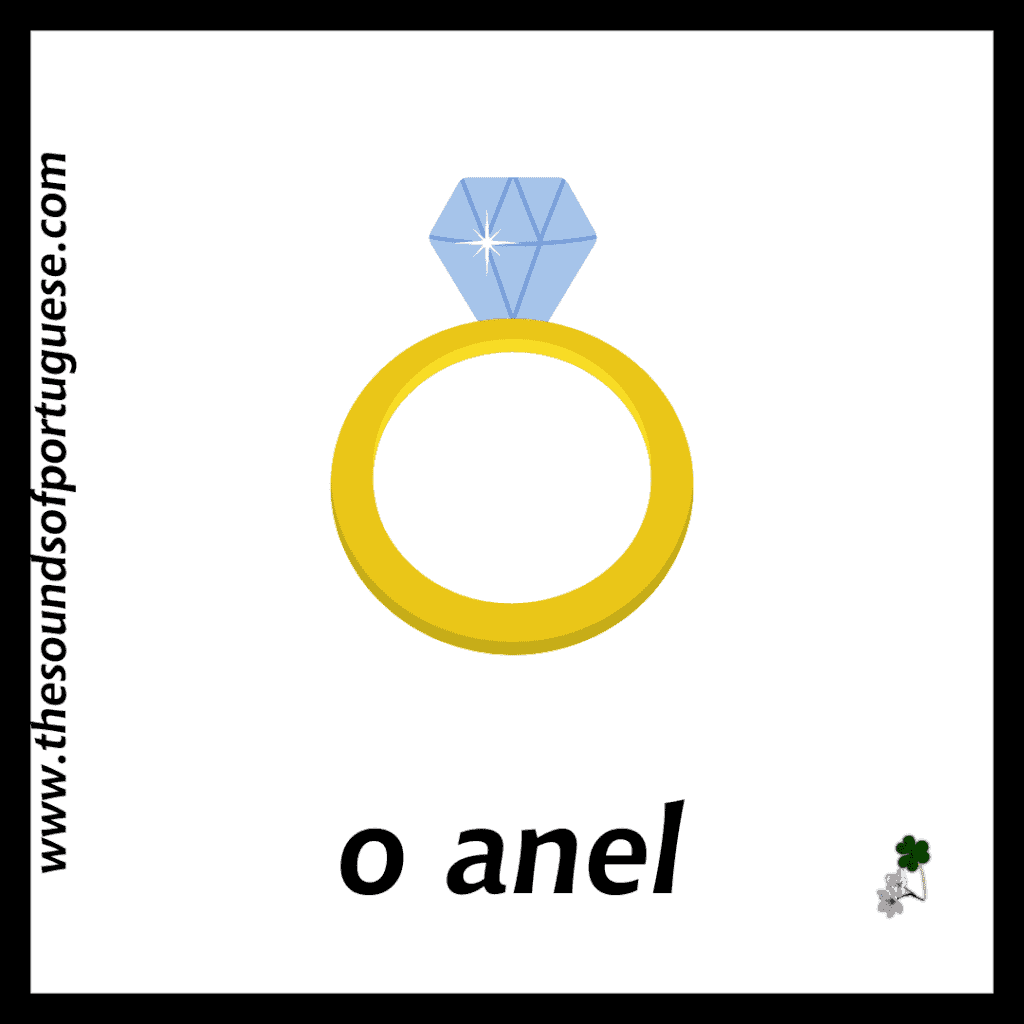
O anel: Lots of people wear them and lots of people don’t 😉
Example: Ele usa muitos anéis. (He wears a lot of rings)
Practice Sentences
- Ele está a usar uma camisa e calças.
- (He is wearing a shirt and trousers.)
- Ela gosta de usar vestidos no verão.
- (She likes to wear dresses in summer.)
- Onde está o teu casaco?
- (Where is your jacket?)
- Preciso de comprar novos sapatos.
- (I need to buy new shoes.)
- Ela comprou uma blusa nova.
- (She bought a new blouse.)
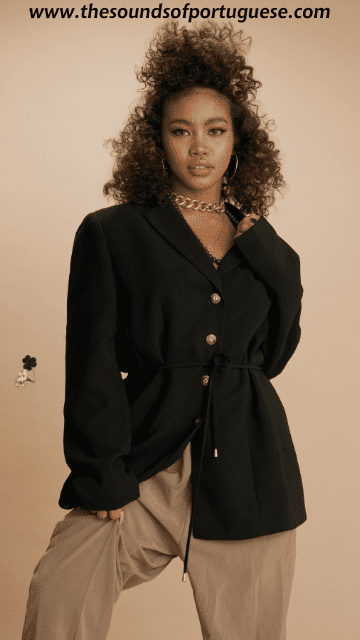
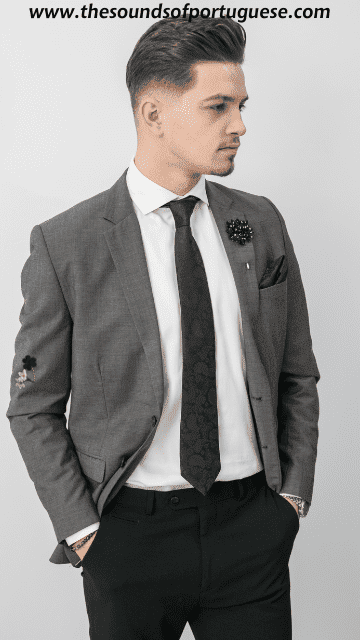
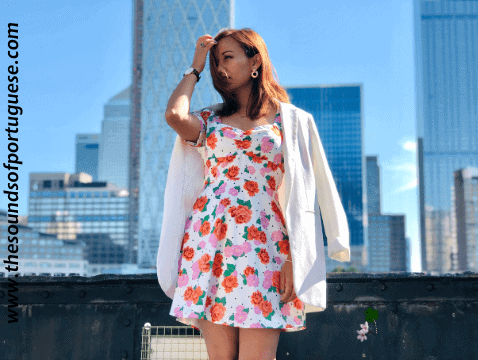
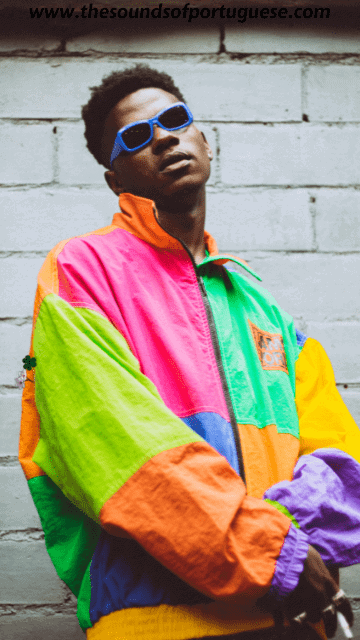
What are they wearing?
Grab a paper and pencil and describe what these people are wearing.
I hope you enjoyed this lesson on everyday clothing in Portuguese from Portugal. Practice these words and sentences to improve your vocabulary and language skills. Até à próxima! (Until next time!)