Dreaming of the day you can small-talk in Portuguese and not be struck by awkward silences and pauses? But you have no clue what to say? Worse – you don’t understand what’s being answered when you do make a successful attempt. Well, this is the post for you!
We use small talk to break the ice when talking to someone we don’t know very well. Or when meeting someone for the first time. It’s also a great way to practice your Portuguese and make meaningful connections when you are here! Small talk is called “conversa fiada” in Portuguese.
In addition to knowing that, the best thing you can do is to relax and be yourself. Listen actively and follow up. However, that’s easier said than done when you don’t know the language well yet. Small talk varies from one social situation to another. On top of that, you may quickly run out of things to say beyond: “What’s your name?”, “Where are you from?” and “What do you do?”. But, have no fear! I will provide you with some examples of what you can say in various scenarios. And tell anxiety to get lost!
7 scenarios for small talk in Portuguese
Num evento social (at a social event)
Então, como é que conhece o Mário? (so, how do you know Mário?)
Está a divertir-se? (Are you having fun/enjoying yourself?)
Está a gostar da festa/do evento? (Are you enjoying/liking the party/event?)
Já experimentou os as empadas da D.Antónia? (Have you tried Donna Antónia’s empadas?)
Parece que precisa de outra bebida. (looks like you need another drink)
É muito agradável aqui, não é? (it’s very pleasant here, isn’t it?)
Adoro o seu vestido! Posso perguntar-lhe onde o comprou? (I love your dress! May I ask where you bought it?)
No escritório, no intervalo (at the office, at break)
Vou fazer um café, quer um? (I’m going to make a coffee, would you like one?)
Já trabalha aqui há muito tempo? (Have you worked here long?)
O que pensa dos novos computadores? (what do you think of the new computers?)
Tem lido alguns livros interessantes ultimamente? (Have read any interesting books lately?)
Tem visto algum programa/filme bom ultimamente? (Have you seen any good program/film lately?)
Ansioso/a para o fim-de-semana? (Looking forward to the weekend?)
Tem sido uma semana longa… (It’s been a long week)
À espera algures (waiting somewhere)
O comboio/o autocarro parece estar atrasado hoje. (The bus/train seems to be late today.)
Não pensei que fosse estar tão ocupado hoje. (I didn’t think it would be so busy today.)
Parece que vai demorar, não é? (It seems like this will take a while, doesn’t it?)
Tenho de me lembrar de não vir aqui às quartas-feiras. (I have to remember to not come here on Wednesdays.)
Há quanto tempo está à espera? (How long have you been waiting?)
Parece que têm as mãos cheias. (Looks like you all have your hands full.)
Falando de eventos actuais (talking about current events)
Viu as notícias ontem? (Did you see the news yesterday?)
Ouviram falar do acidente na estrada nacional? (Did you hear about the accident on the national road?)
Vi hoje na televisão que finalmente vão começar a construir a nova auto estrada. (I saw on the news to day that they are finally starting the new motor way.)
O que pensa sobre a greve de enfermeiros? (What do you think about the nurse’s strike?)
Viu o jogo ontem à noite? (Did you see/watch the game last night?)
Acha que o Sporting/Benfica/Porto/_____ vai ganhar esta noite? (Do you think Sporting/Benfica/Porto/_____ will win tonight?)
Fora para um passeio (out for a walk)
Adoro o cheiro das laranjeiras em flor nesta altura do ano! (I love the smell of the orange tree blossoms during this time of the year!)
Qual é a idade do seu bebé? (How old is your baby?)
Como se chama o seu cão? (What’s your dog’s name?)
Que idade tem o seu cão? (How old is your dog?)
Requested file could not be found (error code 404). Verify the file URL specified in the shortcode.
Está um belo dia para estar ao ar livre, não está? (It’s a lovely day to be out in the fresh air, isn’t it?)
Falando sobre o tempo (talking about the weather)
Está um lindo dia, não está? (It’s a beautiful day, isn’t it?)
Precisamos de chuva./A chuva faz falta. (We need the rain/The rain is needed/missing.)
Dizem que vai fazer frio este fim de semana. (they say it’s going to be cold this weekend.)
O tempo está uma maravilha! (The weather is wonderful!)
O tempo está horrível! (the weather is horrible!)
Que frio que está! (How cold it is!)
No Algarve (in the Algarve):
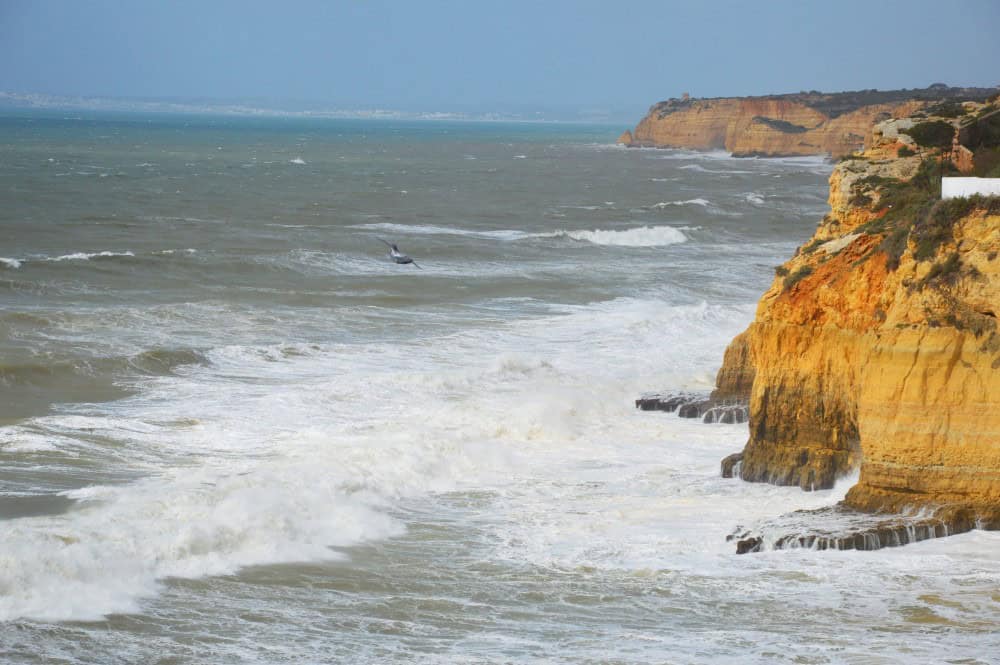
Está levante. (There is “levante”.)
Levante refers to when the wind comes from the East/Southeast/Mediterranean, bringing waves and warm water to the Algarvian beaches. Great for surfing, but not great for swimming. In fact, swimming is not advised/allowed. Please read my post about the safety beach flags in Portugal, so you know when it’s safe and when it’s not.
Falando com os vizinhos (talking to the neighbours)
Como está a família? (How is the family?)
Como foram as férias? (How was your holiday?)
Ouviu o barulho na rua ontem à noite? (Did you hear the noise in the street last night?)
Gosta de limões? Tenho um saco cheio se quiser levar! (Do you like lemons? I have a bag full here if you’d like to take some!)
Conhece alguém que precise de roupa? Tenho um saco para doar. (Do you know anyone who might need clothes? I have a bag to donate.
Quer tomar um chá/café na minha casa? (Would you like to have tea/coffee in my home?)
Experimentei fazer um bolo novo, quer provar? (I tried out making a new cake, would you like to try some?)
***
Many of these can cross over between scenarios, of course and don’t forget my compilation of survival sentences if you get stuck for replies!
Return to
How to Say Things in Portuguese
The Portuguese Learning Hub | Beginner Pathway (A0-A1)
Unidade 1 – Cumprimentar, apresentar-se e conhecer pessoas