

Lent in Portugal is A Quaresma and it starts on Ash Wednesday (Quarta-Feira de Cinzas) and finishes on Holy Thursday (Quinta-Feira Santa), which is the day before Good Friday (Sexta-feira Santa). It’s a religious celebration observed by the Catholic Church in Portugal.
Ash Wednesday is the day right after Shrove Tuesday, or as we call it in Portugal – Carnaval. This day marks the end of all the craziness and revelling of the days before it and starts lent off. (Carnaval Traditions in Portugal)
O Enterro do Entrudo | The Burrial of the Entrudo
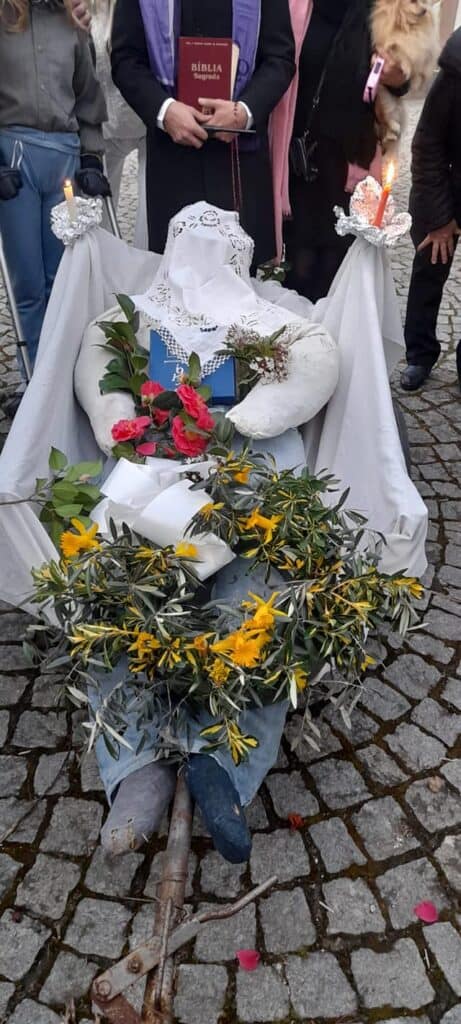
The burial of the Entrudo is the tradition for Ash Wednesday and is very Portuguese. (Some towns have it on Tuesday evening instead) It’s the closing celebration of the excesses of the Carnaval celebrations.
It’s always the people that organize this and it consists of a pretend funeral parade. The funeral is for a life-size dummy or doll as the deceased. Other “characters” present at the funeral include the “inconsolable widows” – a “sister” and a “wife” usually, making witty derogatory and humorous remarks about the deceased to the “priest” and “sacristan” who equally respond sarcastically back.
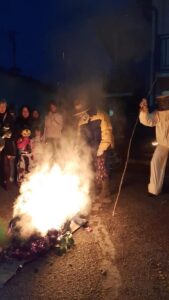
There is even a Last Will and Testament that the doll leaves behind with “tips” on how society can change or improve before the next year. Someone reads the Will in public for all to hear. Then the dummy is lit on fire and cast out to the sea or river to be “drowned”. The significance of this is to purge the soul of bad energy.
Every year this tradition is reviving itself more and more in an attempt to preserve national heritage and fight globalization.
Religious Aspect of Lent in Portugal
In the religious sense, lent is a time of preparation for Easter (Páscoa) and is marked by fasting, abstinence and penitence. And remembering the passion of Christ, known as The Way of the Cross (Via Sacra). This is a pious exercise of prayer practice that is done during Lent, on Fridays, meditating on the suffering of Jesus from Pilate’s court to Mount Calvary. This route is made up of 14 stations.
The word Quaresma comes from the Latin word “Quadragesima” which means the fortieth day. Lent is symbolically 40 days long because it’s representative of the 40 days Jesus Christ spent in the wilderness.
Fasting is a form of penance which consists of the privation of food. In the traditional discipline of the Catholic Church, fasting was accomplished by limiting one’s daily food to one meal, although it was not excluded that one could eat light food at other meal times.

In a more modern and practical sense, this usually translates into one giving something up or abstaining from something for lent. Many people choose to give up a vice like smoking, or wine for instance.
Next, let’s look at some vocabulary you may hear around this time:
(There is no Easter Monday in Portugal)
Do you have a special tradition for Lent in your country?