The Portuguese Folar is the traditional Easter bread in Portugal. It’s made with water, salt, eggs and wheat flour. The shape, content and preparation vary according to the regions of Portugal and go from sweet to salty, in the most diverse forms. In some recipes, an unshelled egg is placed in the centre and cooked next to the bread. Find out what that means in this post!!
Origins
The origins of the Portuguese folar have been lost to time. It’s so old that only one story is associated with it: A Lenda do Folar da Páscoa (The Legend of the Easter Folar).
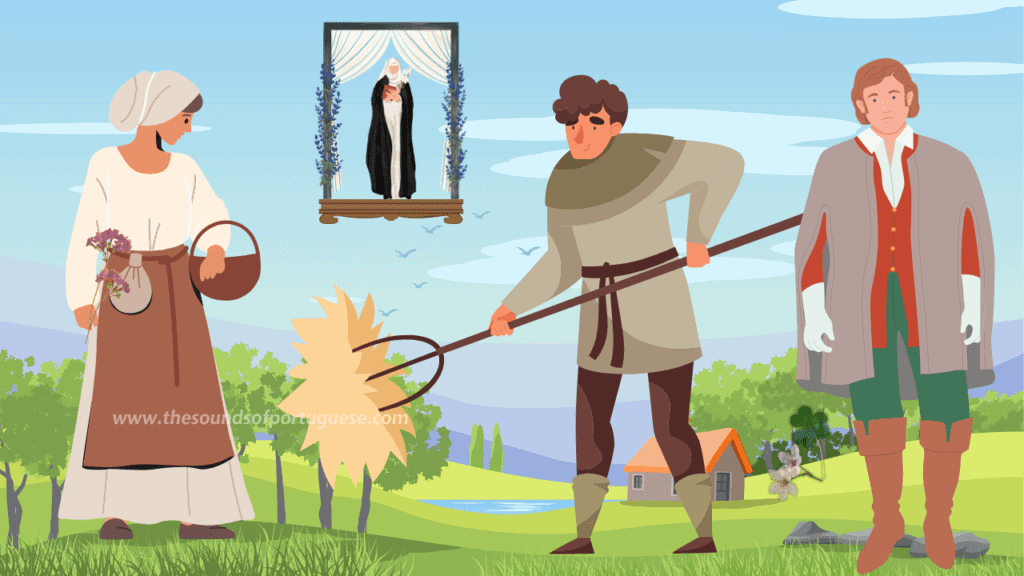
Traditionally, the easter folar is given in exchange for the easter almonds. This exchange traditionally happens between godparents and godchildren. Also part of the tradition is the exchange of flowers: violets for the godmother and an olive branch for the godfather.
Types of Folar
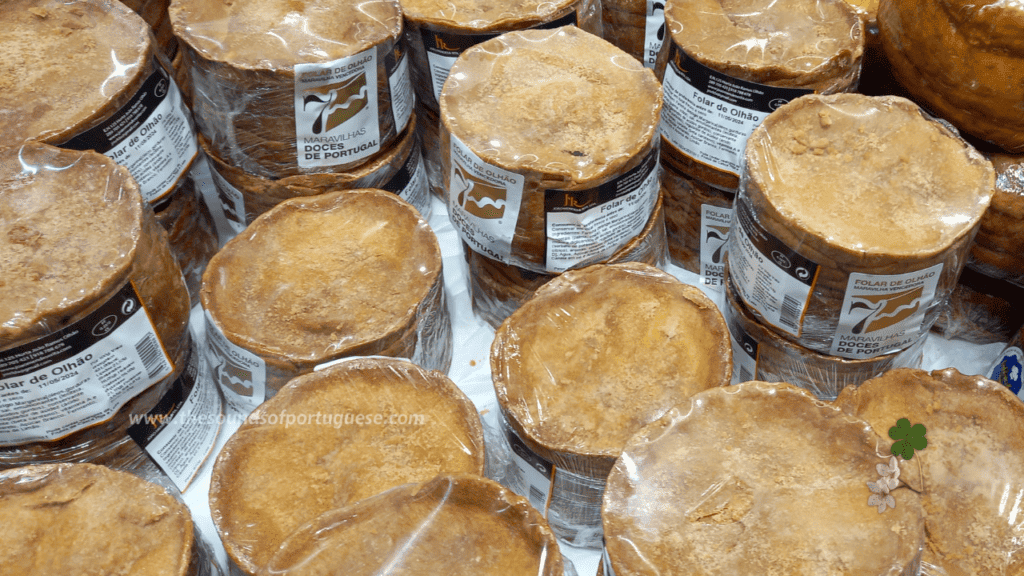
Among the various Portuguese Easter breads, I’ll start with the Algarvian folar, and in particular the folar from Olhão, known as Folar de Folhas.
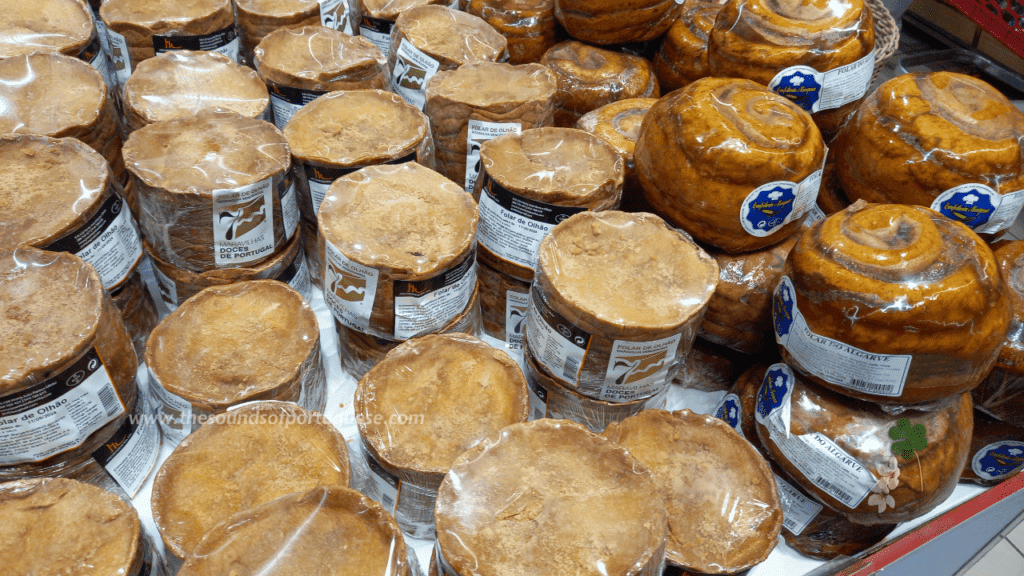
Algarvian Folares (right) and Olhão Folares (left)
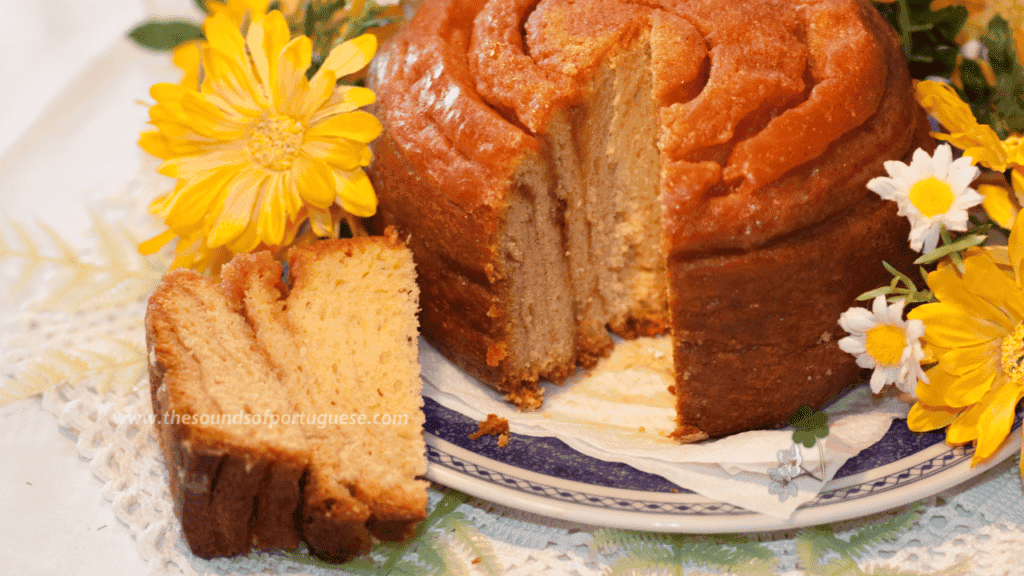
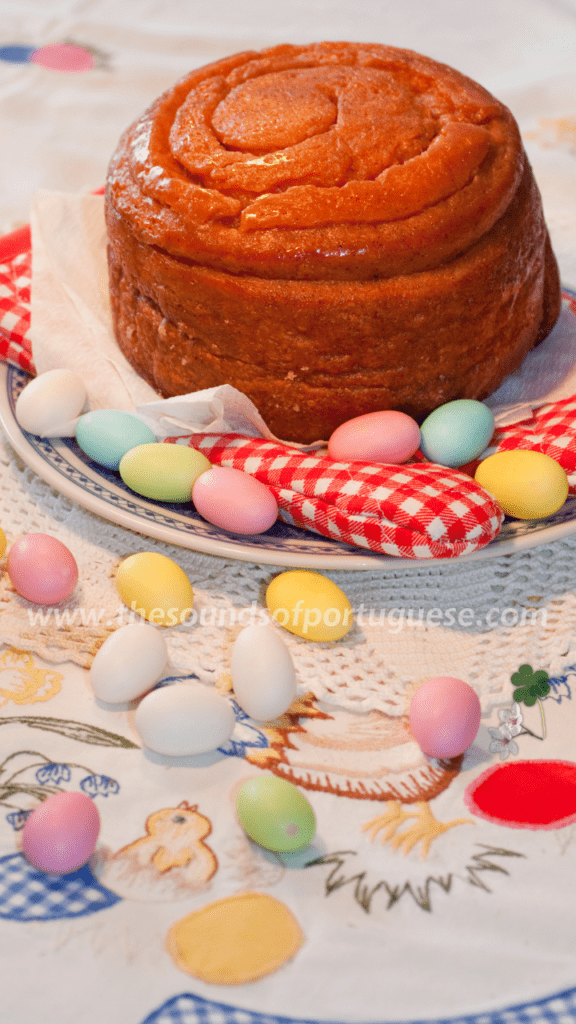

Folar de Folhas
Traditionally made in an old pot, this folar is known for its orange and medronho flavour. However, what truly sets it apart is its unique composition: it features layers overlaid and interspersed with a syrup made of sugar, butter, and cinnamon. The caramelized leaves tend to dry out over time but do not solidify, keeping the dough moist and delicious.


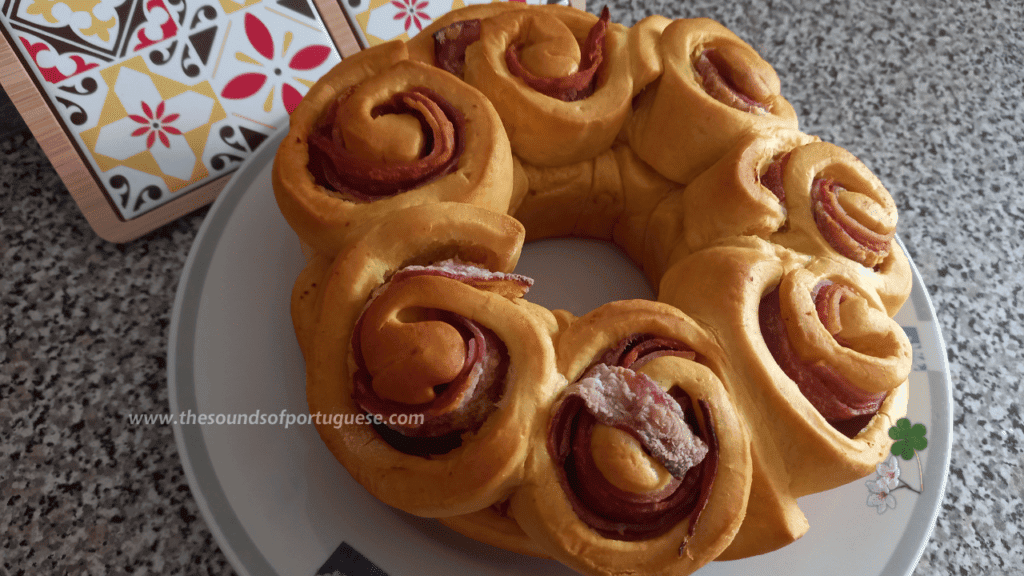
Folar de Trás-os-Montes
This one is a traditional Easter bread from the Trás-os-Montes region of Portugal. It is typically made with flour, eggs, sugar, and sometimes lard or olive oil. What makes it different to the typical folares you see, is it contains cured meats (like chouriço or presunto), bacon.

Below is another version of this that I got from the supermarket this year! It was very tasty 😀
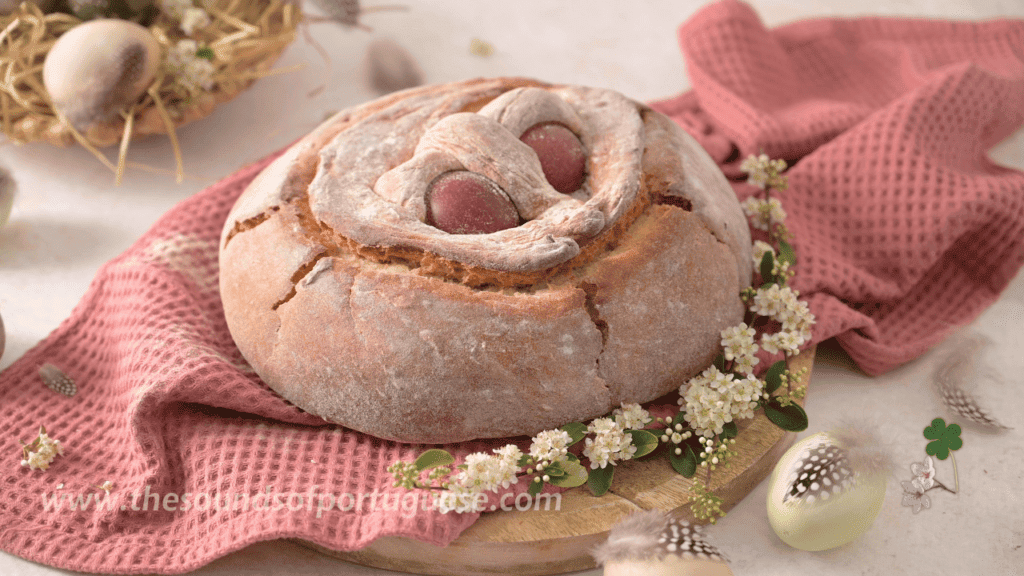
Folar de Ovos
Egg Folar is the traditional gift from godparents to godchildren. It takes centre stage alongside the Lamb dish on the Easter table.
What’s with the Egg?
For Christians, Easter means new life, in this case, the Resurrection of Christ. In other words, it means the passage from death to life. The egg is therefore a metaphor for Christ’s Resurrection.
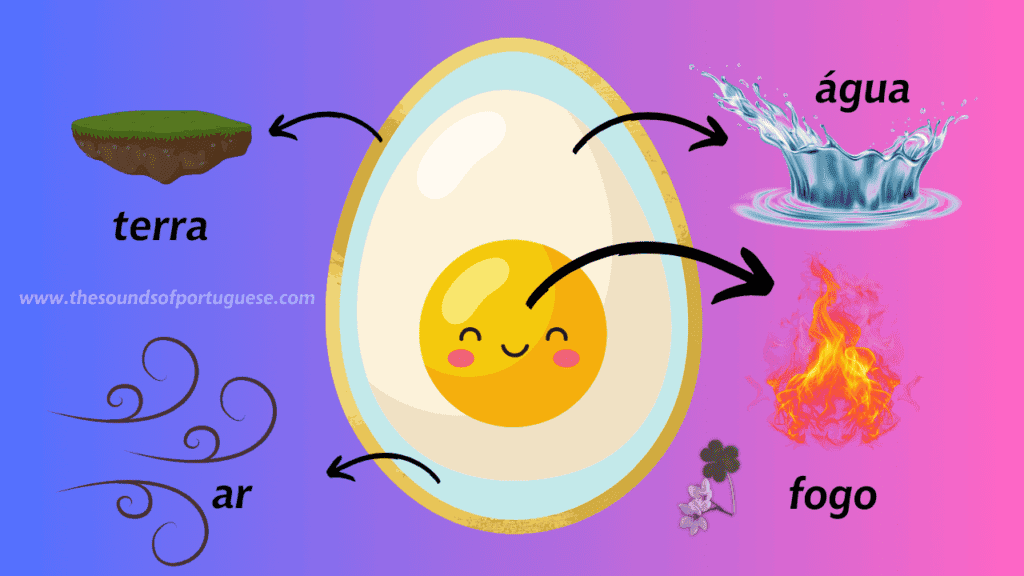
Another view is that the egg represents the circle of life. Another equally interesting idea is that the egg represents the four elements of life: the shell represents Earth; the membrane represents air; the white represents Water and the yolk represents Fire!
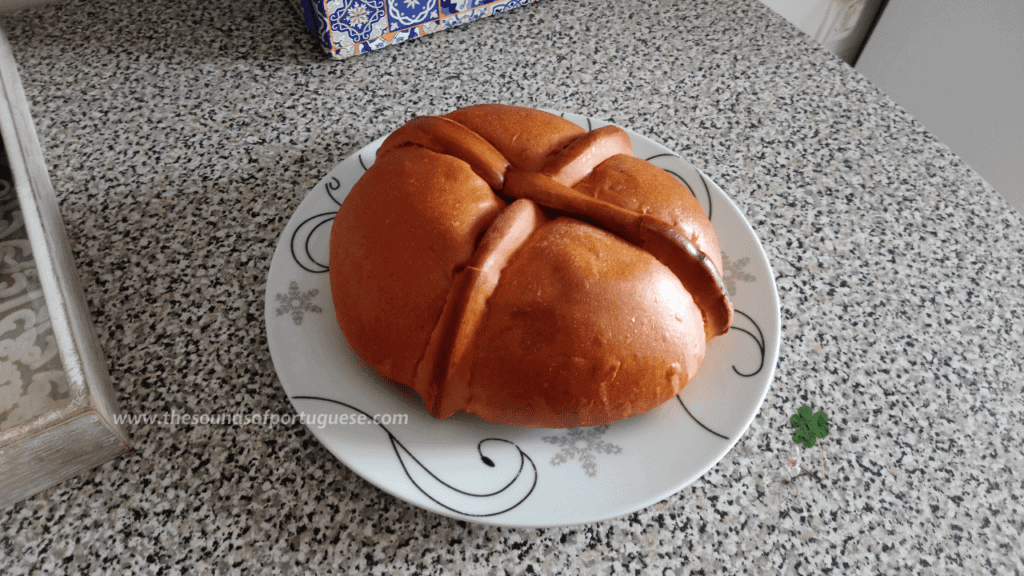
You can also get folares without the egg 🥚
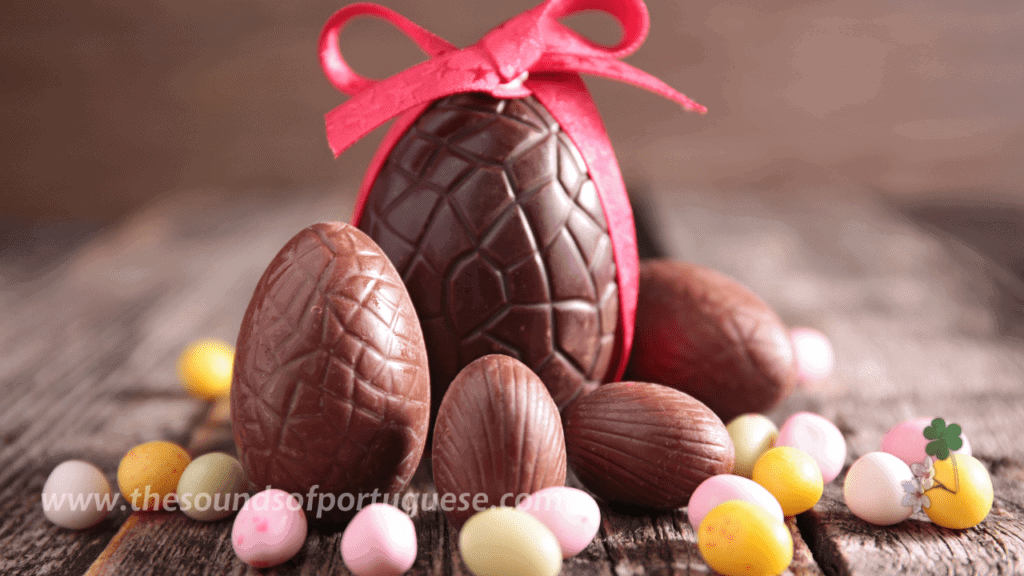
The idea of emptying and filling eggs with chocolate came from France in the 18th century. Later, in other European countries came the elaborate painting and decorating of the eggs which slowly evolved into what we know today.