

October is usually when Portugal begins to feel properly autumnal. The intense heat of summer has gone, the days become noticeably shorter, and the first autumn rains begin to return. In the north and centre of the country, the landscape starts changing colour, while here in the Algarve you can still enjoy plenty of warm, sunny days.
October is also a month of important historical and cultural traditions. Portugal celebrates the anniversary of the establishment of the Republic, autumn harvests begin to appear, and towards the end of the month people start preparing for Dia de Todos os Santos and Halloween (kind of).
In this guide, you’ll discover what October is like in Portugal, learn about 5 de Outubro, explore Portuguese autumn vocabulary and traditions, and find out what happens when the clocks change.
- 🌦️ Weather in Portugal in October
- 🇵🇹 5 de Outubro – Implantação da República
- 🍇 Autumn Harvests in Portugal
- 🌰 The Arrival of Chestnut Season
- ☀️ 13 de Outubro – O Milagre do Sol
- 🎃 Halloween and Dia de Todos os Santos
- 🕐 The Clocks Go Back
- 🇵🇹 Portuguese Vocabulary for October
- Pronunciation Video with relevant vocabulary for October:
- FAQs About October in Portugal
🌦️ Weather in Portugal in October
October is officially outono (autumn) in Portugal, but the weather can vary considerably depending on where you are in the country.
Average temperatures:
- North (Porto, Braga): 13–22°C
- Central (Lisboa): 16–24°C
- South (Algarve): 17–26°C
October is generally cooler and wetter than September. Rain becomes more frequent, particularly in the north and centre, although sunny days are still common.
In the Algarve, October can still be surprisingly warm. You can still have beautiful beach days, particularly earlier in the month, although evenings are cooler and the weather becomes increasingly unpredictable as the month progresses. Having said that, some years are more unpredictable; in 2025, we had a LOT of rain!
One of the biggest changes you’ll notice is the shorter days. After the long summer evenings, the sun sets noticeably earlier.
Is October a good time to visit Portugal?
If you don’t need guaranteed summer weather, October can be an excellent month to visit Portugal.
- Fewer tourists than during the summer
- Lower prices than in the peak summer months
- Pleasant temperatures for sightseeing
- Autumn colours in many parts of the country
- Warm days can still occur in the Algarve
- More frequent rain, particularly later in the month
It’s a particularly good time to explore Portugal’s towns and cities without the intense heat of July and August. Just bring a light jacket (fleecy kind work well!) and don’t forget an umbrella!
🇵🇹 5 de Outubro – Implantação da República
5 de Outubro is a national public holiday in Portugal. It marks the Implantação da República, the establishment of the Portuguese Republic.
On 5 October 1910, the Portuguese monarchy was overthrown, and Portugal became a republic. King Manuel II left Portugal, bringing centuries of monarchy to an end.
The establishment of the Republic was an important turning point in Portuguese history and is still commemorated every year on 5 October.
For Portuguese learners, it is also a useful opportunity to learn some historical vocabulary:
- a República – republic
- a monarquia – monarchy
- o rei – king
- o governo – government
- a revolução – revolution
- o feriado – public holiday
🍇 Autumn Harvests in Portugal
October is an important month for colheitas and autumn produce in Portugal.
Although grape harvesting often begins in September, the wider harvest season continues into autumn. Across Portugal, you’ll find seasonal produce such as grapes, apples, pears, pumpkins and, as the weather gets cooler, chestnuts.
Portugal’s agricultural traditions are closely connected to the seasons, and autumn is a particularly good time to discover vocabulary related to food, farming and the countryside.
Useful autumn vocabulary:
- a colheita – harvest
- a vindima – grape harvest
- as castanhas – chestnuts
- a abóbora – pumpkin
- a maçã – apple
- a pera – pear
- o campo – countryside/field
- a quinta – farm
🌰 The Arrival of Chestnut Season
I love this time of the year because one of the unmistakable signs of autumn in Portugal is the arrival of castanhas – chestnuts.
As the weather gets cooler, you’ll begin to see chestnuts appearing in markets and shops, and eventually you’ll smell them being roasted in the streets.
Castanhas assadas – roasted chestnuts – are a traditional autumn treat in Portugal.
Chestnuts become particularly important in November, when Portugal celebrates one of my favourite holidays: São Martinho. This celebration comes with magustos, roasted chestnuts and, traditionally, água-pé. We’ll explore these traditions in the November guide.
☀️ 13 de Outubro – O Milagre do Sol
13 October is associated with the Milagre do Sol, the final major apparition of Nossa Senhora de Fátima in 1917.
According to accounts of the event, thousands of people gathered at Cova da Iria, near Fátima, where they witnessed what became known as the “Miracle of the Sun”.
Fátima subsequently became one of Portugal’s most important religious pilgrimage sites.
For advanced Portuguese learners, this is an excellent topic for learning vocabulary related to religion, history and pilgrimage.
- a aparição – apparition
- o milagre – miracle
- a fé – faith
- o peregrino – pilgrim
- a peregrinação – pilgrimage
Advanced learners: You can also explore the premium lesson for a deeper Portuguese-language study of this story.
🎃 Halloween and Dia de Todos os Santos
Halloween has become increasingly popular in Portugal, particularly among children and young people dressing up and “doçura ou travessura” (trick or treat). But it is not traditionally the main celebration associated with the end of October.
Halloween is generally still called Halloween in Portuguese, while Dia de Todos os Santos means All Saints’ Day and takes place on 1 November.
Traditional customs associated with this period vary considerably from region to region. In most places, the 1st of November is associated with visiting cemeteries and remembering deceased family members.
For younger generations, however, Halloween has increasingly become an opportunity for costumes, parties, decorations and doçuras ou travessuras.
Discover more about how this increasingly popular celebration is experienced in Portugal:
Learn with Portuguese:
🕐 The Clocks Go Back
On the last Sunday of October, Portugal changes from summer time to winter time.
The clocks go back one hour, giving us an extra hour of sleep that night. The downside? The evenings become noticeably darker much earlier.
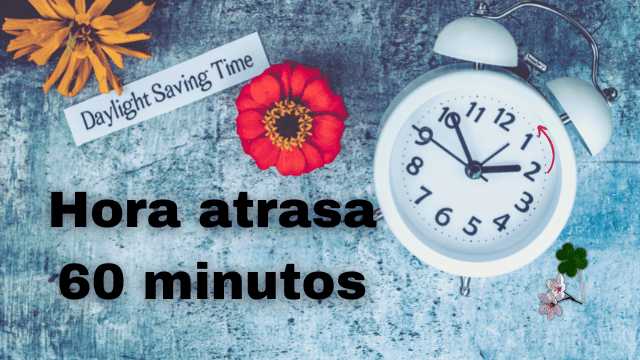
This is also a useful opportunity to learn some everyday Portuguese:
- adiantar o relógio – to put the clock forward
- atrasar o relógio – to put the clock back
- a hora de verão – summer time
- a hora de inverno – winter time
- escurecer – to get dark
🇵🇹 Portuguese Vocabulary for October
Here are some useful words and expressions connected with October in Portugal:
- o outono – autumn
- a chuva – rain
- a nuvem – cloud
- o vento – wind
- as folhas – leaves
- a castanha – chestnut
- a colheita – harvest
- a vindima – grape harvest
- o feriado – public holiday
- a República – Republic
- o relógio – clock
- escurecer – to get dark
- arrefecer – to cool down
Pronunciation Video with relevant vocabulary for October:
If you’re learning European Portuguese, October gives you a wonderful mix of vocabulary connected with weather, history, food, nature and everyday life.