

A Modern Celebration alongside Portuguese Traditions
Olá pessoal! Ever wondered how Halloween is celebrated in Portugal? As someone with both Irish and Portuguese heritage, I find this topic fascinating. When I moved to Portugal with my parents in 1990, Halloween in Portugal was unknown here. Over the years, it has gained popularity among children but remains a controversial cultural import.
This celebration is commonly known in Portugal as Halloween or o Dia das Bruxas (Witches’ Day). The English word Halloween comes from All Hallows’ Eve, meaning the eve of All Saints’ Day. Halloween has roots in a mixture of older Gaelic seasonal traditions and Christian observances, and its modern form has developed differently in different parts of the world.
In Portugal, Halloween takes place alongside much older Christian traditions associated with All Saints’ Day and All Souls’ Day. These traditions give this time of year a very different cultural context from that found in countries where Halloween has become the dominant celebration. These influences shape how people celebrate Halloween. So, gather ’round as we explore this blend of ancient customs and religious influences that define Halloween in Portugal. 🎃
🕯️Halloween in Portugal vs. Samhain in Ireland🎃
Halloween is sometimes associated with the ancient Gaelic festival of Samhain, while its name and date are closely connected to the Christian observance of All Hallows’ Eve, the evening before All Saints’ Day. Over time, these traditions became intertwined in different ways.
Interestingly, Portugal also has its own long-standing traditions surrounding the dead and the period leading up to All Saints’ Day. However, modern Halloween as it is celebrated in Portugal today is largely a more recent cultural import, influenced particularly by American popular culture, television, films and, more recently, social media.
In Portugal, Halloween takes place alongside strong Catholic traditions associated with All Saints’ Day and All Souls’ Day. These days honour saints and pray for the departed. They carry deep religious significance.
Halloween in Portugal: a Modern Phenomenon
🦇 The Good and the Bad 🦇
Fast-forward to Portugal today, and Halloween, or o Dia das Bruxas, has become increasingly visible. Although it was once largely unfamiliar in Portugal, it began gaining popularity towards the end of the 20th century, particularly through American popular culture, television and cinema. More recently, social media has helped it spread even further.
Now, it’s a fun time for children, filled with costume parties, trick-or-treating, and spooky decorations. Yet it coexists alongside our deeply rooted Catholic holy days.
The Days
All Saints’ Day on November 1st and All Souls’ Day on November 2nd are still of great importance in Portugal. In Portuguese, these are known as O Dia de Todos os Santos and O Dia dos Fiéis Defuntos, also commonly called O Dia de Finados. These Christian observances are part of a much wider tradition of remembering the dead around the world. In Mexico, for example, the same period of the Christian calendar has developed into the rich and distinctive tradition known as Día de los Muertos. Although the traditions are not identical, they share historical connections through the Catholic calendar and the practice of commemorating the dead.
o morto – the dead person
os mortos – the dead
falecido – deceased
finados – the departed/dead
cemitério – cemetery
campas – graves
rezar pelos mortos – to pray for the dead
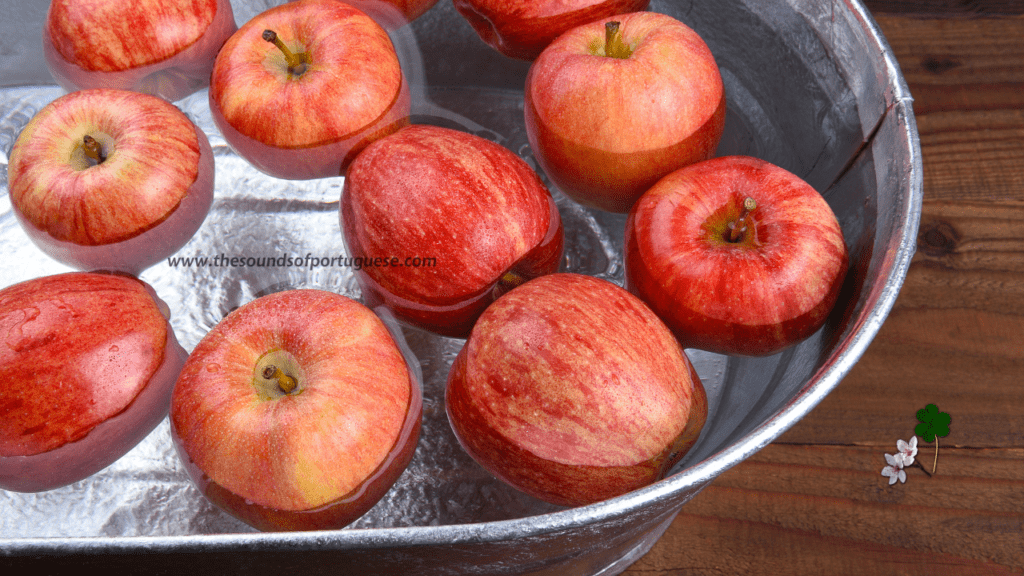
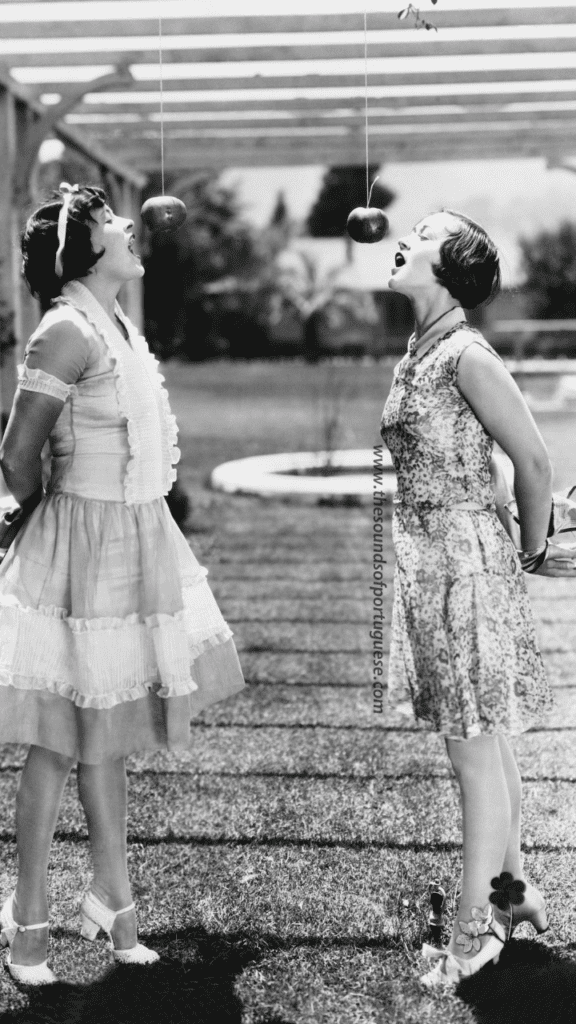
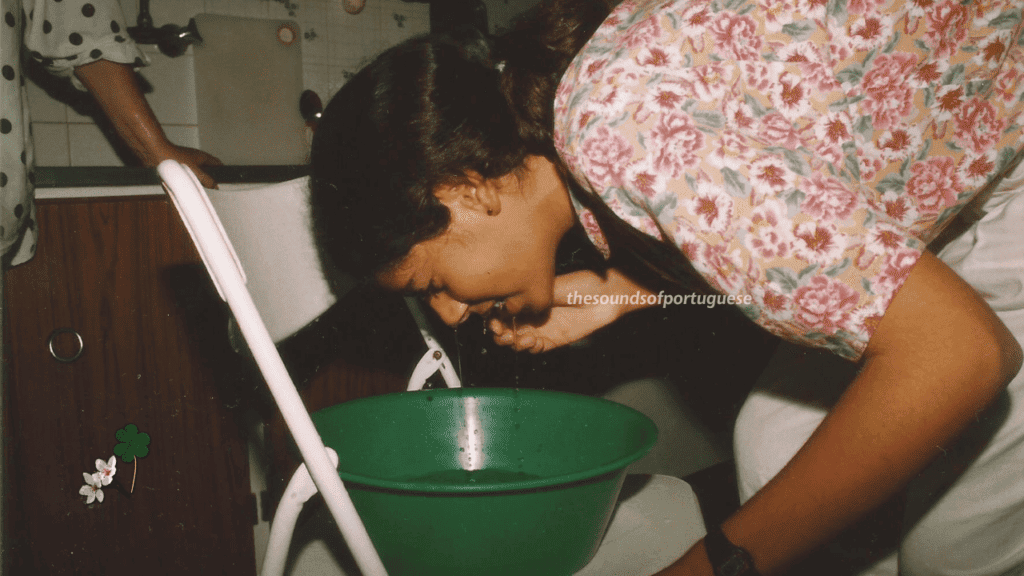
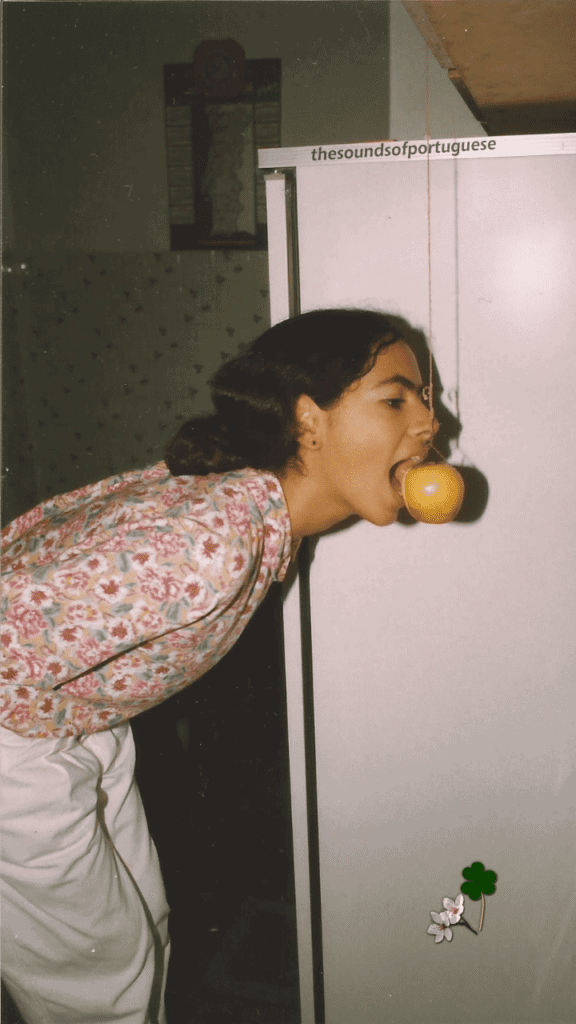
As I said in the intro, growing up in Portugal during the 90s, Halloween was mostly unheard of. The closest my brother and I got to a Halloween party was in our childhood home in Santa Luzia, where we played traditional Irish games like Snap Apple and Bobbing for Apples. It was a fun nod to our Irish heritage rather than a reflection of Portuguese customs. The Portuguese way was not possible for us to honour, as all our family lives in Ireland and thus all the cemeteries with relatives are there. Read more about the Portuguese All Saints traditions here.
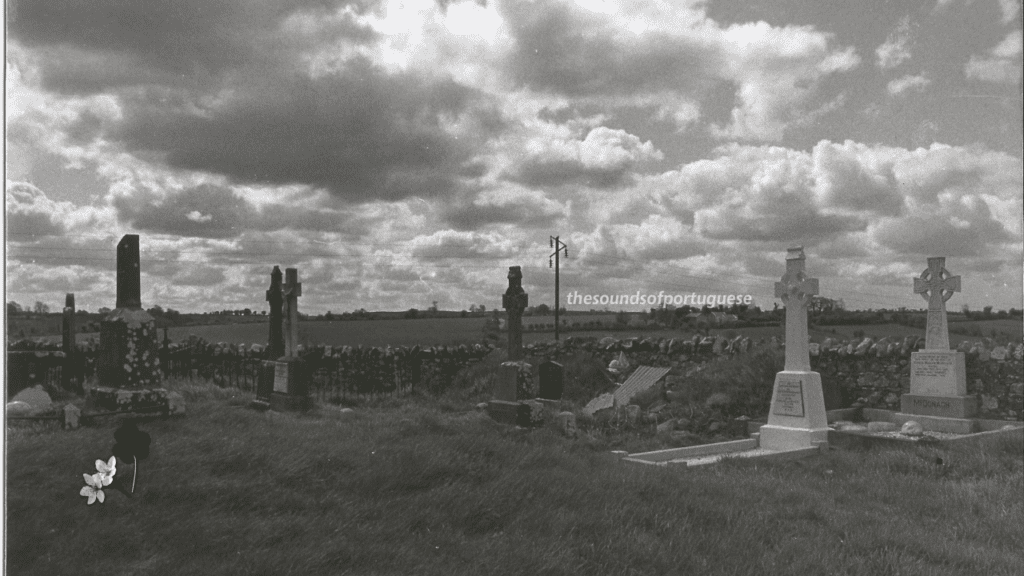
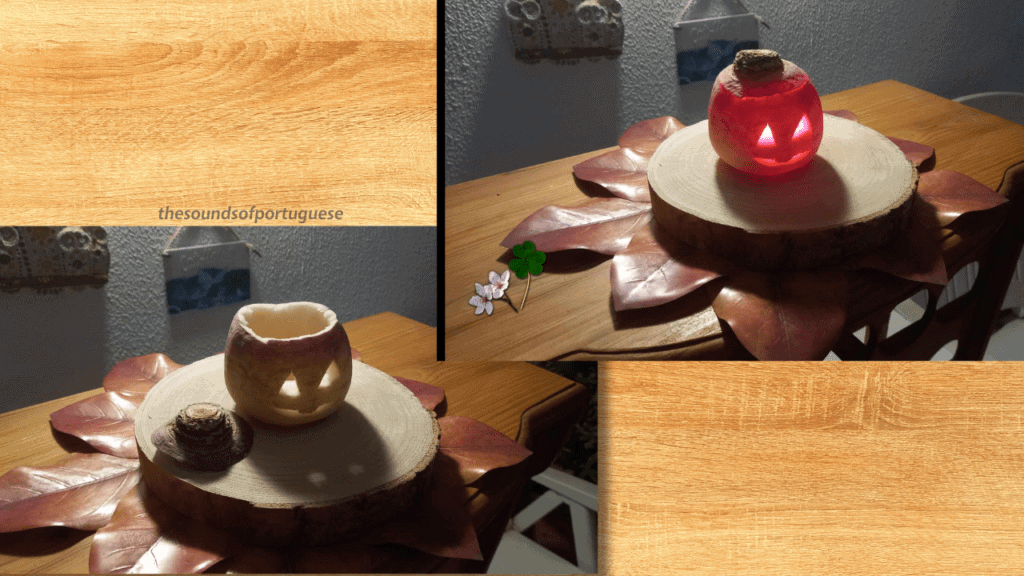
I remember Mammy saying that they used to make them from swedes/turnips in Ireland. Pumpkins weren’t the traditional choice, which is one reason my 2024 Portuguese attempt used a nabo instead.
🥖 Pão por Deus: Portugal’s own tradition of asking for treats
Long before Halloween became popular in Portugal, children already had their own tradition of going from door to door around All Saints’ Day.
Although it may look similar to trick-or-treating, Pão por Deus has a different history and cultural meaning.
Pedir o Pão por Deus is a traditional Portuguese custom in which children visit houses and ask for food or other treats. Traditionally, they might receive bread, cakes, nuts, fruit or other seasonal foods. Today, sweets and money are also common.
In some regions, children recite little verses or songs when they arrive at a door.
For language learners, the expression is particularly interesting: pedir o Pão por Deus literally means “to ask for God’s bread” or, more literally, “requesting bread through God”.
While Halloween is a relatively recent cultural import to Portugal, its popularity is growing, particularly among children and families. At the same time, it remains controversial. Some people see it simply as harmless fun, while others regard it as an unwelcome imported tradition that competes with or overshadows Portugal’s own cultural and religious traditions.
Key similarities and differences
When comparing Halloween in Portugal with traditions in Ireland, the USA and other countries, there are intriguing similarities as well as important differences. The celebrations take place around the same period of the year, but their meanings, customs and religious or cultural contexts vary considerably.
One of the most important differences is the role that religion and remembrance of the dead play in different traditions.
In Portugal, Halloween exists alongside the strong Catholic traditions associated with All Saints’ Day and All Souls’ Day. These days are dedicated to honouring the saints and praying for the souls of the departed, and they carry a deeply religious tone.
In contrast, Halloween in the USA has become a secular, commercialised holiday focused on costumes, trick-or-treating, and festive fun, with little connection to its spiritual origins.
Ireland, meanwhile, has retained a particularly strong Halloween tradition, with many customs that have Irish roots alongside influences from modern international Halloween culture.
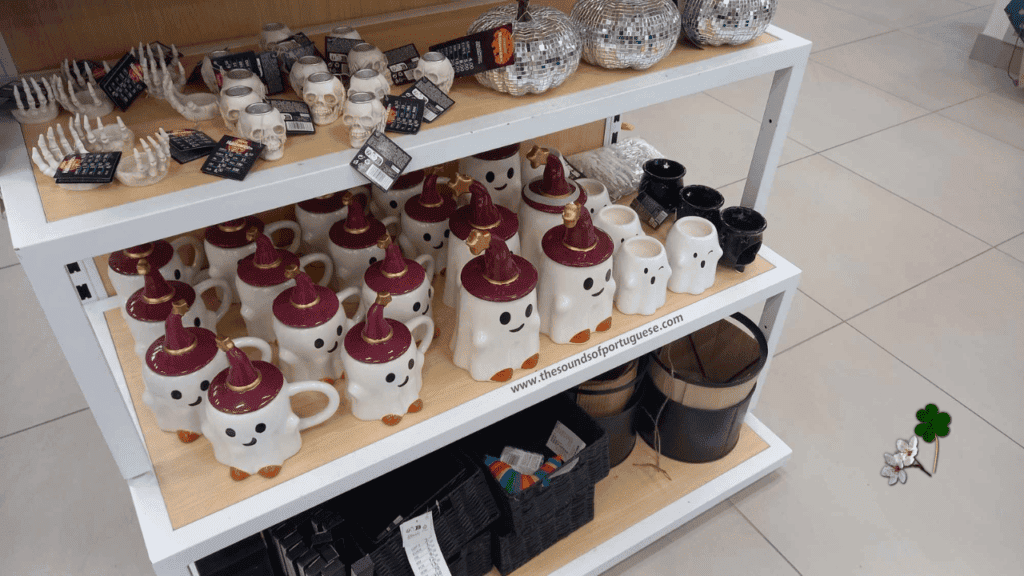
Seeing supermarkets stocked with Halloween-themed products and costume parties in Portugal is becoming more common every year. It’s a far cry from the early days when this holiday was practically non-existent, but it’s clear that Halloween in Portugal is finding its own modern identity.
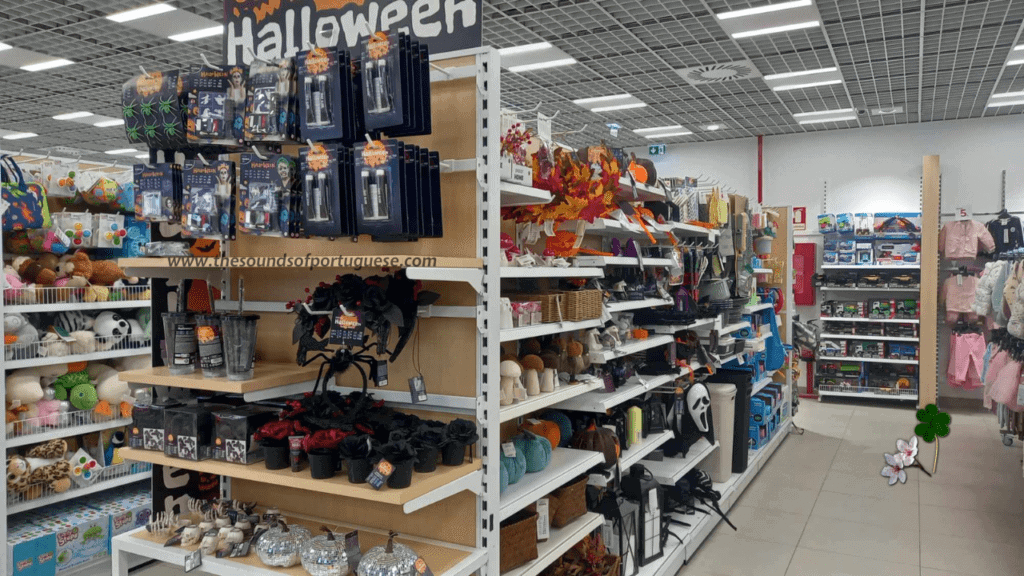
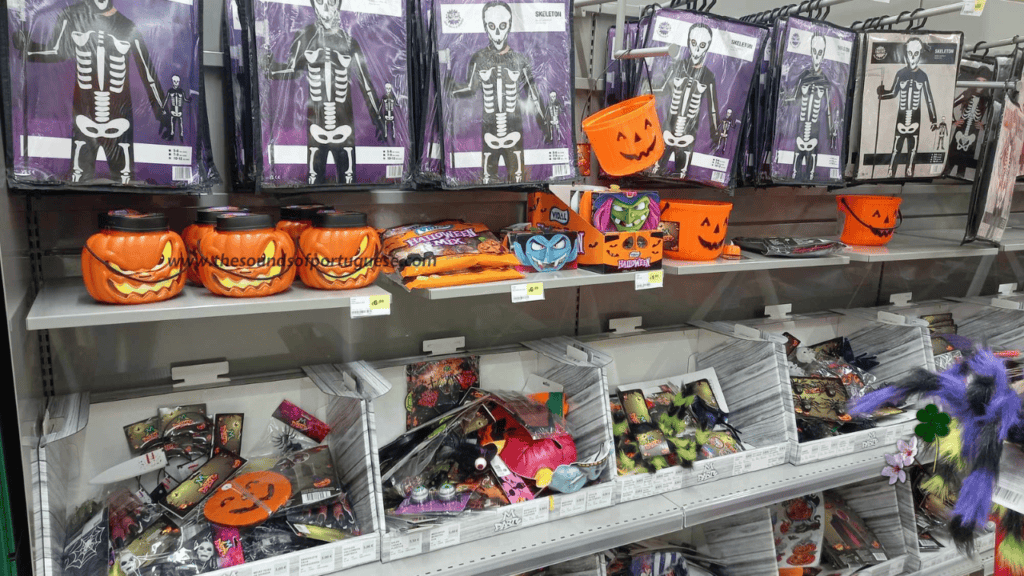
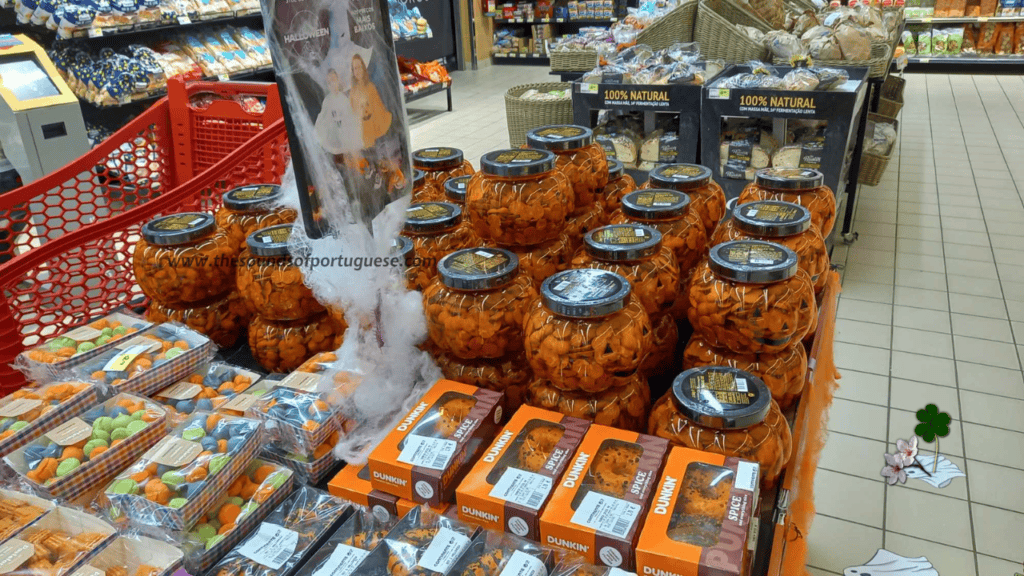
If you would like to know more about how we celebrate this time of the year, read my post on O Dia Todos os Santos (All Saints’ Day)
🎃 So, is Halloween Portuguese?
Not really; at least not in its modern form. Halloween as celebrated in Portugal today is a relatively recent cultural import, strongly influenced by international popular culture. But that doesn’t mean Portugal had no traditions associated with this time of year. O Dia de Todos os Santos, o Dia dos Fiéis Defuntos and pedir o Pão por Deus all have much deeper roots in Portuguese culture.
So if you see children dressed as witches and vampires in Portugal on 31 October, don’t assume you’re seeing an old Portuguese tradition. You’re seeing a newer celebration living alongside traditions that have been part of Portuguese life for centuries.
Related Posts for Further Reading
- O Dia de Todos os Santos
- Portuguese Video Lesson on Halloween and All Saints Day
- 13 Superstitions in Portugal
- November in Portugal
- Estrelinhas de Figo
- October in Portugal
If you’re learning European Portuguese, September gives you a wonderful mix of vocabulary connected with school, food, wine, festivals, seasons and everyday Portuguese life.