
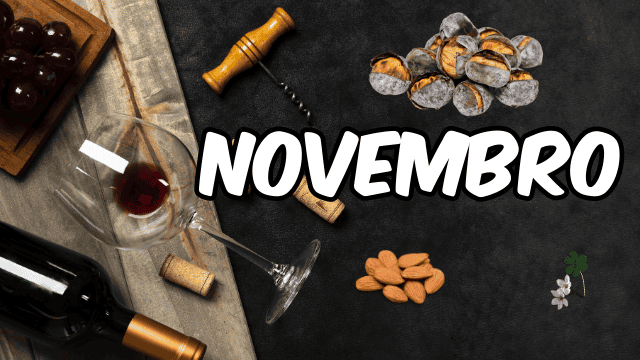
November in Portugal is one of my favourite months! It’s a month of tradition, remembrance and seasonal celebrations. From All Saints’ Day and All Souls’ Day to São Martinho, roasted chestnuts and new wine, November brings together family, faith, food and the changing seasons.
🌦️ Weather in Portugal in November
November marks a noticeable change in the weather across Portugal. Temperatures become cooler, rainfall increases, and the days are shorter, although Portugal can still have plenty of mild and sunny days.
The weather varies considerably from north to south. Northern Portugal tends to be cooler and wetter, while the Algarve generally remains milder and sunnier.
Typical November conditions include:
- 🌡️ Cooler temperatures – especially in the mornings and evenings
- 🌧️ More rain – November is one of the wetter months in many parts of Portugal
- ☀️ Mild sunny days – particularly in southern Portugal
- 🌬️ Cooler evenings – making it a good time for a warm coat or jumper
- 🌰 Chestnut season – perfectly timed for São Martinho!
For language learners, November is also a useful month for learning weather vocabulary:
Hoje está frio. – It’s cold today.
Está fresco. – It’s cool/crisp.
Está a chover. – It’s raining.
Hoje está nublado. – It’s cloudy today.
Está sol. – It’s sunny.
Está vento. – It’s windy.
Hoje está ventoso. – It’s windy today. (less common in everyday speech)
🕯️ 1st November: O Dia de Todos os Santos
O Dia de Todos os Santos (All Saints’ Day)
We celebrate O Dia de Todos os Santos on the 1st of November, and it is an important date in the Portuguese calendar.
Traditionally, families visit cemeteries to clean and decorate the graves of relatives with flowers. It is also a time for remembering family members who have died and, for many Portuguese people, attending Mass.
Aniversário do Terramoto e Tsunami de 1755
November 1st is also the anniversary of the devastating 1755 Lisbon earthquake and the tsunami that followed, which struck Portugal on All Saints’ Day.
The disaster had a profound effect on Lisbon and on Portuguese history, and its anniversary remains an important date to remember.
🕯️ 2nd November: O Dia dos Fiéis Defuntos
All Souls’ Day
O Dia dos Fiéis Defuntos always falls on the 2nd of November, and it’s when we remember and pray for those who have died.
We also call it Dia de Finados. As with All Saints’ Day, visiting cemeteries and caring for family graves is an important tradition for many Portuguese families.
These traditions form part of the wider cultural context surrounding the end of October and beginning of November in Portugal. They are also part of the reason Halloween in Portugal exists alongside much older Portuguese traditions of remembrance.
🌰 11th November: São Martinho
Saint Martin’s Day
O Dia de São Martinho is one of Portugal’s (and also mine) best-loved autumn traditions.
The celebrations are associated with magustos, gatherings where people eat roasted chestnuts, drink água-pé or vinho novo, and enjoy one another’s company.
There is even a Portuguese expression associated with the tradition:
No dia de São Martinho, vai à adega e prova o vinho.
On Saint Martin’s Day, go to the wine cellar and taste the wine.
Another expression you may hear around this time of year is “Verão de São Martinho”, referring to a spell of unusually warm, sunny weather around Saint Martin’s Day.
🧸 20th November: O Dia Nacional do Pijama
National Pyjama Day
O Dia Nacional do Pijama is a Portuguese initiative that takes place on 20 November.
Children go to school wearing their pyjamas and take part in activities designed to raise awareness of children’s rights and the importance of family.
📅 Other November dates
November also includes a few international celebrations and seasonal dates that you may encounter in Portugal.
🛍️ Black Friday
Black Friday has become a big part of November shopping in Portugal, with many shops and websites offering promotions throughout the month. In fact, don’t be surprised if Black Friday seems to last for weeks rather than a single Friday! 😂
You may see expressions such as Black Friday, “Black Friday Festival” and even “Black Friday XXL” used by Portuguese businesses.
This is also a nice opportunity for you to notice how English words and expressions are commonly used in Portuguese advertising and everyday life.
🦃 What about Thanksgiving?
Thanksgiving isn’t a Portuguese holiday, but you’ll increasingly see Thanksgiving dinners and events in Portugal, particularly in areas with large American and international communities.
Planning to celebrate it yourself? Stock up on green beans (feijão verde)! Trust me. 😂
Advent
Advent sometimes begins in November, depending on the year, and marks the beginning of the Christmas season.
👉 Read more about Advent in Portugal →
Useful Portuguese vocabulary
November is a great month for learning vocabulary connected with family, remembrance, religion, autumn and food.
| Portuguese | English |
|---|---|
| novembro | November |
| Todos os Santos | All Saints’ Day |
| Fiéis Defuntos | All Souls’ Day |
| finados | the departed / the dead |
| cemitério | cemetery |
| as campas | the graves |
| flores | flowers |
| castanhas | chestnuts |
| magusto | chestnut gathering / celebration |
| vinho novo | new wine |
| água-pé | a traditional young wine |
| adega | wine cellar |
| outono | autumn |
November is a month that brings together some of the most distinctive aspects of Portuguese culture: remembrance, family, religious tradition, food, wine and seasonal celebrations. From the solemnity of All Saints’ and All Souls’ Days to the warmth of a November magusto, there is much more to November in Portugal than the arrival of colder weather.