

Are You Tired of Confusing Ser vs Estar? The Ultimate Guide to Mastering the Differences and Never Getting Them Wrong Again!
- The Dilemma of Ser vs Estar
- Ser vs Estar are not interchangeable
- Why Portuguese “To Be” Is Tricky
- DOCTOR / PLACE Acronyms
- Unlocking the Hidden Side of Ser vs Estar
- Understanding the Basics
- Embracing the Depths of Ser, Estar, and Ficar
- Embracing the Dynamic Essence of Estar
- Unlocking the Essence of Ficar
- Compound Tenses
- Related Portuguese Lessons for Further Learning
- Want More European Portuguese Lessons?
The Dilemma of Ser vs Estar
Have you ever struggled with ser vs estar in Portuguese? You are not alone. Many learners feel confused and frustrated when trying to use these two verbs correctly.
In this guide, we’ll break down the differences between ser and estar. You’ll get clear explanations, examples, and tips to finally understand when to use each one.
Whether you plan to move to Portugal or just want to improve your language skills, knowing the difference is crucial. Simple explanations like “ser is permanent, estar is temporary”, or the “doctor/place” method often don’t tell the full story.

Ser vs Estar are not interchangeable
Some learners think ser and estar can be swapped. This is not true. Using the wrong verb might confuse native speakers and make your Portuguese sound less natural.
Learning ser and estar takes practice. Memorising all the forms and situations at once can be overwhelming. Take it step by step. Regular practice will help you internalise the differences and feel confident using them.
Why Portuguese “To Be” Is Tricky
English has only one “to be” verb, so learners often translate directly. This can cause mistakes in Portuguese.
Also, Portuguese sometimes skips “to be” altogether. For example, in English, you might say, “I am buying this later.” In Portuguese, you can simply say, “Compro mais tarde.” Notice how the structure changes? Understanding this will improve your grammar and comprehension.

DOCTOR / PLACE Acronyms
There’s no shortage of guides out there, including the popular “doctor/place” model. These are two acronyms to help you remember which verb to use in what circumstance. While it’s a decent starting point, I still believe it oversimplifies the complexities of ser and estar. But let’s have a closer look at this guide:
DOCTOR (acronym for the uses of SER)
- D = description
- O = origin
- C = characteristic
- T = time
- O = occupation
- R = relationships
PLACE (acronym for the uses of ESTAR)
- P = position
- L = location
- A = action (ing form = estar a + infinitive)
- C = condition (and also weather)
- E = emotion
Download your free DOCTOR/PLACE guide here
Unlocking the Hidden Side of Ser vs Estar
Drawing from years of experience and observing countless learners grapple with this subject, I’ve developed my own guide – the “To Be Coin.” Prepare to flip this coin of understanding and delve deeper into the intricacies of ser vs estar.
In the realm of Portuguese verbs, the debate often revolves around two sides of a coin: “ser” and “estar.” But what about the often-overlooked third side – the edge? Let’s delve into this metaphorical journey where “ser” and “estar” represent the two faces, while “ficar” guards the enigmatic edge.
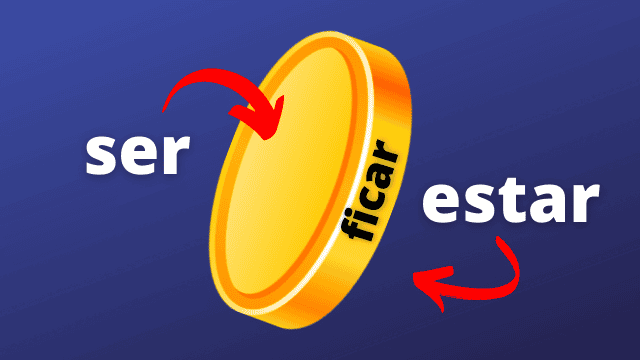
Curious about how this guide works? It’s simple – analyse the situation and ask yourself:
Is it a “what,” a “who,” or a “when“? Embrace the power of “ser.”
Is it a “how“? Let the versatility of “estar” shine through.
Does it involve a sudden change in mood or state? Discover the transformative nature of “ficar.”

But hold on, when it comes to a “where,” things get interesting. Differentiate between a movable object or being and an unmovable thing or place. If it’s movable, let “estar” guide the way. If it’s unmovable, choose between “ser” or “ficar.” As an English speaker, you can see that this linguistic journey isn’t as straightforward as it may seem.
Prepare to navigate the complexities, challenge your linguistic assumptions, and uncover the subtle nuances of ser, estar, and the intriguing edge of ficar. This guide will redefine your understanding of the Portuguese language and leave you feeling fluent, confident, and ready to conquer any communication hurdle.
Understanding the Basics
What Do Ser, Estar and Ficar Mean?
When it comes to “ser,” “estar,” and “ficar,” we’re diving into a world of captivating possibilities. These verbs hold the key to understanding existence, states, and transformations. Let’s explore their unique qualities and shed light on their diverse roles in communication.
- Ser: The realm of permanence and inherent qualities. It reveals the essence of “what,” “when,” and “who.” It even unveils certain fixed “where” aspects, but exclusively for unmovable things. Think of it as a portal to understanding the core characteristics that define us and our surroundings.
- Estar: The ever-changing nature of the present moment. It embodies the fluidity of “how” and portrays the mutable states of people, things, and places. It also offers insights into “where,” but this time for the movable elements that paint the tapestry of our experiences.
- Ficar: The art of staying, becoming, and revealing unmovable “where” aspects, just like “ser.” It captures the essence of remaining or transforming, unveiling the true nature of the subject at hand.
These verbs may seem complex, especially when used in compound tenses. But fear not, compound tenses simply involve a helping verb to complement the meaning, while the second verb takes centre stage, carrying the main message of the sentence. >See below.
Embracing the Depths of Ser, Estar, and Ficar
Unravelling the Essence of Being
When it comes to “ser,” think of it as the verb that signifies existence itself. It’s the innate quality of “being” rather than the result of an action or situation. Let’s dive into its versatile applications and unravel the magic of “ser.”

- One’s origin: O André é de Portugal. (André is from Portugal). It’s a glimpse into someone’s roots and where they call home.
- Essential/inherent characteristics: Sou morena. (I have dark/black hair). It reveals the core aspects that define one’s appearance or nature.
- Nationality: Sou meio Portuguesa e meio Irlandesa. (I’m half Portuguese and half Irish). It proudly showcases one’s cultural heritage.
- Profession/hobby/occupation/religion/political affiliation, and more: Somos estudantes. (We are students). It sheds light on roles, beliefs, and affiliations.
- Relations and possessions: Este carro é seu? (Is this car yours?). It establishes ownership and connections between individuals and their belongings.
- What things are made of: Este copo é de plástico. (This cup is made of plastic). It reveals the material composition of an object.
- Events/things that take place or occur: A festa é no sábado às três da tarde. (The party is on Saturday at 3 pm). It marks the time and occurrence of an event.
- Locations: Think of fixed points on a map, like towns, buildings, countries, and more. A praia é perto daqui. (The beach is close by). It anchors us in space and highlights specific destinations.
Embrace the richness and versatility of “ser” as it weaves through different aspects of existence. From personal traits to cultural ties, from ownership to the fabric of events, “ser” paints a vivid picture of the world around us. Let’s dive deeper into its nuances and unlock the true power of this foundational Portuguese verb.
Embracing the Dynamic Essence of Estar
Unveiling the Ever-Changing States
Regarding “estar,” we enter a realm of fluidity and ever-shifting states. This versatile verb allows us to grasp the essence of how something exists in a given moment, capturing the nuances of action, situation, and state. Let’s delve into its captivating applications and explore the depths of estar.

- Weather: O tempo está bom hoje. (The weather is good today). It reveals the current atmospheric conditions, offering a glimpse into the ever-changing skies.
- Appearance: A Paula está bonita hoje. (Paula looks pretty today). It highlights how someone looks or presents themselves in a specific moment, emphasizing the temporary nature of their appearance.
- Moods, feelings, and behaviour: Estou cansada. (I’m tired) / Estás muito calada hoje. (You’re very quiet today.) It delves into the realm of emotions, moods, and behavioural shifts, painting a picture of the ever-evolving human experience.
- Location of objects, people, and animals: Onde estão as minhas chaves? (Where are my keys?). It pinpoints the current whereabouts of items, individuals, or even furry friends, guiding us to their present locations.
Unlocking the Essence of Ficar
Revealing the Power of Staying and Becoming
Within the realm of “ficar,” we find the captivating dance of staying and remaining. This versatile verb not only signifies the act of “staying” or “remaining,” but it also holds the power to convey the notion of “being located” or “becoming.” Let’s embark on a journey to unravel its multifaceted nature.

- Embracing emotional shifts and states: Fico feliz em ouvir isso. (I “stay” happy upon hearing that, meaning I’ve become happy to hear about that). It captures the transformative moments when our emotions and states undergo a change, leaving us with a new sense of joy, just like saying “I’m happy to hear that.”
- Unmovable locations: When it comes to fixed places like towns, buildings, and countries, “ficar” stands shoulder-to-shoulder with “ser.” It uncovers the unchanging nature of these locales, providing a sense of permanence. For example, A praia fica perto daqui. (The beach is close to here) reveals the fixed location of the beach, drawing us into its proximity.
- Fixed location of movable objects: Imagine a place where objects find their homes, where they stay and belong. As chaves ficam na porta. (The keys “stay”/are kept in the door) reveals the fixed spot where the keys reside, adding a touch of familiarity to their location.
Compound Tenses
Unveiling the Power of “To Be” Verbs in Compound Tenses
Compound tenses may seem complicated at first, but they are actually quite simple once you understand how they work. In Portuguese, the “to be” verbs (ser and estar) often act as helpers, or auxiliary verbs. They allow the second verb to take centre stage, showing the main action. Let’s explore the main types and see how they function in everyday speech.
- Ficar + a + infinitive: This expresses staying or continuing an action. It shows persistence. Example: Fico a falar (I keep talking) – the conversation continues without stopping.
- Ficar + gerund: Mostly used in Brazil, sometimes in the Algarve, this form has the same meaning as ongoing action. Example: Fico falando (I keep talking) – a continuous conversation.
- Estar + a + infinitive: This is the standard way to talk about actions happening right now. Example: Estou a falar (I’m talking) – you are in the middle of speaking at this moment.
- Estar + gerund: Common in Brazilian Portuguese, and occasionally in the Algarve, this also shows an ongoing action. Example: Estou falando (I’m talking) – similar to “estou a falar” in Portugal.
- Estar + a + ser + adjective: Use this to describe behaviour or temporary states. Example: Estás a ser teimoso (You’re being stubborn) – describes how someone is acting in that moment.
- Ser + past participle: Expresses completed actions. Example: O bolo foi feito ontem (The cake was made yesterday) – focuses on the action that has been completed.
- Estar + past participle: Shows current states resulting from a past action. Example: Estou cansada (I’m tired) – highlights how someone feels now.
Related Portuguese Lessons for Further Learning
Want More European Portuguese Lessons?
Inside the Language Hub, you get:
- Audio-based lessons in European Portuguese
- Comprehension exercises
- Real-world vocabulary
- Clear explanations without overwhelming grammar
If you want to understand Portuguese beyond textbook dialogues, this is your next step.