

Have you been wondering when to use definite articles in Portuguese? This is one of the most confusing areas of Portuguese grammar, especially for beginners learning European Portuguese.
In this guide, you’ll learn exactly when to use definite articles (o, a, os, as) with clear examples, audio, and real-life usage.
If you’re not yet familiar with what definite articles are, start with this guide on definite articles in Portuguese, then come back here for the full breakdown.
👉 definite articles in Portuguese
- Quick Summary: When to Use Definite Articles in Portuguese
- Watch my Video on When to use Definite Articles in European Portuguese
- 1 – Definite Articles with Days of the Week in Portuguese
- 2 – Definite Articles with Possessive Pronouns in Portuguese
- 3 – Definite Articles with Seasons and Holidays in Portuguese
- 4 – Definite Articles with Time Expressions in Portuguese
- 5 – Definite Articles with Country Names in Portuguese
- 6 – Definite Articles with People's Names
- 7 – Definite Articles with Titles (senhor/senhora/menina)
- Spelling and Pronunciation
Quick Summary: When to Use Definite Articles in Portuguese
You typically use definite articles in Portuguese:
- With days of the week (habitual actions)
- Before possessive pronouns (e.g. a minha casa)
- With seasons and festive periods
- When talking about time (às 6h)
- With many country names (o Brasil, a França)
- Before people’s names (in European Portuguese)
- With titles (o senhor, a doutora)
- To distinguish meaning (a polícia vs o polícia)
Watch my Video on When to use Definite Articles in European Portuguese
1 – Definite Articles with Days of the Week in Portuguese
With days of the week when referring to habitual actions or a specific event occurring on a particular day*

*Sometimes we don’t use an article when we colloquially state what we’re doing on the next-mentioned day relative to when you say it. For example, if in the above sentence, the person had said “Na quinta” instead of “na próxima quinta”, it’s likely that they would have just said, “Quinta vou ao cinema.” (Thursday, I’m going to the cinema). Both ways are considered correct in everyday speech, and which one you use is optional.
2 – Definite Articles with Possessive Pronouns in Portuguese

3 – Definite Articles with Seasons and Holidays in Portuguese


4 – Definite Articles with Time Expressions in Portuguese

5 – Definite Articles with Country Names in Portuguese

More examples with an article:
- a Suíça (Switzerland)
- a França* (France)
- a Alemanha (Germany)
- a Espanha* (Spain)
- a Itália* (Italy)
- a Inglaterra* (England)
- a Bélgica (Belgium)
- o Brasil (Brazil)
- o Japão (Japan)
- o Canadá (Canada)
- os Estados Unidos (the United States)
*These are optional and can be used without the articles as well.
Examples without an article:
- Portugal
- Andorra
- Moçambique
- Angola
- Timor-Leste
- Israel
This matters when you’re forming sentences with prepositions like em (in/on/at) and de (of/from). I explore some of this in this practical Portuguese conversation practice with a polyglot.
- Struggling with Portuguese prepositions? Check out this Portuguese prepositions of movement (A0 beginner mini-course)
6 – Definite Articles with People’s Names
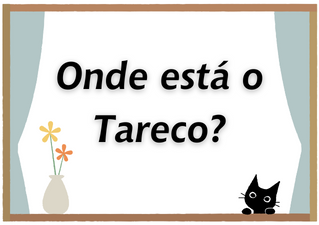
7 – Definite Articles with Titles (senhor/senhora/menina)

Spelling and Pronunciation
The article also allows us to distinguish between nouns that have the same spelling and pronunciation.

Mastering when to use definite articles in Portuguese is a key step towards sounding natural and fluent in European Portuguese.
While the rules may seem overwhelming at first, they become much more intuitive with exposure and practice. Make sure to also learn when NOT to use definite articles in Portuguese, as both go hand in hand.
Now that you know when to use definite articles in Portuguese, you need to learn when you DON’T need definite articles in Portuguese.
return to
Portuguese Conversations | Beginner Pathway (A1/A2)