

Corpus Christi in Portugal is known as Corpo de Deus in Portuguese. It’s a religious event celebrated in Portugal. This day, which translates to “Body of Christ,” takes place 60 days after Easter. In this post, let’s find out more about this date and how Portugal celebrates it.
The Significance of Corpus Christi
Corpus Christi is a Roman Catholic feast day that honours the Eucharist. It takes place 60 days after Easter, on the Thursday following Trinity Sunday, which is the first Sunday after Pentecost. The feast creates a day solely dedicated to the Eucharist, reflecting on its importance outside the solemnity of the Holy Week and Easter celebrations. It is a day of thanksgiving for the presence of Christ in the sacrament of the Eucharist.
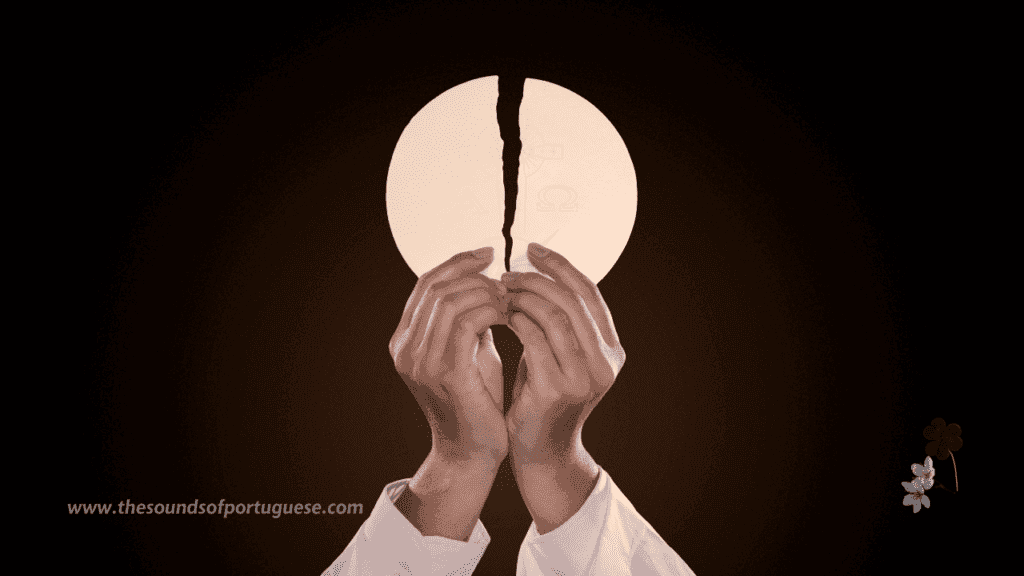
Why is Corpus Christi a Bank Holiday in Portugal?
In Portugal, Corpus Christi is a public holiday, allowing the faithful to participate fully in the religious ceremonies. It was ordered by King Dom Dinis and began in 1282, although there are earlier references dating back to the time of King Dom Afonso III.
Historically, the feast was celebrated with dances, festivities, and processions where the sacred and the profane were intertwined. Representatives of various professions, floats, devils, the serpe (wyvern), the coca (mythical ghost-like monster similar to the bogeyman), and giants, all to the sound of bagpipes and other instruments, paraded through the streets. This celebration has a strong connection in the Minho region, particularly in Monção and Ponte de Lima, where the tradition of Corpus Christi has endured for centuries.
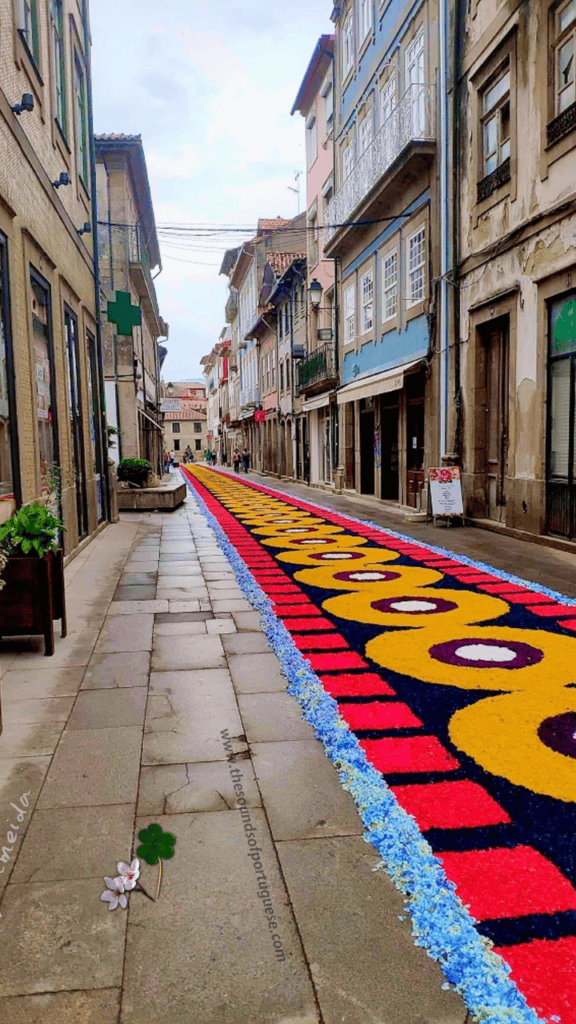
Original photo by Tapetes Rua DO Souto
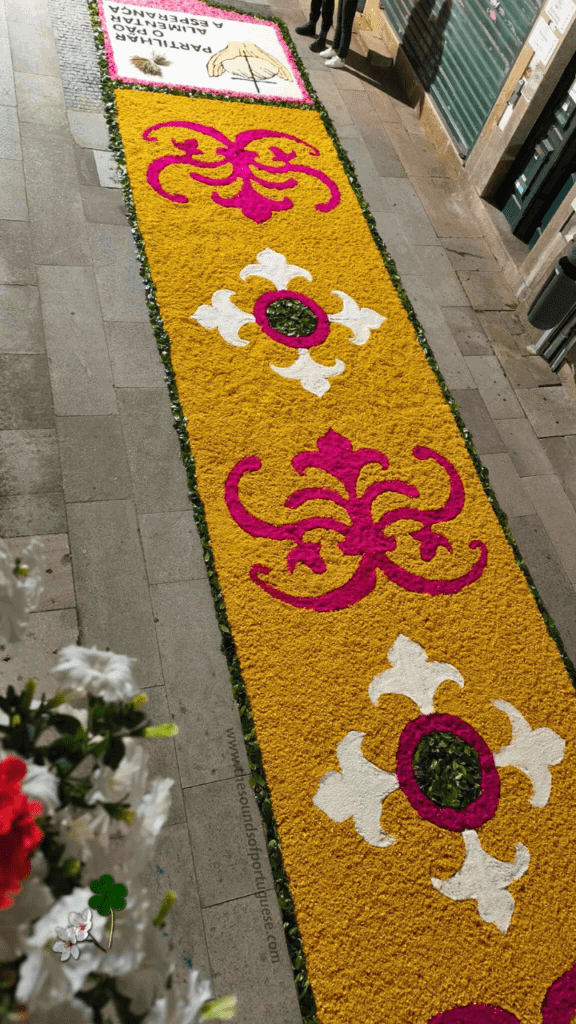
The original photo by Tapetes Rua DO Souto

Original photo by Joaquimrios Photography
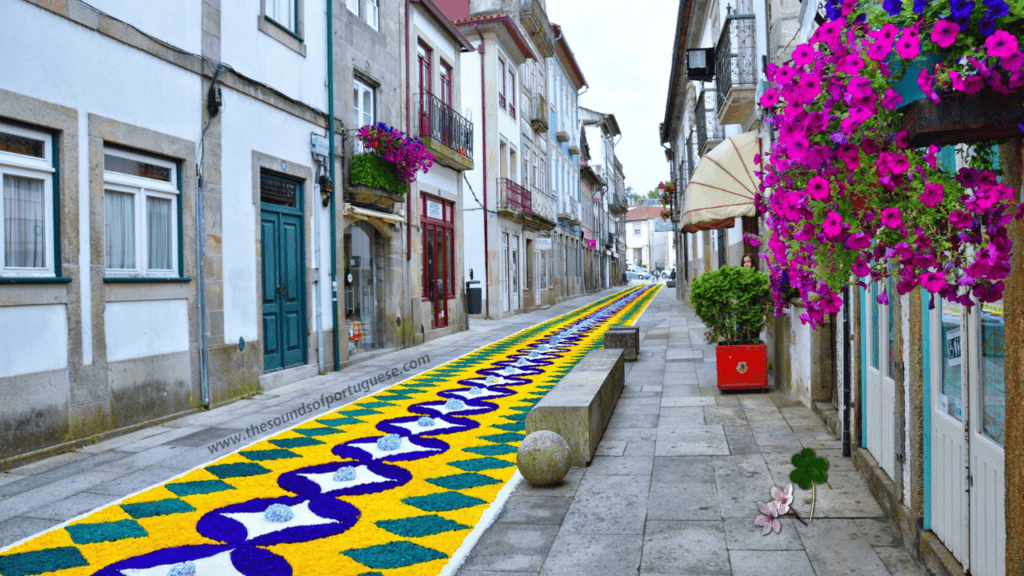
Original photo by Joaquimrios Photography
Celebrations and Traditions in Portugal
People across Portugal Corpus Christi with great reverence and joy. Here are some of the key elements of the celebrations:
1st Holy Communion
First Holy Communion is celebrated on Corpus Christi in many parishes across Portugal. This practice is common because the feast, which honours the Eucharist, is a fitting occasion for children to receive this sacrament for the first time. The celebration underscores the sacrament’s importance in young Catholics’ lives.
Religious Processions
One of the most notable features of Corpus Christi in Portugal is the elaborate processions. People adorn the streets with flower petals, and local parishes carry the Blessed Sacrament through the town or village. Participants often dress in traditional costumes and decorate the route with intricate floral carpets (tapetes de flores).
Mass and Eucharistic Adoration
Special Masses in churches, where the Eucharist is the focal point. Following Mass, the Blessed Sacrament is exposed for adoration, allowing the faithful to spend time in prayer and reflection.
Community Gatherings
Corpus Christi is also a time for community gatherings. Towns and villages come together to organise feasts, dances, and other communal activities. This strengthens the social fabric ensuring and sharing the day’s significance among all members of the community.
What’s Open on Corpus Christi in Portugal?
As a public holiday, many establishments close for Corpus Christi. Here’s what you can expect:
- Closed: Government offices, banks, and most businesses, including some shops and restaurants, close to allow their employees to observe the holiday.
- Open: Essential services such as hospitals, pharmacies, and some grocery stores remain open. Tourist areas and attractions may also operate, though it’s advisable to check in advance.

Vocabulary to Know for Corpus Christi
To fully appreciate and participate in Corpus Christi celebrations, here are some useful Portuguese terms:
- Eucaristia – Eucharist
- Procissão – Procession
- Tapetes de flores – Floral carpets
- Missa – Mass
- Adoração – Adoration
- Santíssimo Sacramento – Blessed Sacrament
- Ferido nacional – National holiday
- Paróquia – Parish
- Celebração – Celebration
Conclusion
Understanding and participating in these traditions not only brings you closer to the Portuguese culture but also offers a glimpse into the country’s rich spiritual heritage. Please share if you see something special!
Related Post for further reading
- Easter in Portugal
- O Dia da Espiga
- A Semana Santa (Holy Week in Portugal)
- May in Portugal
Portuguese Culture | May in Portugal | The Portuguese Learning Hub