

Easter in Portugal is a deeply rooted cultural and religious celebration that goes far beyond chocolate eggs and Easter bunnies. From Semana Santa (Holy Week) to traditional foods like folar and amêndoas, this guide will walk you through the most important Easter traditions in Portugal, key vocabulary, and what to expect if you’re experiencing Portuguese Easter for the first time.
- What Are Easter Traditions in Portugal?
- Easter in Portugal: Key Traditions
- Semana Santa in Portugal Explained
- What Do People Eat at Easter in Portugal?
- Easter Food in Portugal
- Is Easter Monday a Holiday in Portugal?
- Why Is Easter a Moving Holiday?
- Portuguese Easter Vocabulary (Beginner-Friendly 🇵🇹)
- Origin of Easter
- Related Lessons for Further Learning
What Are Easter Traditions in Portugal?
Easter traditions in Portugal include religious processions during Semana Santa, traditional foods like folar and roast lamb, and the exchange of gifts such as amêndoas between godchildren and godparents.
Easter in Portugal: Key Traditions
One of the most famous traditions for Easter in Portugal is Semana Santa (holy week). As the name suggests, this celebration lasts a full week, and each day has its meaning. There are three highlights of this week in Portugal.
- Procissão dos Passos (Procession on Palm Sunday).
- Missa de Lava-pés (The reenactment of the Last Supper and washing of the feet mass on holy Thursday)
- A Procissão do Enterro do Senhor (nighttime burial procession on Good Friday)
Semana Santa in Portugal Explained
Read more information about this tradition in its own dedicated post:
What Do People Eat at Easter in Portugal?
Traditional foods during Easter in Portugal include folar (a sweet or savoury bread), amêndoas (sugar-coated almonds), and roast lamb or cabrito served on Easter Sunday.
Easter Food in Portugal
Folar
This one is one of the more famous foods that are eaten for Easter in Portugal. The folar is usually a round nest-shaped cake with its recognisable aroma and flavour consisting of cinnamon, fennel and lemon zest. Another common feature is the presence of a hard-boiled eggshell and all in its centre. The egg is said to represent the four elements of life: the shell represents the Earth, the membranes the Air, the white the Water and the yellow the Fire!
For Christians, Easter means the passage from Death to Life. Therefore, the egg is a metaphor for the Resurrection of Christ. There are other versions of the folar, though, which include meat and caramel.
The folar is traditionally given by Godparents to their Godchildren (or vice-versa) in exchange for easter almonds and flowers on Palm Sunday. Of course, today, there is somewhat of a commercial aspect to this tradition that you can see in the shops. Children will offer other things such as mugs and picture frames, etc with the words “madrinha“, “padrinho” or “padrinhos“.
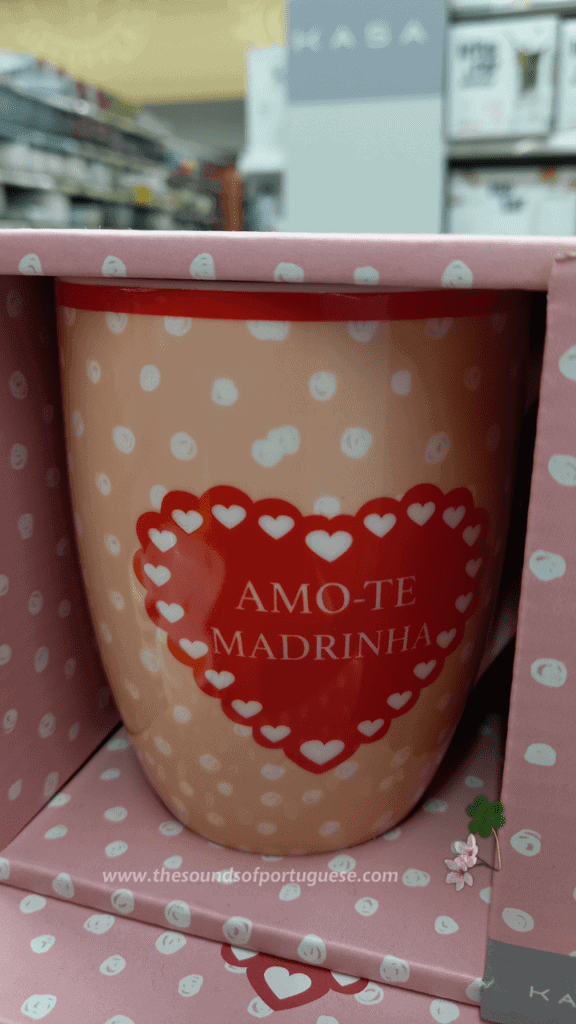
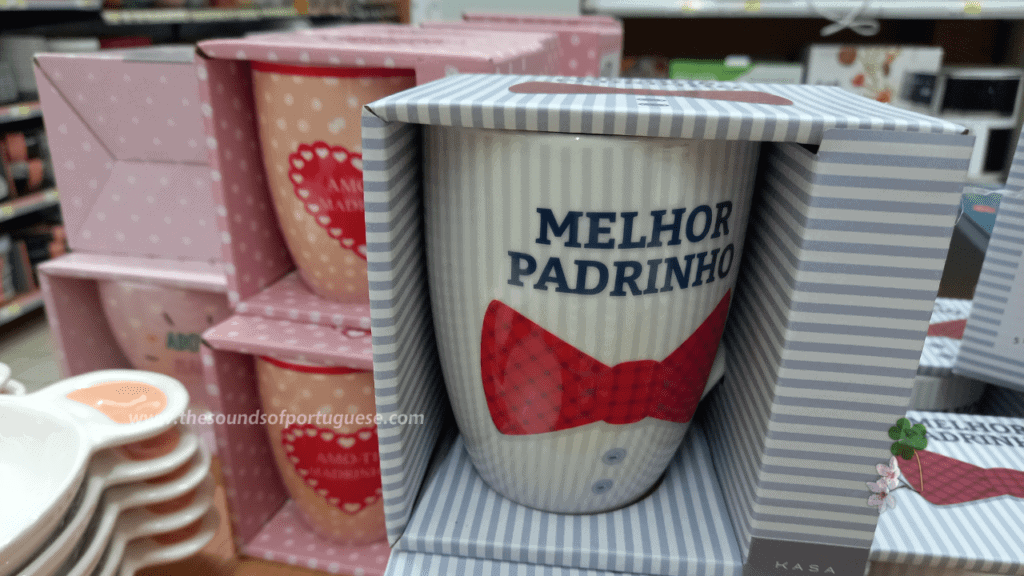
If you’re curious about this cake and want to read more about the Portuguese Folar, click on the link.
Amêndoas
The colourful sugar or chocolate-coated almonds are one of the most popular and consumed sweets at Easter in Portugal. Nowadays, there are many other variants, including even confectionery Easter almonds…without almonds!
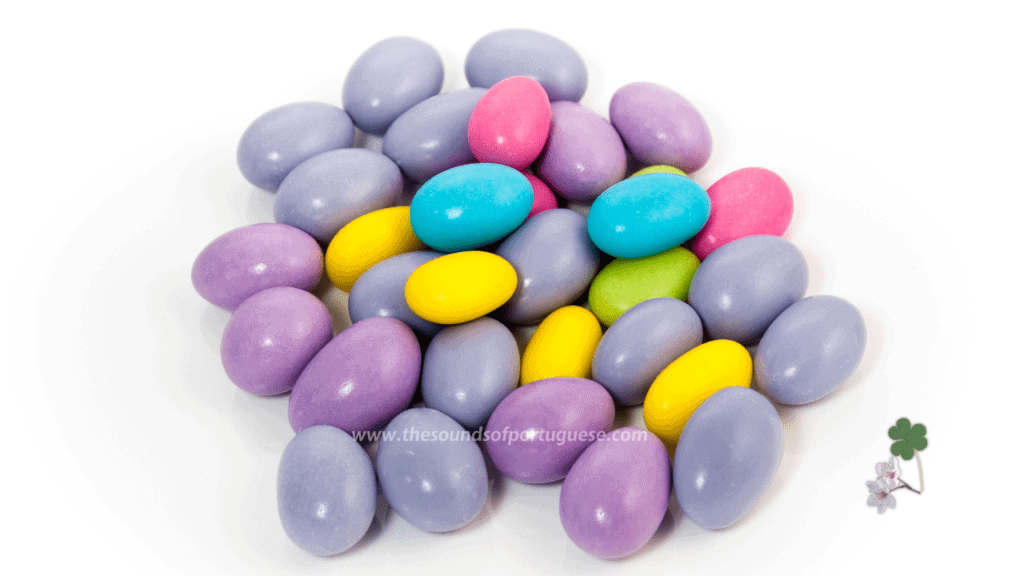
In many regions of Portugal, this is the traditional gift given by godchildren to their godparents, accompanied by flowers in exchange for the folar. In current times, also includes chocolate easter eggs and all the other treats. Other gifts may include money or items the children need. Are you interested to learn more about these Easter Almonds in Portugal and maybe trying to make some?
Traditional Easter Dishes in Portugal
For Easter Sunday, it’s the popular cabrito (kid) or cordeiro de leite, of course! This is the milk lamb, which means it’s the lamb that’s still very young and milk-fed. More on Lamb in Portugal here.

The reason we eat lamb on Easter Sunday is that it is a symbol of the resurrection, as the biblical reference itself explains: “the lamb of God who takes away the sins of the world”. So, Bacalhau and other fish are reserved for Good Friday and lamb for Sunday lunch. For more details, click here.
Is Easter Monday a Holiday in Portugal?
No, Easter Monday is not a national holiday in Portugal, although some municipalities observe it locally.
In some Alentejo municipalities, it is traditional to save Easter Monday for a family picnic. This consists of a trip to the countryside to celebrate spring.
Why Is Easter a Moving Holiday?
Did you know that Easter Sunday is a moving Holiday? In some years, it occurs in March.
How is Easter Sunday Determined?
Easter Day, by definition, is the first Sunday after the full moon that occurs after the vernal equinox and can fall between the 22nd of March and the 25th of April.
What about Good Friday?
Good Friday takes place every year between the 22nd of March and the 25th of April. These dates coincide with the first full moon after the spring (in the Northern Hemisphere) and autumn (in the Southern Hemisphere) equinoxes.
And Palm Sunday?
Well, this one always falls on the 6th Sunday of Lent, which is the Sunday before Easter Sunday. So it’s calculated based on when Easter Sunday is.
Portuguese Easter Vocabulary (Beginner-Friendly 🇵🇹)
- a Páscoa (Easter)
- o ovo da páscoa (easter egg)
- coelhinho da Páscoa (Easter bunny)
- os padrinhos (godparents)
- o padrinho (the Godfather)
- a madrinha (the godmother)
- o afilhado (the godson)
- a afilhada (the goddaughter)
- os afilhados (the godchildren)
- as amêndoas (the almonds)
- o folar (Portuguese easter cake)
- as flores (flowers)
- o cordeiro de leite (milk lamb)
- borrego (lamb)
- coelho (rabbit)
- a Semana Santa (holy week)
- Sexta-Feira Santa (Good Friday)
- Procissão dos Passos (Procession of the Passion)
- Domingo de Ramos (Palm Sunday)
- A Procissão do Enterro do Senhor (Processions of the burial of the Lord)
- A Via Sacra (the way of the cross)
Vou à missa na Quinta-Feira Santa. (I go to mass on Holy Thursday)
Recebo amêndoas da minha madrinha. (I receive almonds from my Godmother)
Comemos borrego no Domingo de Páscoa. (We eat lamb on Easter Sunday)
Did you know that this week is also where the Portuguese names of the week come from?
Origin of Easter
Easter in Christianity is the celebration of the death and resurrection of Jesus Christ, forming the foundation of the feast.
Its name, Páscoa, comes from the Latin Pascha, derived from the Hebrew Pessach (Passover), meaning “passage.”
In Jewish tradition, Passover commemorates the liberation of the Israelites from slavery in Egypt.
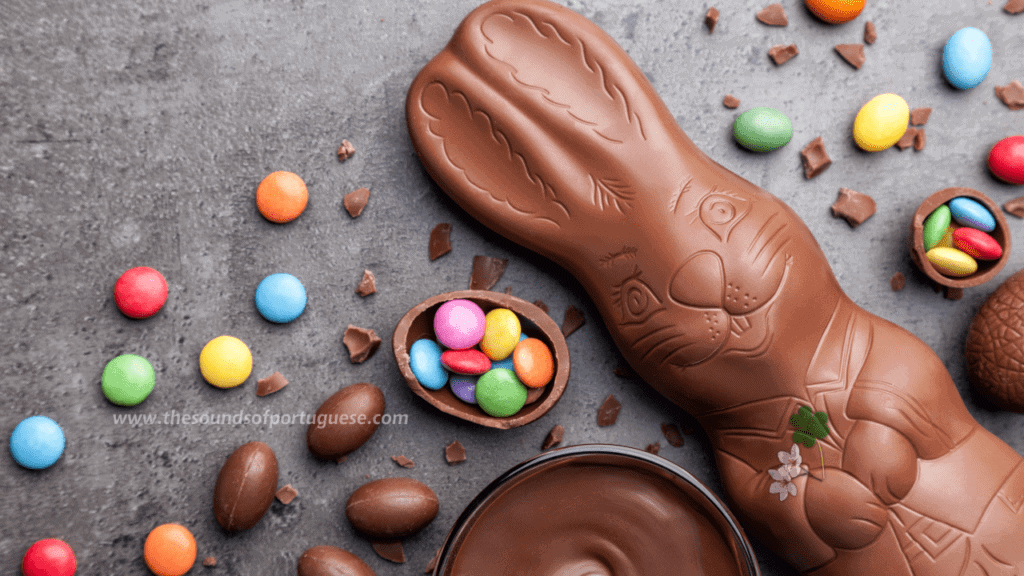
Earlier still, some spring customs, like eggs and rabbits, are linked to pagan traditions honouring the goddess Eostre and themes of fertility and renewal.

Related Lessons for Further Learning
- Holy Week in Portugal
- The Portuguese Folar
- Easter Almonds in Portugal
- Lent in Portugal
- A Lenda do Folar da Páscoa (The Easter Folar Legend)
- Why do we eat lamb for Easter
If you’d like to learn how to actually use this vocabulary in real conversations, join my beginner Portuguese lessons below.