

Portuguese prepositions can be tricky, especially when several expressions seem to mean “below” or “under.” In this lesson, you’ll learn the difference between abaixo, debaixo, em baixo and por baixo and how to use them naturally in European Portuguese.
We’ll break down each expression with clear explanations, practical examples, and common mistakes learners make.
For a more natural, real-life context, watch my conversation video with Luke here – where we touch on this topic a little bit.
1. Abaixo – Abstract “Below”
Use: Refers to something that is below a level, point, number, standard, or position. It is particularly common in abstract or measured contexts.
✅ Grammar Guide: Often an adverb of place used for standards, levels, or measurements.
BUT…
When followed by de (abaixo de), it becomes a prepositional phrase.
Examples:
- O nível do mar está abaixo da média. (The sea level is below average.)
- A temperatura hoje está abaixo do normal. (The temperature today is below normal.)
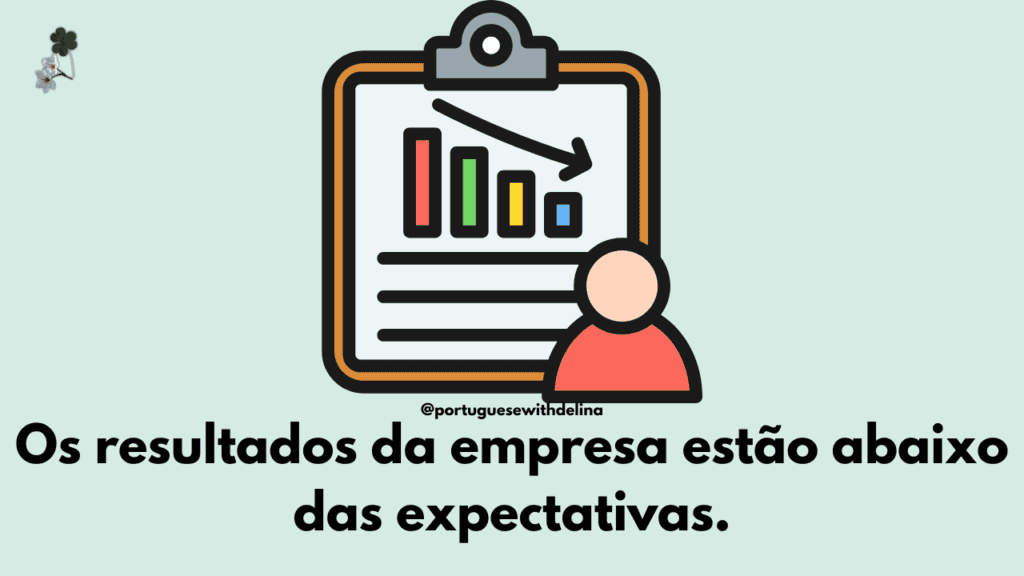
- Os resultados da empresa estão abaixo das expectativas. (The company’s results are below expectations.)
Tip: Think of abaixo when you’re talking about levels, measurements, standards, rankings, numbers, or other points of reference.


2. Em baixo
Use: Refers to something being in a lower position, down, or downstairs, without necessarily identifying something directly underneath it.
Examples:
- O livro está em baixo. — The book is down/below.
- O meu quarto fica em baixo. — My bedroom is downstairs.
- A fotografia está em baixo. — The photograph is at the bottom/below.
- Põe a caixa em baixo. — Put the box down/below.
Compare:
O livro está em baixo. → The book is down/below.
O livro está debaixo da mesa. → The book is underneath the table.
Tip: Use em baixo when you mean “down”, “below”, “at the bottom”, or “downstairs” without necessarily saying what something is underneath.
Em baixo is the opposite of em cima in many everyday situations:
O livro está em cima. → The book is up/on top.
O livro está em baixo. → The book is down/below.
3. Debaixo – Literal “Underneath”
Use: Refers to something being underneath or beneath another thing, usually in a physical sense.
✅ Grammar Guide: This is an adverbial expression usually used with de:
- O gato está debaixo da mesa. (The cat is under the table.)
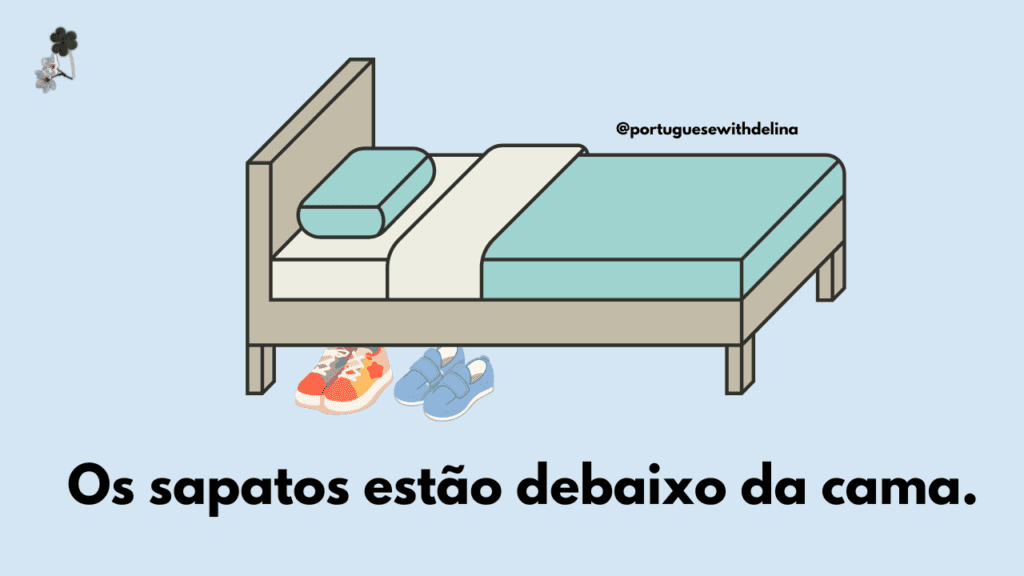
- Guarde os sapatos debaixo da cama. (Put the shoes under the bed.)
- O cão dorme debaixo da cadeira. (The dog sleeps under the chair.)
Tip: When you want to say that something is underneath a specific object, debaixo de is a very common choice.


4. Por Baixo – Underneath / Beneath
Use: Refers to something being underneath or beneath something else, often with the idea of passing underneath, moving through a lower space, or being positioned beneath something.
- Ele passou por baixo da ponte. (He went under the bridge.)
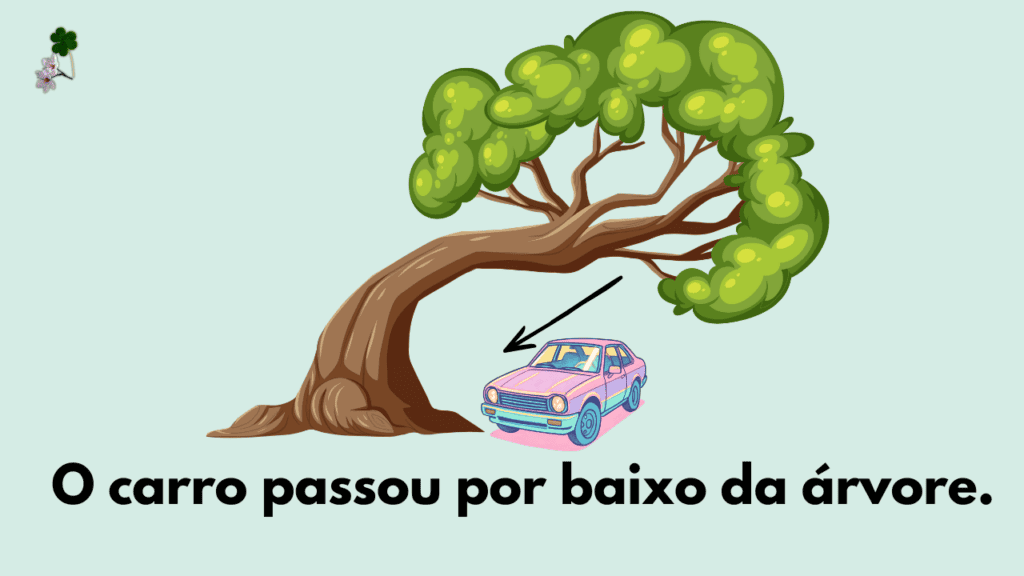
- O carro passou por baixo da árvore. (The car passed under the tree.)
- A bola rolou por baixo da mesa. (The ball rolled under the table.)
- O tapete está por baixo da mesa. (The rug is underneath the table.)
Tip: Por baixo de is especially common when something passes, moves, or is positioned beneath something else.


5. Bonus Examples & Cultural Context
Portuguese prepositions appear everywhere, even in daily conversations and idioms:
Abaixo de → below a level, standard, number, or point of reference
A temperatura está abaixo do normal.
Em baixo → down, below, at the bottom, or downstairs
O meu quarto fica em baixo.
Debaixo de → underneath a specific object
O gato está debaixo da mesa.
Por baixo de → underneath/beneath, often with movement or the idea of passing beneath
O barco passou por baixo da ponte.
💡 Understanding these nuances will make your Portuguese sound much more natural!
6. Related Lessons for Further Portuguese Learning
- Watch the real conversation video here: Portuguese Conversation with Luke
- Check out our Portuguese Conversations hub for more real-life lessons
- Explore our Portuguese Grammar Hub for more grammar guidance
- Learn the opposites of the expressions in this post (por cima, acima and em cima)
Learning prepositions in Portuguese doesn’t have to be confusing. By combining grammar rules, examples, and real conversations, you’ll understand not only how to use abaixo, em baixo, debaixo, and por baixo, but also when to choose each one.
Até breve,
Adelina 🌸