

Meeting someone for the first time is an important step when learning a new language. You might already know how to say olá (hello) or bom dia (good morning), but what comes next?
How do you tell someone your name, say where you’re from, or ask a few questions to get to know them?
In this lesson, you’ll learn how to introduce yourself in European Portuguese, ask someone about themselves and respond naturally when meeting someone new.
We’ll focus on useful expressions you can use in everyday situations, whether you’re meeting a Portuguese neighbour, chatting to someone in a café or making new friends in Portugal.
1️⃣ How to introduce yourself in Portuguese
Let’s start with some essential expressions.
| Portuguese | English |
|---|---|
| Olá! | Hello! |
| Chamo-me… | My name is… |
| Sou… | I am… |
| Sou de… | I’m from… |
| Vivo em… | I live in… |
| Tenho … anos. | I’m … years old. |
| Muito prazer! | Pleased to meet you! |
You don’t need to use every expression when introducing yourself. Start with your name and add one or two details about yourself as you become more confident.
What’s the difference between chamo-me and sou?
In European Portuguese, one of the most common ways to introduce yourself is:
Chamo-me Adelina. (I call myself Adelina. /I’m called Adelina / My name is Adelina.)
You can also say:
Sou a Adelina. (I’m Adelina.)
Both are natural ways to introduce yourself. Notice that sou is the first-person form of the verb ser, meaning to be.
You can use sou to give other information about yourself, too:
- Sou portuguesa. (I’m Portuguese.)
- Sou professora. (I’m a teacher.)
- Sou irlandesa. (I’m Irish.)
Remember that nationalities and many other adjectives change according to gender. For example, português is masculine, and portuguesa is feminine.
2️⃣How to say where you’re from and where you live
When meeting someone new, it’s common to share a little information about where you come from or where you live.
Here are three useful expressions:
Sou de Lisboa. (I’m from Lisbon.)
Vivo em Tavira. (I live in Tavira.)
Sou Irlandesa. (I’m Irish.)
Notice the difference between ser and viver in these examples. Use sou de to talk about where you’re from and vivo em to say where you live.
You can combine these expressions to give a little more information about yourself:
Olá! Chamo-me Adelina. Sou irlandesa e portuguesa, mas vivo em Tavira. (Hello! My name is Adelina. I’m Irish and Portuguese, but I live in Tavira.)
3️⃣How to ask someone about themselves
An introduction is a conversation, not just a list of facts about yourself. Once you’ve introduced yourself, you can ask the other person a few simple questions.
| Portuguese | English |
|---|---|
| Como te chamas? | What’s your name? |
| De onde és? | Where are you from? |
| Onde vives? | Where do you live? |
| O que fazes? | What do you do? |
| Quantos anos tens? | How old are you? |
These are informal questions, using tu, which is commonly used when speaking to friends, people of a similar age and others in informal situations.
You don’t need to ask all these questions at once! Choose one or two that feel natural for the conversation.
A useful expression: E tu? /você? / o senhor? / a senhora?
One of the easiest ways to keep a conversation going is to ask “And you?” Sounds easy, right? But it’s not from the English point of view.
The word “you” has 8 different equivalents in Portuguese depending on formality, how many people you are addressing, and some have gendered versions.
| tu | informal and singular |
| você | semi-formal and singular |
| o senhor | formal, singular and addressing a man |
| a senhora | formal, singular and addressing a woman |
| vós | informal and plural but not commonly used in conversation |
| vocês | has replaced vós in conversation |
| os senhores | formal, plural and addressing men or a mixed gender group |
| as senhoras | formal, plural and addressing women |
But for now, to keep things simple, we will look at the singular informal and the singular plural. Informal:
– Olá! Chamo-me Ana. E tu?
– Chamo-me Miguel.
Formal:
– Olá! Chamo-me Ana. E você/o senhor?
– Chamo-me Miguel.
These expressions help you return a question or invite the other person to share something about themselves.
4️⃣How to respond when meeting someone
When someone introduces themselves, you can respond with one of these expressions.
Muito prazer! (lots of pleasure. / Pleased to meet you!)
Prazer em conhecer-te. (Pleased to meet you – informal)
Prazer em conhecê-lo. (Pleased to meet you (man) – formal)
Prazer em conhecê-la. (Pleased to meet you (woman) – formal)
Igualmente! (Likewise!)
For example:
– Olá! Chamo-me Sofia. Muito prazer!
– Olá, Sofia! Chamo-me David. Igualmente!
You may also hear Prazer! on its own. It’s a short, natural way of expressing that you’re pleased to meet someone.
5️⃣Let’s put it all together
Imagine that Ana and Miguel meet for the first time at a café in Portugal.
Ana: Olá! Chamo-me Ana. E tu?
Miguel: Olá, Ana! Chamo-me Miguel. Muito prazer!
Ana: Igualmente! De onde és, Miguel?
Miguel: Sou de Coimbra, mas vivo em Lisboa. E tu?
Ana: Sou de Dublin, mas vivo em Tavira.
Miguel: Que interessante! O que fazes?
Ana: Sou professora. E tu?
Miguel: Sou estudante.
Read the conversation aloud, paying attention to the rhythm of the sentences. If you can, listen to the dialogue in European Portuguese and repeat each line.
6️⃣Practise introducing yourself
Now it’s your turn!
Complete the following introduction using your own information.
- Olá! Chamo-me __________.
- Sou de __________.
- Vivo em __________.
- Sou __________.
- Gosto de __________.
The last expression, Gosto de…, means I like…. It’s a useful way to add a personal detail and give the other person something to ask you about.
For example:
Gosto de passear. (I like going for walks.)
Gosto de ler. (I like reading.)
Gosto de cozinhar. (I like cooking.)
You can also practise asking someone else the same questions:
- Como te chamas?
- De onde és?
- Onde vives?
- O que fazes?
Try answering aloud rather than simply reading the words on the page. The aim is to become comfortable introducing yourself without having to translate every sentence in your head.
Final tip: Practise little and often
You don’t need to memorise a long speech to introduce yourself in Portuguese. Start with your name, where you’re from and where you live. Then practise asking one or two questions in return.
The more you hear these expressions in context, the more natural they’ll begin to feel.
Below are multiple Comprehensible Input video lessons I’ve made to help you acquire these expressions.

How to Use “Ser” in Portuguese (Who or What Someone/Thing Is)
Portuguese has two main verbs that express “to be”. They are ser and estar. This lesson will help you confidently describe what you or others are in simple sentences (occupation). We are learning how to say: “I am”, “you are”, and he/she is”.

The Verb Chamar-se: What’s Your Name?
In Portuguese, we usually use the verb chamar-se to say what our name is. The literal translation is “to call oneself”.

Margarida makes two Friends
Margarida has recently moved to Faro and is getting to know her new surroundings. While she is walking in a public garden, she meets Sofia and João and makes two new friends.
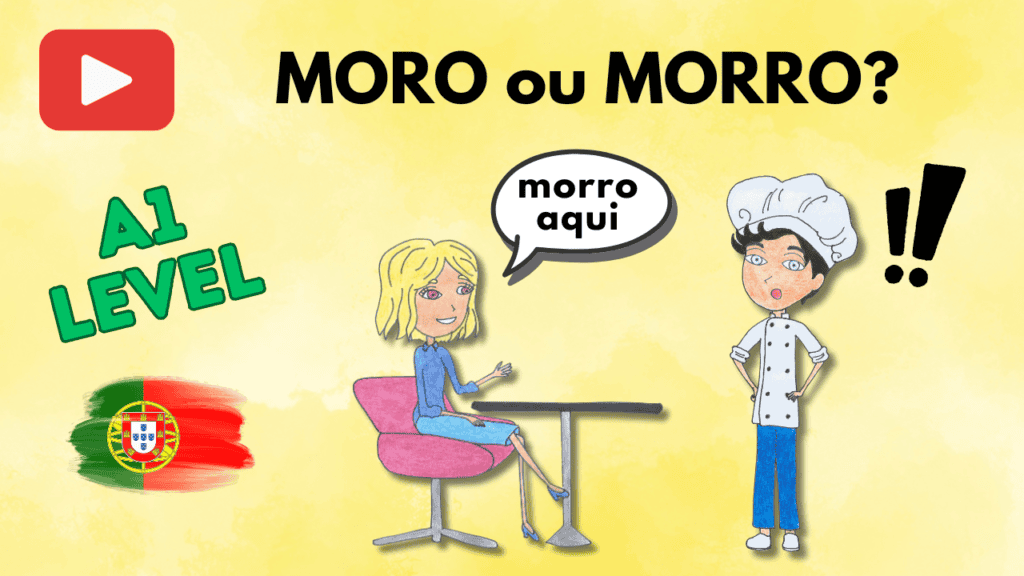
Ela fala Português?
Through a light and humorous misunderstanding, you’ll acquire vocabulary naturally without memorising grammar rules. Can you spot what goes wrong?
Related Portuguese Lessons
- Hello in Portuguese
- Greet someone in Portuguese – Practice
- Say Goodbye in Portuguese
- Small Talk in Portuguese
- Phrasebook Portuguese
Ready to keep learning? Explore more beginner European Portuguese lessons on greetings, everyday conversations and listening practice to build your confidence one conversation at a time.
← Back to European Portuguese A1/A2 Study Companion
← Unidade 1 – Cumprimentar, apresentar-se e conhecer pessoas