
Are you curious about the savoury world of 🐖 pork cuts in Portugal? If you’re planning a visit, live in Portugal or simply have a fascination for the finest flavours from around the mundo (world), you’re in for a treat. In this blog post, we’re delving into the universe of Portuguese pork cuts, uncovering their names, and traditional dishes, We’re also exploring the iconic black Iberian pork, the beloved presunto, and even guide you on how to order meat like a local. So, grab your appetite and let’s begin Savouring Pork in Portugal!
The Symphony of Portuguese Pork Cuts 🐖
Portugal’s butchers offer a mouthwatering array of pork cuts, each with unique flavours and cooking possibilities. From the tender and versatile lombo (loin) to the flavorful costeletas (chops), there’s something for every culinary craving. Understanding these cuts is essential if you’re planning to prepare a traditional Portuguese meal.
For example, the secreto, a hidden gem, is a tender, well-marbled cut ideal for grilling. Meanwhile, the entremeada, or belly, is perfect for preparing dishes like feijoada, a hearty bean stew. These cuts are the building blocks of iconic Portuguese dishes, so exploring their characteristics and flavours can make your culinary journey more rewarding.

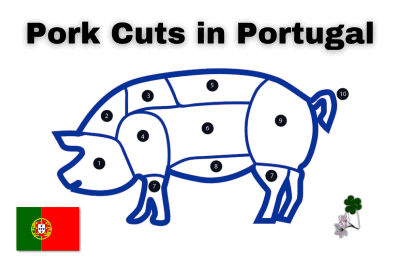
1 – Cabeça | Head
The famous Alentejo “Cabeça de Xara” or “Bochechas de Porco” dishes come from this part of the pig.

2 – Cachaço | Neck
This particular cut is derived from the cervical hemi-vertebrae. It can be prepared in various ways, thanks to its high-quality attributes, combining a well-balanced presence of fat and muscle. These cutlets are called costeletas do fundo and are renowned for their exceptional flavour, making them a top choice for culinary creations.

3 – Lombo | Costeletas de Lombo | Blade Shoulder/Rib End Loin
The loin is a boneless meat cut from the muscular mass within the lumbar vertebral groove. It is devoid of bones and excess fat. The loin can be prepared as a whole piece or cut into steaks. The tenderloin, the muscle within the lumbar spine, can be prepared as a whole piece, fried, grilled, or used for espetadas (kebabs), offering versatile cooking options.

4 – Pá | Arm Shoulder/Picknic Ham
Derived from the front section of the pig, the shoulder lends itself to a delightful roast. One can slice into steaks or prepare rojões, which are scrumptious when fried or used in a flavorful jardineira dish.

5 – Costeletas com Pé | Pork Chops
This is a term that typically refers to pork chops. “Costeletas” means “chops,” and “com pé” roughly translates to “with bone” or “with the bone-in.” They come from the section corresponding to the dorsal hemivertebrae, these chops represent some of the finest quality cuts and can be prepared in a variety of delicious methods. They are perfect for grilling or frying.

6 – Entrecosto | Spare Ribs
This cut is obtained by separating the pork rind from the fat. While it contains many bones, it offers a delightful flavour when grilled or fried, making it an excellent choice for either method of preparation. Personally, I’d go for grilled!

7 – Chispe | Hock/Trotter
The lower limbs, both anterior and posterior, display the skin along with all the muscles and tendons unique to this area. They are excellent for roasting, stewing, frying, or boiling, offering a range of culinary possibilities. Chispe de porco com grão.

8 – Entremeada | Belly
Belly meat is a cut that features abundant fat and skin. To enhance its flavour, it should strike a harmonious balance between fat and meat. When selecting it, ensure there is no strong or off-putting odour. It’s crucial to avoid serving it rarely. Professional culinary settings slow-cook this part for extended hours at low temperatures to achieve tenderness and juiciness.

9 – Perna | Leg/Ham
This portion pertains to the hind limb and offers versatile options for cutting based on its intended purpose. It’s particularly well-suited for roasting as a whole piece, but it can also be sliced into medallions, and steaks, or used for bifanas, making it adaptable for frying or grilling.

10 – Rabo | Tail
In Portuguese cuisine, the pork tail is used in some regional or traditional dishes, but it’s relatively uncommon.
If the tail is used at all, it’s typically in stews or soups where it can add flavour to the broth but is not generally considered a main ingredient. Please note that the use of the pork tail may vary by region and personal preference, but it is not a prominent or widely used cut in Portuguese cuisine.

Portugal’s Flavourful Sausages
Portugal’s culinary tapestry is woven with the rich flavours of enchidos. The literal translation for “enchidos” is “filled”. These cured sausages are a testament to my country’s love for pork. Whether it’s the smoky Alheira, the spicy Chouriço, or the aromatic Morcela, enchidos come in a delightful variety of flavours and textures. These sausages often play a starring role in Portuguese dishes, adding a burst of flavour that’s hard to resist.
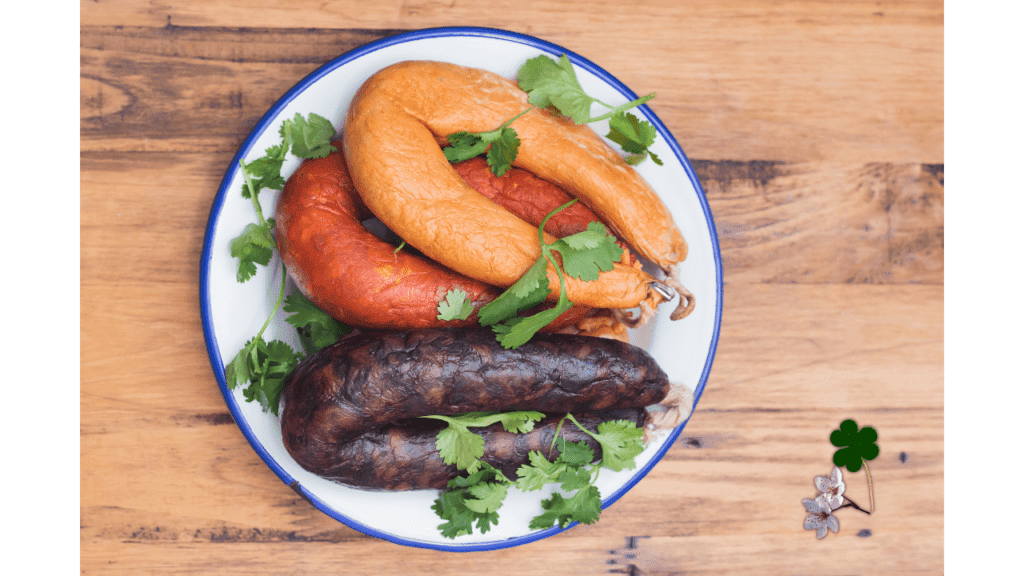
When you visit Portugal, be sure to try petiscos, the Portuguese answer to tapas, where you can sample an assortment of enchidos. Pair them with a glass of vinho verde, and you’re in for a treat. Next, we’ll look at the most common types of Portuguese Cured Pork Sausages.
Chouriça
Chouriça, a smoked sausage, takes the shape of a foot-long horseshoe. When you decide to savour it, be sure to come with a hearty appetite, or invite some friends to join in. This delicacy is crafted using the meat, blood, and pork fat of the Bísaro breed, an indigenous variety known for its large size, long snouts, and a mix of thick, bristly black and white hair. To enhance the flavours, the meat and fat are carefully seasoned with a blend of salt, local red or white wine, water, garlic, red paprika, and aromatic bay leaves.

Linguiça
Linguiça, a thin smoked sausage, comprises a mixture of pork meat and fats, resembling chouriça but usually boasting a lighter texture. Producers season it with garlic and red paprika for enhanced flavour.
Alheira
The Alheira originates from Trás-os-Montes in the north and consists of bread, mixed meats, and garlic, all chopped and blended together.

Morcela
Morcela is Portuguese black pudding. It gets its consistency and dark colour from the jelly-textured blood encasing it. Cloves and cumin provide the intense aroma that characterises this sausage. Present in traditional dishes such as Cozido à Portuguesa.

Farinheira
The Farinheira is made from flour or bread crumbs, pork fat and seasonings.

Presunto
Presunto is the seasoned and cured hind leg of the pig that and often smoked. (More info in the presunto section)


Paio
Paio is a sausage crafted from pork loin, lending it a lean texture. Producers prepare it with a blend of garlic, sweet pepper, and white wine.
Leitão à Bairrada
Leitão is suckling pig and Leitão à Bairrada is a cherished dish in Portuguese cuisine, featuring succulent roasted piglet seasoned with garlic and spices. Then crisped to perfection in a wood-fired oven. Served with crispy potatoes and zesty orange sauce, it’s a true taste of Portugal. This delicacy hails from the Bairrada region in the north of the country and is a must-try when exploring Portuguese flavours.

Miudezas | Offal
Miudezas refers to the offal or variety of meats of an animal, typically the internal organs and other edible parts that are not considered traditional cuts of meat. In Portuguese cuisine, “miudezas” from pork include a variety of organ meats such as liver (fígado), heart (coração), kidneys (rins), and sometimes even parts like ears (orelhas) and snout (focinho).
These organ meats are often used in the preparation of traditional Portuguese dishes, adding unique flavours and textures to the cuisine. For instance, “Iscas com Elas” is a dish made with liver, and “Rojões” may include various cuts of pork, sometimes including organ meats.
It’s important to note that the specific “miudezas” used and the dishes they are incorporated into can vary based on regional traditions and personal preferences. In Portuguese culinary traditions, using the entire animal, including offal, has been a way to minimise waste and create flavourful and diverse dishes.
- Miudezas (offal)
- Coração (heart)
- Molejas (oxen and swine gland)
- Túbaros (animal testicle)
- Redanhos (omentum)
- Chispes (trotter)
- Língua (tongue)
- Mioleira (brains)
- Rins (kidneys)
- Baço (spleen)
- Fígado (liver)
- Focinho (snout)
- orelhas (ears)
Related posts
- Beef cuts in Portugal 🐄
- Lamb in Portugal 🐑
- Cabrito in Portugal 🐐
- Bacalhau cuts 🐟
- Food in Portugal 🍽️