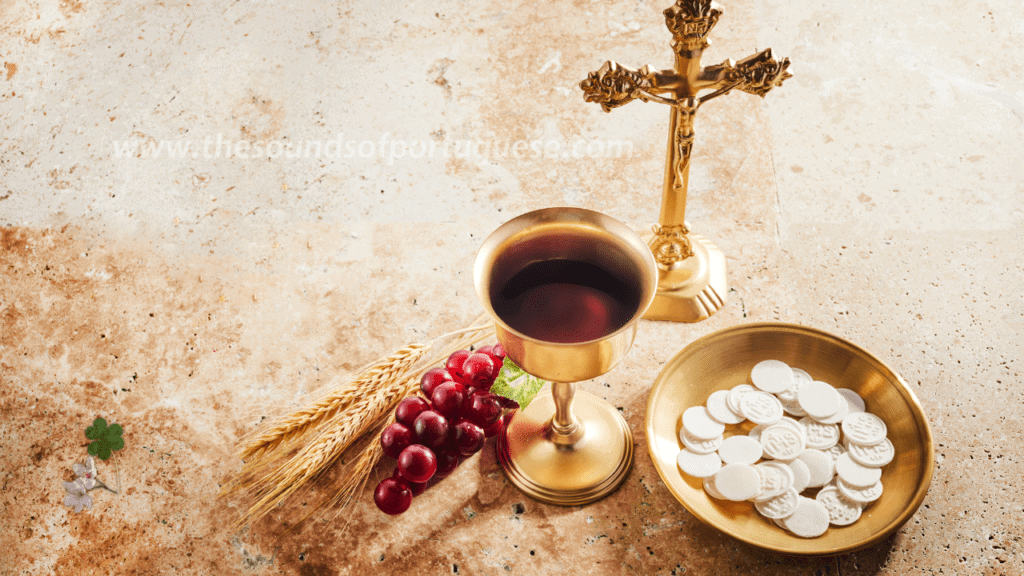
Gathering around the family table to enjoy a lamb meal on Easter Sunday is a cherished tradition in Portugal. But have you ever wondered about the origins of this custom and the rich symbolism behind it? Why do we eat Lamb for Easter?
Agnus Dei
Firstly, the roots of this tradition can be traced back to ancient times and are deeply intertwined with Christian beliefs. In the New Testament, Jesus Christ is often referred to as the “Lamb of God,” (Agnus Dei in Latin and Cordeiro de Deus in Portuguese), symbolising his sacrifice for humanity’s sins.

Secondly, this imagery stems from the sacrificial practices of the Jewish tradition, where lambs were offered in temples during Passover ceremonies.
Jewish Connection
The significance of the lamb in Jewish culture dates back to the story of the Passover, where the blood of a lamb was used to mark the doors of the Israelites, protecting them from the plagues sent upon Egypt. This act spared their firstborn children from death, symbolising deliverance and redemption.


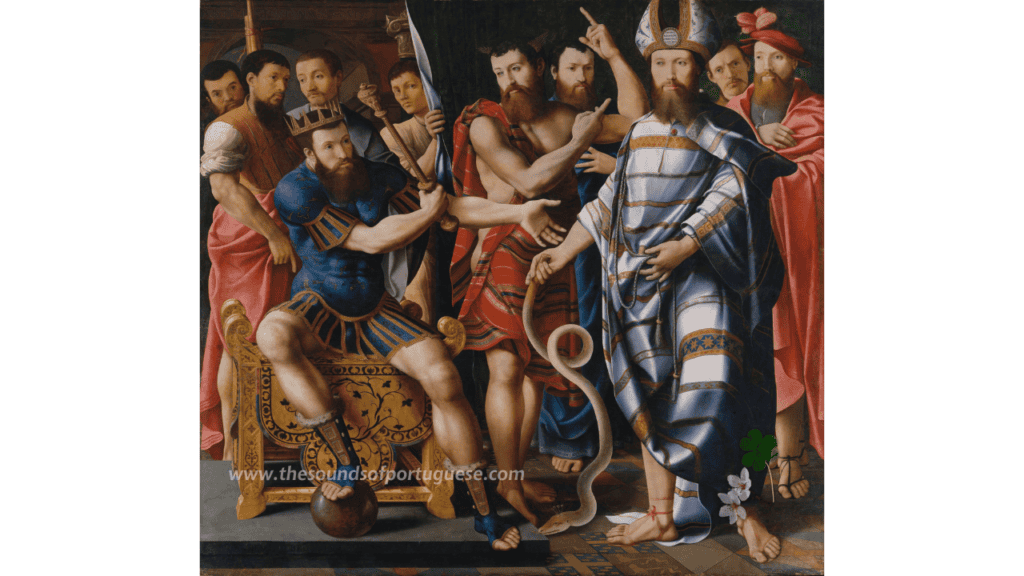
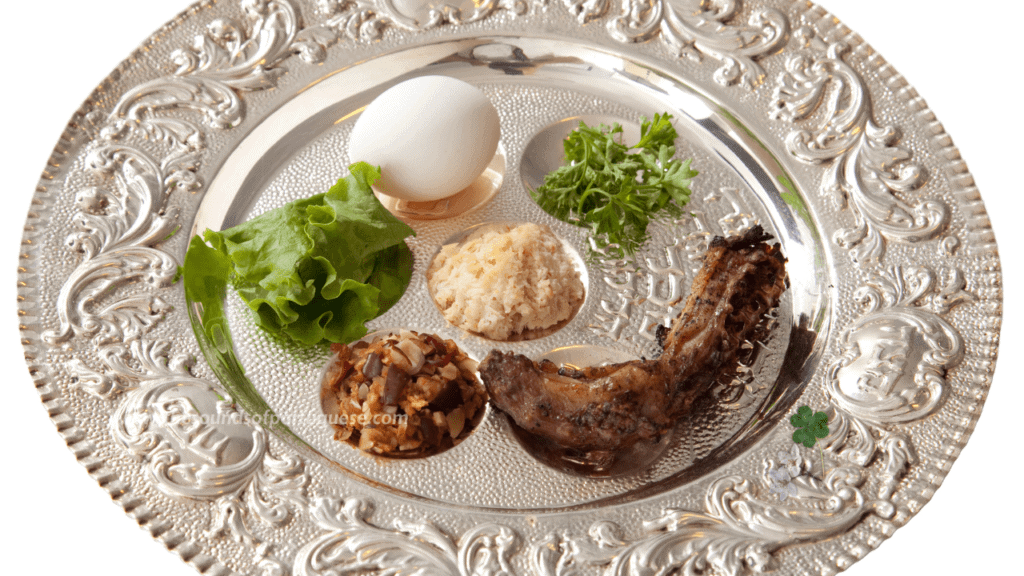
Nowadays, Jews celebrate Passover with a Seder plate. A Seder plate is a special plate during the Passover Seder, a ritual meal that remembers and celebrates the Jewish Exodus from Egypt. The plate typically holds symbolic foods representing various aspects of the Passover story and its themes of liberation and redemption. Among these foods is a Lamb Shank and a hard-boiled egg.
Another interesting connection is that the word Páscoa comes from the Jewish word Pesach (Passover). So, this means that in Portuguese, the words are the same for both celebrations. To distinguish them, you can add the words “Cristã” or “Judaica” for clarification.
Páscoa Cristã (Christian Easter)
Páscoa Judaica (Jewish Easter – Passover)
Christian Meaning of the Lamb
With the advent of Christianity, the sacrificial aspect of the Passover lamb took on new meaning. Jesus Christ’s crucifixion became the ultimate sacrifice, fulfilling the prophetic symbolism of the Passover lamb. As John the Baptist proclaimed,
“Behold the Lamb of God, who takes away the sin of the world.” (Eis o Cordeiro de Deus que tira o Pecado do Mundo)
Thus, the tradition of eating lamb on Easter Sunday in Portugal and other Christian cultures is a symbolic reminder of Jesus Christ’s sacrifice and the redemption it offers to believers. It’s a beautiful testament to the continuity of faith and tradition across generations, enriching our Easter celebrations with profound meaning and reverence.
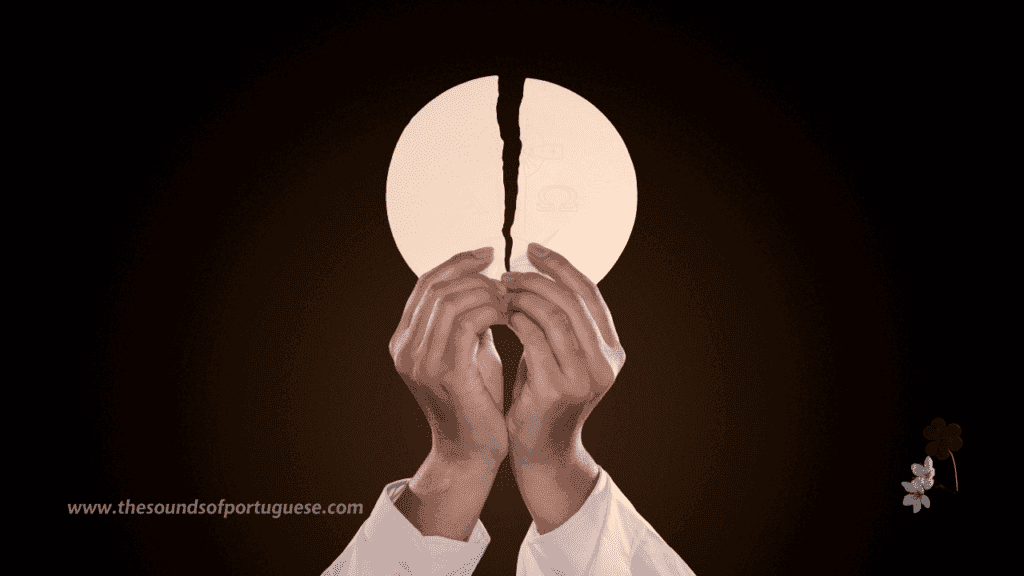
During the celebration of the Eucharist, also known as the Lord’s Supper or Holy Communion, bread and wine are consecrated and consumed by believers in remembrance of Jesus’s sacrificial death and resurrection. Within this context, the bread is often referred to as the “body of Christ” and the wine as the “blood of Christ.” This act of partaking in the Eucharist is central to Christian worship and is understood to convey spiritual nourishment, forgiveness of sins, and communion with God and fellow believers.